I drove three hours to spend Thanksgiving with my son’s family, bringing a homemade feast large enough to feed twelve people. I had spent days preparing everything, hoping we would share a wonderful holiday. Instead, my daughter-in-law embarrassed me so badly that I made a decision nobody saw coming.
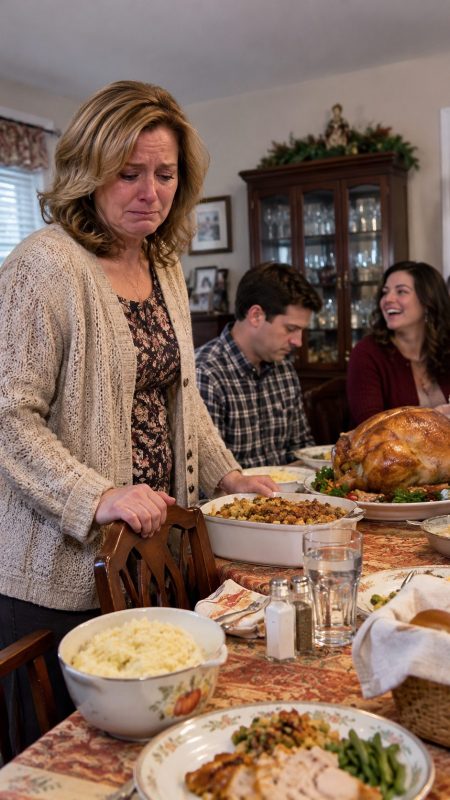
“Honestly, Diane, your whole existence revolves around cooking and scrubbing floors!” Cassandra laughed across the dinner table.
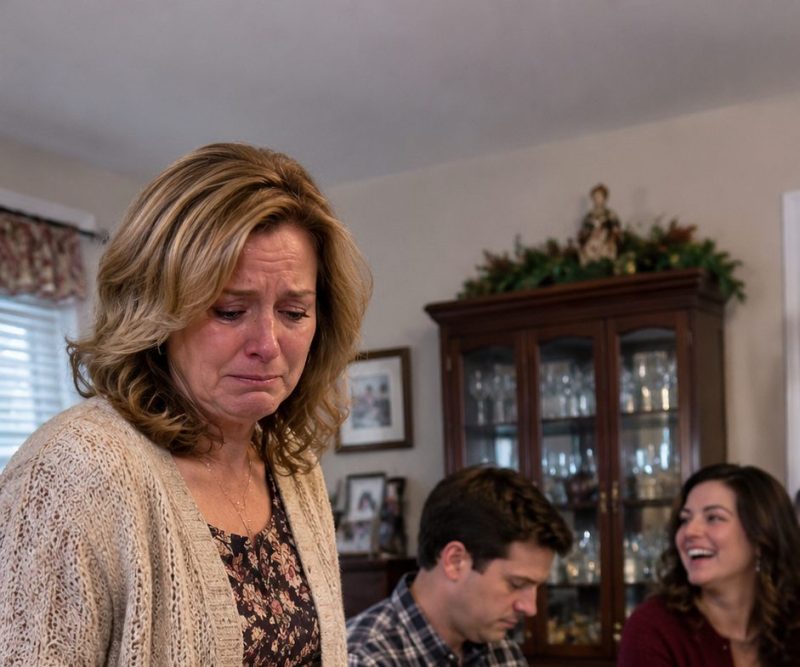
Everyone heard her.
I glanced at my son, Derek, expecting him to defend me. But he just stared at his food, pretending nothing had happened.
That was the moment something inside me changed.
My name is Diane. I’m sixty-three, a retired dental assistant, and I’ve been a widow for many years.
When my husband, Leonard, died, our children were still young. Derek and Joanna depended on me, and I did everything possible to give them a stable childhood.
I worked overtime, gave up holidays, and saved whatever money remained after paying the bills.
Throughout those difficult years, I dreamed about retirement. I pictured myself exploring unfamiliar cities, discovering beautiful landscapes, and finally having time for the hobbies I’d always postponed.
But when retirement arrived, my life took a different direction.
Instead of becoming a traveler, I became my son’s unpaid employee.
I watched his children whenever he needed me. I cleaned his house, prepared meals, collected groceries, and even paid some of his monthly expenses.
At first, I was happy to help.
Then my generosity slowly became something the entire family took for granted.
Thanksgiving finally opened my eyes.
That morning, I arrived at Derek’s house with a fully cooked turkey, several desserts, and enough side dishes for a dozen guests.
While Cassandra entertained everyone in the living room, I worked in the kitchen.
I reheated food, arranged serving platters, carried dishes to the table, and made sure nobody needed anything.
By the time we sat down, my back was aching.
During dinner, one of the guests asked about my recent vacation in New Zealand.
I brightened immediately.
Travel had always been my greatest passion, and I was eager to share a few memories.
But Cassandra interrupted before I could finish.
“Oh, come on! Diane’s only real talents are cooking and cleaning!”
A few people chuckled uncomfortably.
My cheeks burned.
I looked directly at Derek.
He didn’t even raise his head.
Later, Cassandra casually announced that I would also be responsible for the Christmas feast.
“Diane always takes care of everything,” she said. “That’s what she does!”
Nobody bothered to ask whether I agreed.
I finished helping with the cleanup, hugged my grandchildren, and left without arguing.
During the long drive home, I kept replaying her words.
Was that really how my family saw me?
Not as a mother with interests, memories, and ambitions, but as someone whose only purpose was making their lives easier?
When I finally reached home, I opened my laptop and checked my bank statements.
I discovered how much I was still contributing to Derek’s household.
Storage fees, entertainment subscriptions, and miscellaneous expenses added up to hundreds of dollars every month.
He was forty years old, yet I was still quietly supporting him as though he were a teenager.
Then I noticed a folder I hadn’t opened in months.
“Places to Go.”
Inside were saved photographs, travel ideas, and information about a charming Portuguese town called Óbidos.
Almost a year earlier, I’d found a delightful cottage with white walls, blue shutters, and a secluded courtyard.
I had imagined spending several weeks there, enjoying the quiet streets and learning to paint.
But every time I considered booking it, something came up.
Derek needed childcare.
Cassandra needed help organizing a celebration.
Someone needed money.
That evening, however, I checked the cottage’s availability again.
It was free for eight weeks, beginning in December.
Without asking anyone’s permission, I booked it.
Then I purchased a flight to Lisbon.
I stared at the confirmation emails in disbelief.
For the first time in years, I had chosen myself.
The next morning, Derek texted me about Christmas preparations.
I replied, “You’ll need to organize dinner without me this year. I’ve made other plans.”
He called immediately.
“Mom, seriously? Cassandra was kidding! Why are you making such a big deal out of it?”
I remained calm.
“If it was just a joke, Derek, why did you sit there while everyone laughed at me?”
Silence.
Then he asked the question that told me everything.
“So who’s going to cook Christmas dinner?”
I took a slow breath.
“You’re forty years old, Derek. I’m confident you can prepare a meal or arrange one.”
He didn’t know what to say.
When I told Joanna about my Portuguese adventure, her response was completely different.
“Mom, that’s incredible! You’ve talked about visiting Portugal forever. I’m so happy you’re finally going!”
For once, someone was celebrating my dreams instead of asking me to postpone them.
A few days later, I informed Derek that he would also need to take responsibility for his own bills starting in January.
He protested, but I refused to change my mind.
Shortly afterward, Cassandra sent me a detailed Christmas menu.
Nearly every dish had my name written beside it.
I responded with a simple reminder.
“I won’t be there. I’ll be in Portugal.”
Her reply came within seconds.
“But we’ve already invited sixteen people!”
“Then you still have time to make other arrangements.”
Three days before my departure, Derek arrived unexpectedly.
He looked frustrated.
“Mom, are you really abandoning Christmas because of one stupid comment?”
I invited him into the kitchen.
“No, Derek. I’m going away because I’ve spent years forgetting that my life matters, too.”
He crossed his arms.
“I don’t understand.”
“Whenever you need childcare, I cancel my plans. Whenever your house needs cleaning, I’m the first person you call. I pay expenses you should be handling yourself. And now your wife assumes I’ll prepare every holiday meal without even asking me.”
He looked uncomfortable.
“I thought you wanted to help.”
“I do want to help. But helping should be my choice, not something you automatically expect.”
For the first time, Derek seemed to understand that I wasn’t simply upset about a joke.
I was exhausted from being taken for granted.
On the morning of my flight, Joanna took me to the airport.
She hugged me tightly.
“Enjoy every minute, Mom. You’ve earned this.”
When I finally arrived in Óbidos, I felt as though I’d stepped into a beautiful painting.
The narrow streets twisted between whitewashed houses decorated with colorful flowers. Ancient stone walls surrounded the town, and little cafés filled the air with the scent of fresh pastries.
I explored historic buildings, browsed local markets, and spent hours photographing everything that caught my attention.
Then I signed up for watercolor lessons.
My first attempt looked nothing like the picturesque street I had tried to capture.
The houses leaned in strange directions, and the colors blended into a chaotic mess.
I laughed at my mistakes.
And that laughter felt wonderful.
There was nobody waiting for me to prepare dinner.
Nobody calling to ask for a favor.
Nobody expecting me to solve another financial problem.
Each morning, I could decide exactly how I wanted to spend my day.
Sometimes I visited museums.
Sometimes I sat in a courtyard with a book.
And sometimes I simply wandered through town without any particular destination.
I hadn’t felt so free in decades.
A few days before Christmas, an email arrived from Derek.
“Mom, I’ve transferred the bills into my name. I honestly didn’t realize how much money you were spending on us every month.”
I read his message twice.
It wasn’t a complete apology, but it was a beginning.
Soon afterward, Cassandra contacted me.
“I’m sorry about what I said at Thanksgiving. I was trying to make everyone laugh.”
I answered politely.
“Cooking is something I enjoy, Cassandra. But it isn’t who I am. I have dreams and interests beyond taking care of everyone else.”
I didn’t know whether she fully understood, but I was glad I’d finally spoken up.
On Christmas Day, I dressed nicely and visited a lovely restaurant in town.
I enjoyed a wonderful meal, watched families celebrating around me, and thought about my grandchildren back home.
Of course, I missed them.
But missing my family didn’t mean I’d made the wrong decision.
For once, I was experiencing a holiday instead of working through it.
In January, Derek called again.
His voice was unusually serious.
“Mom, I’ve been thinking about everything. You were right.”
I waited.
“I should’ve defended you at Thanksgiving. And I should’ve noticed how much you’ve been doing for us. I kept accepting your help because I knew you would never let us down.”
He paused.
“I’m really sorry.”
His words meant more to me than he probably realized.
A little later, Cassandra sent another message.
This time, she didn’t excuse her behavior as a joke.
She admitted that she’d treated my kindness as something she was entitled to and promised to be more considerate.
I appreciated her apology, although I knew that rebuilding our relationship would require more than words.
After eight unforgettable weeks, I returned home.
My suitcase contained souvenirs, photographs, and a collection of watercolor paintings.
But I also returned with something far more valuable.
I had rediscovered the person I’d been before everyone else’s needs became my entire world.
The following Sunday, Derek invited me to dinner.
“Just come and relax, Mom,” he said. “Don’t cook anything. Don’t even bring dessert.”
When I arrived, Cassandra was busy preparing the meal.
Derek greeted me warmly and took my coat.
The children ran over to hug me.
We spent the evening sharing stories, laughing, and enjoying each other’s company.
After dinner, Derek began clearing the table while Cassandra packed away the leftovers.
I instinctively stood to help.
“Sit down, Mom,” Derek said gently. “We’ve got this.”
For a moment, I hardly knew what to do with myself.
Then I sat back down and continued talking with my grandchildren.
I wasn’t there to work.
I was there because my family wanted to spend time with me.
A few weeks later, I framed one of my paintings from Portugal and hung it in the hallway.
It showed a narrow street in Óbidos, lined with white houses and blue doors.
The proportions weren’t quite right, and the colors were far from perfect.
But I treasured it.
Every time I passed that painting, I remembered the moment I had finally stopped waiting for permission to enjoy my own life.
I still love being a mother.
I still cherish every moment with my grandchildren.
And I still enjoy cooking a beautiful meal for the people I care about.
But I no longer believe that loving someone means sacrificing every personal dream to keep them comfortable.
Maybe next Christmas I’ll prepare the turkey myself.
Maybe I’ll spend the holiday exploring another country.
Or perhaps I’ll simply arrive at my son’s house, sit down at the table, and enjoy being a guest.
Whatever I decide, it will be because I genuinely want to do it.
Not because someone assumes I have no other purpose.
At sixty-three, I finally learned that being constantly useful doesn’t necessarily mean being truly appreciated.
And sometimes, the greatest gift you can give yourself is the courage to establish boundaries and reclaim the life you’ve spent years putting aside.
My family will always have a place in my heart.
But from now on, my dreams will have a place there, too.