Everyone in the unit knew Verónica Salas was approaching before they saw her.
Her boots announced her.
The measured thud against the cafeteria floor was usually enough to lower voices and send eyes toward untouched meals.
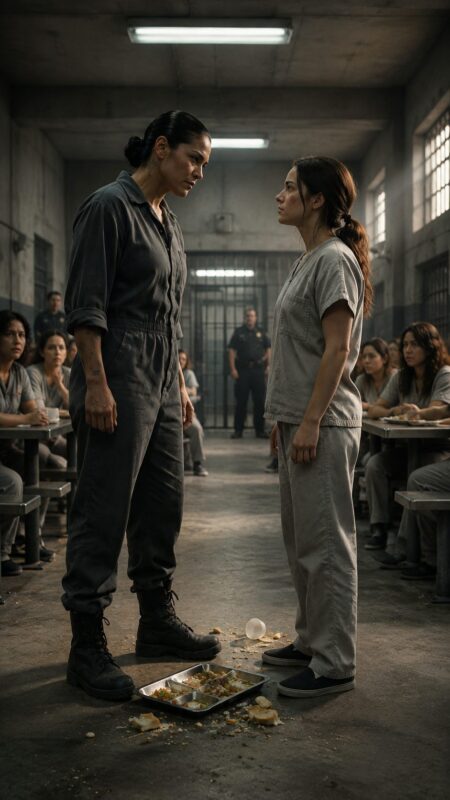
For years, Verónica had built her authority on one simple rule: make people afraid often enough, and eventually they will police themselves.
That morning, however, Ana Torres remained seated.
She was alone at a corner table, quietly finishing breakfast when Verónica stopped beside her.
“You’re in my seat.”
Ana glanced around.
“Your name isn’t on it.”
Several inmates immediately looked away.
Nobody spoke to Verónica like that.
Her mouth curled into a smile.
Then she lifted her boot and brought it down onto Ana’s tray.
The metal buckled slightly beneath the pressure as breakfast spilled across it.
“You’ll eat when I decide you can.”
Ana stared at the mess.
Verónica was expecting anger.
Maybe tears.
Perhaps an apology.
Instead, Ana calmly looked up.
“Again.”
The smile disappeared from Verónica’s face.
“What?”
“Do it again.”
Ana’s eyes shifted toward the upper corner of the room.
“Make sure they get a clear view this time.”
Verónica followed her gaze.
A security camera was pointed directly at them.
For the first time, the woman everyone feared looked uncertain.
“That camera hasn’t worked in months.”
Ana’s expression barely changed.
“Yesterday, you would have been right.”
Ana had entered Santa Lucía Women’s Correctional Center outside Madrid determined to attract as little attention as possible.
A financial fraud investigation at her former workplace had uncovered decisions she should never have participated in. She accepted responsibility for her involvement, received a relatively short sentence, and intended to complete it without trouble.
Then she met Verónica.
There were official rules at Santa Lucía.
And there were Verónica’s rules.
New inmates learned the difference quickly.
Certain seats belonged to her even when they were empty. Desserts disappeared from other women’s trays. Coffee, shampoo, soap, and commissary purchases regularly found their way into her possession.
Anyone who resisted discovered that prison life could become unpleasant very quickly.
Verónica rarely needed to threaten anyone directly.
Her reputation handled most of that for her.
Ana’s first mistake, according to everyone else, was refusing to participate.
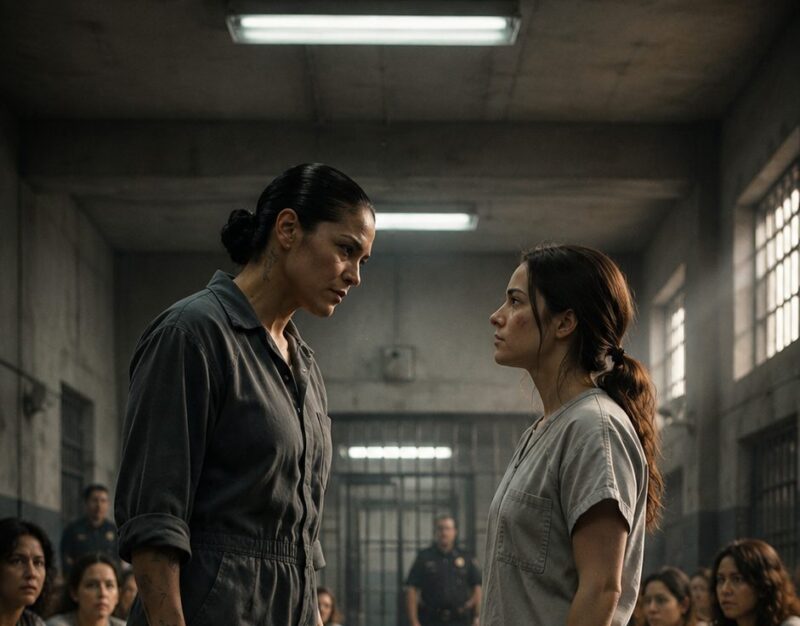
One afternoon, Verónica pointed at Ana’s coffee.
“I’ll take that.”
Ana looked at the cup and then at her.
“No.”
The women nearby became silent.
Verónica almost laughed.
“You’re new, so I’ll give you another chance.”
“I heard you the first time.”
Ana kept the coffee.
By the end of the week, her soap was gone.
Soon afterward, several personal items disappeared.
Then she returned to her cell one evening and discovered that her mattress had been drenched.
Ana reported every incident.
Nothing happened.
Nobody had seen anything.
No useful footage existed.
No inmate wanted to become involved.
Ana understood the message.
She was supposed to become frightened enough to surrender.
Instead, she became curious.
Verónica seemed almost unnaturally good at avoiding surveillance. Incidents occurred in blind spots, near malfunctioning cameras, or during brief gaps in staff supervision.
That couldn’t be coincidence.
Ana stopped challenging her openly.
She began watching.
She remembered times and locations. She recorded dates whenever possible. She noticed which inmates surrounded Verónica and which women avoided her completely.
Eventually, people started talking.
Pilar admitted that much of her commissary allowance was being spent on items Verónica demanded.
Sofía regularly surrendered food.
Teresa handed over toiletries.
María had been threatened repeatedly.
Raquel knew of other women who had experienced the same thing.
For years, Verónica had made every victim believe she was facing the problem alone.
Ana began connecting them.
During her next meeting with her attorney, Laura Méndez, Ana described the pattern.
Laura listened without interrupting.
When Ana finished, she asked something simple.
“You said she always knows where surveillance is weakest?”
“Yes.”
“How?”
Ana had no answer.
Laura did.
“Then perhaps Verónica isn’t the only person we should be looking at.”
The concern eventually reached prison director Isabel Romero, who authorized a discreet review of the surveillance system.
Seven cameras officially listed as malfunctioning had remained out of service for suspiciously long periods.
One overlooked the cafeteria.
Romero had it repaired quietly.
No announcement was made.
No maintenance notice was posted for the inmates.
Ana learned the camera was active again.
Verónica did not.
The following morning, Ana chose her breakfast seat carefully.
She sat directly inside the restored camera’s field of view.
Then she waited.
Soon, she heard the familiar footsteps.
Verónica appeared beside the table.
“You really don’t learn.”
Ana continued eating.
“Actually, I’ve learned quite a lot.”
“Apparently not enough.”
“I know exactly how things work here.”
Verónica leaned closer.
“Then why are you still causing problems?”
Ana finally looked at her.
“Because prison rules apply to me. Yours don’t.”
A hush spread across the room.
Verónica’s expression hardened.
She seized the edge of Ana’s tray.
Then she raised her boot.
The tray slammed loudly against the table beneath her sole.
Several women flinched.
“You want to know my rule?” Verónica said. “You eat when I permit it.”
Ana could hear her own heartbeat.
Still, she refused to give Verónica the reaction she wanted.
“Do it again.”
Verónica stared at her in disbelief.
“You think someone is going to save you?”
“No.”
Ana glanced toward the ceiling.
“I think you just saved me the trouble of proving it.”
Verónica slowly turned.
Then she saw the camera.
And the tiny active light.
Her confidence vanished.
“No.”
Ana said nothing.
“That thing is broken.”
“Check again.”
Verónica took a step backward.
Before she could do anything else, the cafeteria doors opened.
Director Romero entered with two officers and an investigator.
Verónica looked from them to Ana.
“You trapped me!”
Ana pushed the ruined tray away.
“Nobody told you to come to my table.”
That should have been the end of the confrontation.
Instead, it became the beginning of something larger.
A chair moved behind them.
Pilar stood.
“She did the same thing to me.”
Verónica turned sharply.
“Sit down.”
Pilar remained standing.
“She makes me buy things for her.”
“Be quiet!”
Then María rose.
“She threatened me.”
Sofía stood next.
“She takes my food.”
Teresa followed.
Then Raquel.
More voices joined them.
For years, Verónica had survived by making each woman believe resistance was impossible.
Now her victims could see one another standing.
The fear that had protected her began collapsing faster than anyone expected.
The investigation expanded beyond the cafeteria incident.
Footage from the repaired camera gave investigators a clear starting point. Commissary transactions revealed repeated patterns. Statements taken separately from inmates matched in important details.
Then investigators uncovered the reason Verónica had always seemed one step ahead of surveillance.
Someone on staff had been feeding her information.
She had been told which cameras were malfunctioning, where security coverage was weakest, and when certain routines changed.
The staff member was removed from duty while the matter was investigated.
Verónica lost her special privileges and was moved out of the unit pending the outcome of the inquiry.
Her unofficial kingdom disappeared almost overnight.
Months later, Ana’s sentence ended.
On the morning she was due to leave, Pilar found her packing.
“I still don’t understand something.”
Ana closed her bag.
“What?”
“When Verónica first started targeting you, why didn’t you fight back?”
“I did.”
Pilar looked confused.
“You never hit her. You barely even argued.”
Ana smiled.
“Fighting back doesn’t always look the way the other person expects.”
Pilar thought about that.
“She believed you were afraid.”
“That helped.”
“So she underestimated you?”
Ana shook her head.
“Worse. She overestimated herself.”
Before leaving the unit, Ana glanced once more toward the cafeteria.
The camera remained above the same corner.
Such a small object.
Yet it had helped dismantle years of intimidation.
Later that morning, the outer gates opened and Ana stepped outside.
She had entered Santa Lucía believing courage meant standing up to someone stronger.
She left understanding something different.
Sometimes courage meant waiting.
Sometimes it meant documenting what others ignored.
And sometimes the most powerful thing one frightened person could do was show everyone else that they were not alone.
Verónica had stepped on Ana’s breakfast believing the entire cafeteria was watching another demonstration of her authority.
She had been right about one thing.
Someone was watching.
She simply never imagined that this time, the evidence would survive after everyone walked away.