I Came Home From a Two-Week Vacation and Found 15 Strangers Occupying My House. My Son-in-Law’s Mother Told Me to Stop Complaining—Until I Revealed an Urn That Exposed Her Darkest Family Secret.
I knew something was wrong the moment I pulled into my driveway.
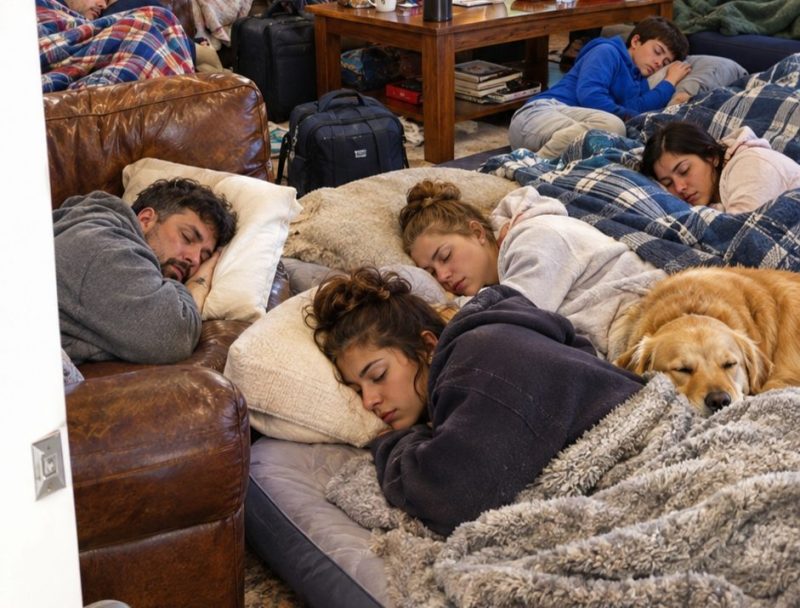
Three unfamiliar cars were parked outside my house. Another vehicle blocked half the garage, and someone had left a pair of muddy shoes on my front steps.
I’d just returned from a two-week vacation in Florida.
All I wanted was to unpack, make myself a cup of tea, and enjoy the comfort of my own home.
Instead, when I opened the front door, I walked straight into chaos.
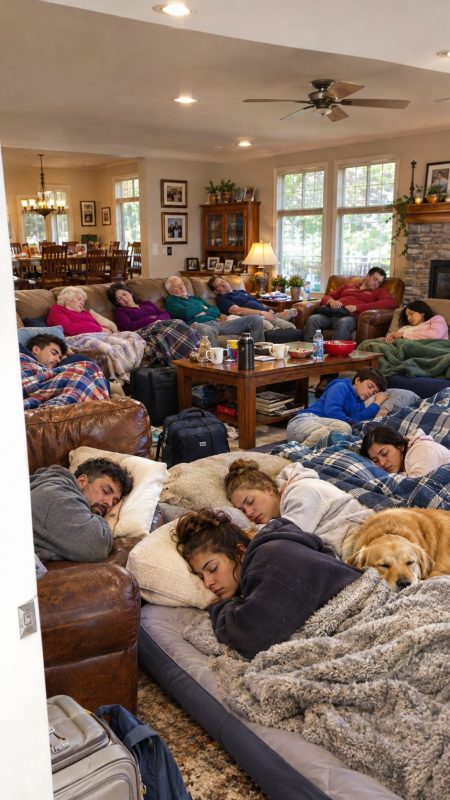
Mattresses covered the living room floor. Suitcases were piled against the walls. The dining table was buried beneath pizza boxes, plastic cups, and dirty plates.
A man I’d never seen before was asleep in my husband’s favorite recliner.
Two teenagers were watching television with their feet on my antique coffee table.
And the photographs that had stood on my fireplace mantel for years were gone.
Every single one.
Including the last picture I’d taken with Robert before he died.
“Excuse me,” I said, struggling to keep my voice steady. “Who are all these people?”
A middle-aged woman looked up from the sofa.
“Oh! You must be Margaret. Linda said you’d be staying away a little longer.”
I stared at her.
“Linda told you what?”
Before she could answer, someone called from the kitchen.
“Is that Margaret? Tell her we’re having breakfast in an hour!”
I felt as though I’d stepped into someone else’s life.
My name is Margaret. I’m sixty-two, and the house those strangers were occupying had belonged to my husband and me for more than thirty years.
Robert and I had purchased it when we were young, raising our daughter, Emily, while saving every spare dollar for repairs.
We’d painted the bedrooms ourselves, replaced the old kitchen cabinets, and planted the maple tree that now shaded the front porch.
Four years earlier, Robert had passed away.
After losing him, the house became my refuge.
Every corner held a memory.
Now, people I didn’t even know were treating it like a free vacation rental.
I immediately called Emily.
She answered cheerfully.
“Hi, Mom! Are you back?”
“Yes. And I’d like to know why fifteen strangers are living in my house.”
Her voice changed.
“Oh. You’re already home?”
“Emily, I told you my return date before I left.”
“I know, but David’s relatives needed somewhere to stay for their reunion. Linda said your house would be perfect.”
“Linda doesn’t own my house.”
“Mom, please. They’re family.”
“Not mine. And nobody asked me.”
Emily sighed loudly.
“They’re only staying one more night. Can’t you just be understanding?”
I looked toward the fireplace again.
“Where are your father’s photographs?”
There was a pause.
“Linda probably moved them to make room for decorations.”
I closed my eyes.
“Emily, you had a key because I trusted you.”
“Please don’t embarrass me in front of David’s family. I’ll explain everything later.”
Then she hung up.
I stood there, stunned.
I’d raised my daughter to be considerate and generous. Somewhere along the way, she’d begun confusing kindness with allowing other people to take advantage of her.
And now she’d dragged me into it.
A moment later, Linda appeared.
She was David’s mother, a woman who had never missed an opportunity to remind Emily how fortunate she was to have married into such a respectable family.
Linda descended the staircase wearing a luxurious silk robe.
My silk robe.
She was also carrying the blue porcelain mug Robert had given me for our twenty-fifth anniversary.
“Margaret!” she exclaimed brightly. “What a surprise!”
I looked at the mug.
“That’s mine.”
Linda glanced down.
“Oh, this old thing? It was in the cupboard.”
“So was my privacy, apparently.”
Her smile vanished.
“There’s no need to be rude.”
“Why are you hosting fifteen people in my house?”
She folded her arms.
“David’s family needed accommodation. Emily agreed. I assumed she’d cleared everything with you.”
“She didn’t.”
Linda shrugged.
“Well, everyone is settled now. It would be terribly inconvenient to move them.”
I couldn’t believe what I was hearing.
“Then I suggest they begin packing.”
She gave an irritated laugh.
“Margaret, don’t be dramatic. It’s only one more day.”
“This is my home.”
“And I’m sure Robert would have wanted you to share it with family.”
Hearing her use my dead husband’s name to justify her behavior made something inside me snap.
But I didn’t shout.
Instead, I looked at Linda and said quietly, “You know, I brought something interesting back from Florida.”
She appeared bored.
“How lovely.”
“I think you’ll want to see it.”
I went upstairs to my bedroom.
Someone had used my bed. An unfamiliar perfume lingered in the air, and my bedside table had been pushed against the wall.
I opened my suitcase and removed a small wooden box.
Inside was a sealed urn.
Next to it lay a yellowed envelope bearing my name in carefully written letters.
I’d received both items three days earlier.
At the time, I hadn’t understood why they had been entrusted to me.
Now, I suspected their arrival was no coincidence.
I carried the box downstairs.
Linda was sitting at the kitchen table, complaining to another guest about how difficult I was being.
I set the urn in front of her.
“Do you recognize this?”
She glanced at it.
Then her expression changed completely.
Her eyes widened. Her lips parted, and her hand tightened around my coffee mug.
“Where did you get that?”
“Florida.”
“From whom?”
“My sister, Helen.”
Linda rose so abruptly that her chair scraped across the floor.
“That should have been destroyed.”
I stared at her.
“Why?”
She looked toward the doorway.
“Lower your voice.”
“Why, Linda? Whose ashes are inside?”
Before she could respond, David entered.
He stopped when he saw the urn.
“Grandma Eleanor?”
Linda spun around.
“David, go back upstairs.”
But he remained where he was.
His face had gone pale.
“Margaret, how did you find that?”
I folded my arms.
“Perhaps someone could finally tell me why your grandmother’s ashes were left in a Florida storage unit.”
David looked at his mother.
For the first time since I’d known him, he seemed unwilling to follow her instructions.
“Because Mom was angry about Grandma’s will,” he answered.
“David!” Linda shouted.
“No, Mom. This has gone on long enough.”
He pulled out a chair.
Then, with Linda watching him in fury, he told me the truth.
Three years earlier, Eleanor had discovered irregular withdrawals from her bank accounts.
At first, she’d assumed someone had stolen her banking information.
But the transactions traced back to a person she’d trusted with access to her finances.
Her own daughter.
Linda.
Eleanor had confronted her privately and demanded an explanation.
Linda claimed she’d borrowed the money to cover household expenses and intended to repay it.
But the withdrawals had continued for months.
Heartbroken, Eleanor consulted an attorney and changed her estate plan.
Instead of leaving her remaining savings to Linda, she directed the money to a nonprofit organization that helped children from struggling families.
She also made arrangements to be buried beside her late husband.
But after Eleanor died, Linda learned she’d been excluded from the inheritance.
“She was furious,” David said quietly.
Linda interrupted.
“My mother wasn’t well. She was easily influenced.”
David shook his head.
“Grandma had medical assessments. Her attorney made sure she understood every decision.”
Linda’s cheeks reddened.
“You have no right to discuss private family matters with Margaret.”
I looked at the urn.
“Then why wasn’t Eleanor buried?”
David lowered his eyes.
“Mom refused to pay for the arrangements after the estate was settled. Grandma’s companion kept her ashes, hoping the family would eventually honor her wishes.”
I felt a deep sadness.
I’d known Eleanor as a warmhearted woman who sent handwritten birthday cards and always asked about Robert’s health.
She’d once told me that her happiest memories were simple family dinners, when everyone sat together without worrying about money.
And now her final wish had been ignored because of a dispute over an inheritance.
I removed the envelope from the box.
“My sister found this with the urn. It has my name on it.”
Linda reached for it.
“That should come to me.”
I pulled it away.
“It’s addressed to me.”
Then I opened it.
The letter was written in Eleanor’s familiar handwriting.
She explained that she’d grown increasingly lonely during her final years.
People who once visited simply to spend time with her had begun asking questions about her property, her savings, and what they would receive after her death.
She wrote about how painful it was to discover that affection could disappear the moment she stopped giving people what they wanted.
But she also remembered the kindness Robert and I had shown her.
Years earlier, when she’d been recovering from surgery, we’d invited her to stay with us for several days.
Robert had cooked soup, and I’d helped her tend the flowers in our backyard.
To us, it had been a small gesture.
To Eleanor, it had meant everything.
Near the end of her letter, she wrote:
“Margaret, never confuse being generous with allowing others to claim ownership of your life. A home should be a place where love is offered freely, not demanded as payment. Protect the memories you’ve built, and never apologize for asking others to respect them.”
I had to stop reading.
Tears blurred the page.
Eleanor hadn’t known what would happen in my house years later.
But her words seemed written for that exact moment.
I folded the letter and looked at Linda.
“Your mother wasn’t punishing you by changing her will. She was trying to protect what remained of her dignity.”
Linda stared at the table.
For once, she had no immediate reply.
Then I turned toward the living room.
Several guests had gathered near the kitchen entrance.
I spoke clearly enough for everyone to hear.
“I understand you were invited here for a family reunion. Unfortunately, the person who invited you had no authority to offer my home.”
An older gentleman stepped forward.
“Margaret, we were told you volunteered the house.”
“I did not.”
He looked genuinely embarrassed.
“Then I apologize. We never would have come if we’d known.”
I nodded.
“Thank you. I’m asking everyone to collect their belongings and leave today.”
A few people exchanged uncomfortable glances.
One woman asked whether they could finish breakfast first.
I answered calmly.
“You may take some food for the road.”
That settled it.
Within the hour, suitcases were being carried outside.
The mattresses disappeared from my living room.
People apologized as they left.
Linda remained in the kitchen, refusing to look at me.
When the last car pulled away, I finally sat down.
The house was a mess.
But it was mine again.
Emily arrived shortly afterward.
She found me standing beside the fireplace, holding Robert’s photograph.
“Mom?”
I looked at her.
“Did you know Linda had taken down your father’s pictures?”
Emily’s expression crumpled.
“No. I didn’t know she’d do that.”
“Did you know she was sleeping in my bedroom?”
She shook her head.
“Did you know strangers were using our belongings?”
“Mom, I’m sorry.”
I placed the photograph on the mantel.
“Emily, I gave you access to this house because you’re my daughter and I trusted you. You turned that trust into permission for someone else to take over.”
Tears spilled down her cheeks.
“I know I made a terrible mistake.”
“Then help me understand why.”
She sank onto the sofa.
For several minutes, she couldn’t speak.
Finally, she admitted something she’d been hiding.
“Linda has never liked me.”
I sat beside her.
“She constantly compares me to David’s ex-girlfriend. She says I’m not sophisticated enough, that my job isn’t impressive, and that I don’t understand how their family does things.”
My heart ached.
“Why didn’t you tell me?”
“Because I thought I could make her accept me.”
Emily wiped her face.
“When David mentioned the reunion, Linda complained that nobody had a big enough house. She kept saying that a devoted daughter-in-law would find a solution.”
“And you offered mine.”
Emily nodded miserably.
“I thought she’d finally see that I belonged in the family.”
I took her hand.
“Sweetheart, anyone who makes you prove your worth by sacrificing someone else’s happiness isn’t asking for love. They’re demanding control.”
She began crying harder.
“I was so afraid of disappointing her that I ended up hurting you.”
“Yes,” I said gently. “You did.”
She looked at me.
“Can you ever forgive me?”
“Of course I can. But we need to be clear about something.”
She nodded.
“You cannot give people access to my home without asking. You cannot make promises on my behalf. And you don’t have to keep pleasing someone who treats you badly.”
“I understand.”
“I hope you do.”
That afternoon, Emily stayed.
Together, we washed the dishes, stripped the beds, and cleaned the floors.
David arrived later with boxes of belongings his relatives had accidentally packed.
He apologized for not realizing how far his mother’s plans had gone and promised to support Emily in setting boundaries.
When he learned about Eleanor’s letter, he asked if he could read it.
I handed it to him.
He sat quietly for several minutes.
Then he wiped his eyes.
“I wish I’d stood up for Grandma when she was alive.”
I put a hand on his shoulder.
“You can’t change what happened. But you can decide what kind of man you want to be now.”
He nodded.
By evening, nearly everything was back where it belonged.
Robert’s armchair stood beside the window.
Our wedding photographs were once again arranged on the mantel.
Even my blue anniversary mug had been washed and returned to its shelf.
I made tea and sat down beside Emily.
She was holding a photograph she’d discovered while cleaning.
It showed the three of us sitting on the porch years earlier.
Robert was laughing, Emily had chocolate ice cream on her chin, and I was trying to hold her still long enough for the camera.
Emily smiled through fresh tears.
“Dad would’ve hated what I did.”
“He would have been upset,” I agreed. “But he would’ve wanted you to make things right.”
She leaned against me.
“I wish he were here.”
“So do I.”
We sat together in silence.
For the first time in days, the house felt familiar again.
Over the next month, Emily made real changes.
She stopped answering every demand from Linda.
She and David began making decisions together instead of allowing his mother to dictate their lives.
And when Linda complained that Emily had become selfish, my daughter calmly told her that respect was not something she had to earn through obedience.
I couldn’t have been prouder.
Meanwhile, I kept thinking about Eleanor.
Her ashes remained in my care while David helped arrange the necessary paperwork.
Finally, we were able to fulfill her last request.
Emily and I traveled to Florida, where a small memorial service was held beside Eleanor’s husband’s grave.
A few relatives attended.
David read a passage from one of her favorite books.
I placed a single white rose beside the urn before it was laid to rest.
Linda didn’t come.
She sent flowers but offered no explanation.
Perhaps one day she would understand what she’d lost.
Perhaps not.
That was no longer mine to decide.
When Emily and I returned home, she suggested planting roses beneath my front window.
“White ones,” she said. “For Eleanor.”
“And for your dad,” I added.
We spent a sunny afternoon preparing the soil and planting six rosebushes.
By the time we finished, our knees ached and our hands were covered in dirt.
We laughed about how Robert would have insisted we were planting them too close together.
That evening, we sat on the porch drinking iced tea.
The sky glowed pink above the neighborhood rooftops.
Emily was quiet for a while.
Then she turned toward me.
“Mom, can I ask you something?”
“Of course.”
“Would you like David and me to come over for dinner next Sunday?”
I smiled.
“I’d love that.”
She hesitated.
“I’ll call beforehand.”
I raised my glass.
“That would be a wonderful start.”
We both burst out laughing.
And in that moment, I realized something I’d been struggling to understand since Robert’s death.
I’d been so afraid of losing the people I loved that I’d sometimes allowed them to cross boundaries I should have protected.
I thought saying no would make me seem cold.
I thought insisting on respect might push my daughter away.
But the opposite had happened.
By finally standing up for myself, I’d given Emily permission to do the same.
My house was no longer filled with strangers.
My husband’s memories were safely back where they belonged.
Eleanor had been laid to rest beside the man she loved.
And my daughter and I had begun repairing a relationship that mattered more than any family reunion.
I didn’t need fifteen people under my roof to prove that I had a family.
I needed the people who entered my home to understand what it meant.
A home isn’t defined by how many guests it can accommodate or how much someone is willing to give away.
It’s defined by the love, trust, and respect shared by the people inside it.
And sometimes, the kindest thing you can do for yourself and those you love is to close the door on anyone who refuses to respect that.