I Heard My Housekeeper Ask Her Mother for $28 for Baby Formula—Then an Old Family Envelope Revealed Who Her Son Really Was
Twenty-eight dollars should have meant nothing to me.
That was the part I couldn’t stop thinking about.
My name is Adrian Whitmore, and by thirty-eight, I was running a construction company outside Boston where conversations about seven-figure contracts happened before most people finished their first cup of coffee.
I was used to large numbers.
Budgets.
Investments.
Property values.
Payroll.
So when twenty-eight dollars brought me to a standstill one rainy Tuesday morning, I knew something was wrong.
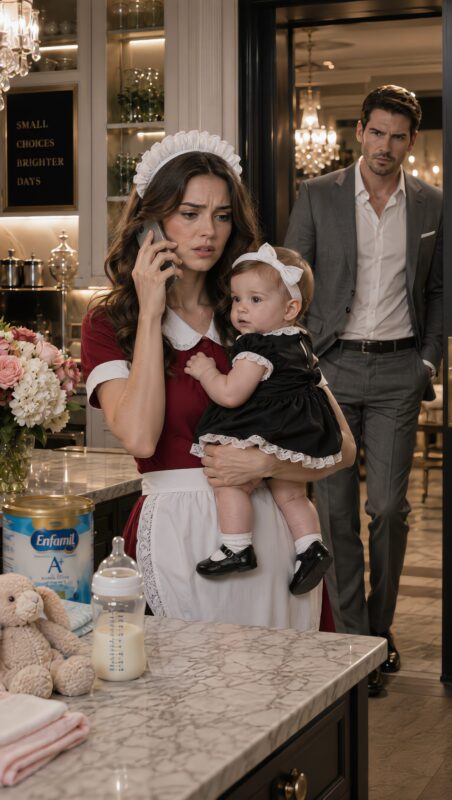
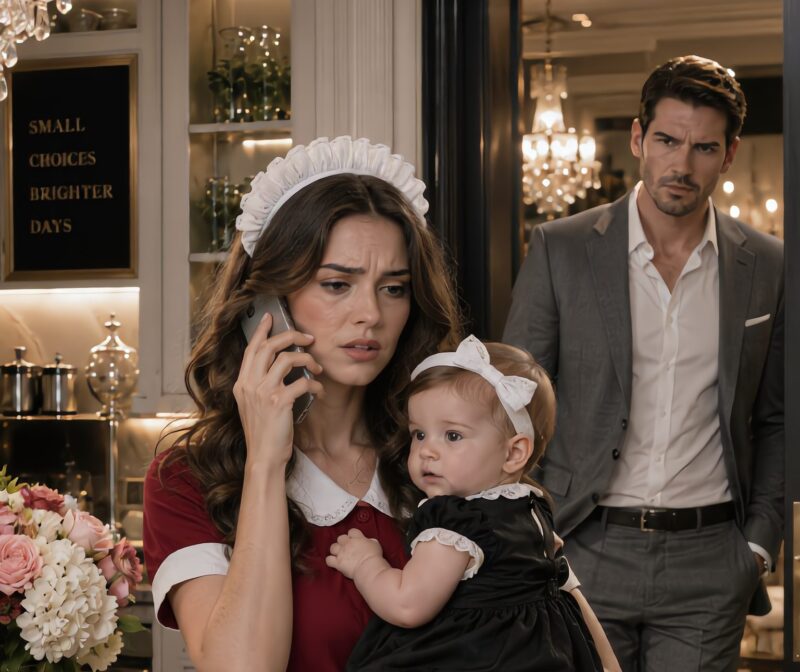
I had been heading toward the kitchen when I heard my housekeeper, Marissa Keane, speaking quietly on the phone.
“Mom, I hate asking, but could you lend me twenty-eight dollars?”
I stopped before turning the corner.
There was a pause.
“It’s for Owen’s formula. We’re almost out, and payday isn’t until Friday.”
Another pause.
Then her voice softened.
“No. Don’t take it from your grocery money. Forget I asked. I’ll find another way.”
I stepped backward before she could see me.
Marissa had worked in my home for seven months.
She arrived early.
She stayed late when necessary.
She never complained.
And not once had she asked me for money.
That morning, I sat at my desk and looked at her salary differently than I ever had before.
For the first time, I stopped seeing a payroll figure and started imagining what that number had to cover.
Rent.
Gas.
Electricity.
Transportation.
Childcare.
Diapers.
Food.
Formula.
I ran the numbers twice.
They technically worked.
Barely.
Only if nothing unexpected ever happened.
One doctor’s bill, one broken appliance, one rent increase, and the whole thing could collapse.
I leaned back in my chair.
I had paid her on time every month and convinced myself that meant I had done enough.
I hadn’t.
My first thought was to increase her pay.
But I wanted to do it without making her feel singled out or pitied.
So I opened her employment records.
That was when I saw her marital status.
Widowed.
Underneath was the name of her late husband.
Nathan Keane.
I stared at it for several seconds.
I knew that name.
Not from Marissa.
From my family.
Four years earlier, I had walked into my grandfather’s study and interrupted an argument between my father and Raymond Pierce, the attorney who had handled Whitmore family matters for decades.
They hadn’t noticed me at first.
Raymond was standing near the desk.
“Nathan was promised what was his,” he had said.
My father’s answer came immediately.
“Nathan Keane will never receive a cent from this family.”
Raymond looked furious.
“That wasn’t your decision to make.”
My father struck the desk with his palm.
“It is now.”
Then he saw me.
The room went silent.
Later, when I asked who Nathan was, my father dismissed it as an old legal dispute.
Then he told me not to mention the name again.
I never did.
Until I saw it attached to Marissa’s file.
That evening, after she finished work, I waited several minutes before leaving the house.
I had loaded my car with groceries, diapers, and several containers of formula.
I also carried an envelope of cash.
My plan was simple.
I would follow her home, wait until she was inside, then leave everything near her door without turning it into some humiliating act of charity.
Marissa lived in a modest apartment building nearly forty minutes away.
I parked across the street.
Before I could get out, another car arrived.
A black sedan.
The rear door opened.
Raymond Pierce stepped onto the sidewalk.
I sat motionless behind the wheel.
Of all the people I expected to see outside Marissa’s building, my family attorney was not one of them.
Raymond disappeared through the entrance.
I followed.
When I reached Marissa’s floor, her apartment door was partly open.
I heard her voice first.
“You can’t be here.”
Raymond answered quietly.
“I should have been here a long time ago.”
I stopped just beyond the doorway.
Marissa sounded frightened.
“Does Adrian know about this?”
“No.”
A long silence followed.
Then Raymond said, “Nathan left instructions for what should happen if anything happened to him.”
Marissa didn’t answer.
A moment later, I saw her cross the small apartment and open a drawer.
She removed an old blue envelope.
My chest tightened.
The paper was faded, but the embossed symbol on the front was unmistakable.
The Whitmore family crest.
I had seen that seal on private documents in my grandfather’s office since childhood.
Marissa handed the envelope to Raymond.
He carefully opened it.
Her voice shook.
“Nathan never wanted anything from the Whitmores.”
Raymond looked at her.
“That’s where you’re wrong.”
“What do you mean?”
“It was never theirs to give him.”
He placed the document on the table.
“It was already his.”
That was when I stepped into view.
Raymond noticed me first.
His face changed instantly.
Marissa turned.
“Mr. Whitmore?”
I entered the apartment.
“What was Nathan’s?”
Neither of them answered.
So I looked down at the papers spread across the table.
One carried my grandfather’s signature.
Another contained Nathan Keane’s legal information.
Then I reached the section listing his parentage.
I read the line.
Stopped.
Then read it again.
My grandfather’s name appeared where Nathan’s father should have been.
I looked at Raymond.
“No.”
He said nothing.
I looked back at the page.
Nathan Keane had not simply known my family.
He had belonged to it.
My grandfather was his father.
Which meant Nathan had been my father’s half brother.
And my uncle.
I slowly set the document down.
“How long has everyone known?”
Raymond exhaled.
“Your grandfather knew from the beginning. Your father learned the truth years later.”
“And Nathan?”
“He knew too.”
Marissa wiped her eyes.
Raymond continued.
“Your grandfather kept Nathan out of public family matters, but privately, he tried to provide for him.”
I looked around the apartment.
“This is what providing for him looked like?”
“No.”
Raymond’s answer was immediate.
“Before your grandfather died, he created a trust for Nathan.”
My attention snapped back to him.
“How much?”
“Enough that Marissa and her son should never have been struggling like this.”
Marissa looked away.
“Did Nathan refuse it?” I asked.
“Not exactly.”
Raymond hesitated.
“He refused the family name. He didn’t refuse what your grandfather legally left him.”
Then he looked directly at me.
“After Nathan died, the trust was supposed to pass to his child.”
I already knew.
“Owen.”
Raymond nodded.
“Yes.”
I turned toward the corner of the apartment.
A crib stood near the wall.
Beside the sink was an almost-empty container of formula.
Suddenly, twenty-eight dollars no longer seemed like a small number.
It felt enormous.
My cousin had been living in this apartment while money legally belonging to him remained locked away.
And my father had known.
I looked back at Raymond.
“Tell me he didn’t.”
Raymond remained silent.
That silence answered the question.
“My father stopped the transfer?”
“He made sure the documents disappeared from the active estate file.”
Marissa folded her arms tightly.
“Nathan told me your father hated the idea that anyone might find out.”
I felt my jaw tighten.
“Does he know you came here tonight?”
“No.”
“Then don’t tell him.”
Raymond studied me.
“What are you planning?”
I placed the papers neatly back on the table.
“Tomorrow, he explains everything.”
Marissa shook her head.
“I don’t want anything from the Whitmores.”
I turned toward her.
“This isn’t about the Whitmores giving you anything.”
“I won’t take charity.”
“It isn’t charity.”
I looked toward the crib.
“It belongs to Owen.”
Her eyes filled.
For the first time since entering the apartment, I remembered the bags in my car.
I went downstairs and carried them up.
Formula.
Diapers.
Bread.
Milk.
Fruit.
Vegetables.
Enough groceries to get her through the next couple of weeks.
The cash stayed in my pocket.
A handful of bills might help for a few days, but it wouldn’t fix the real problem.
Marissa needed security.
So did the other people who worked for me.
The next morning, before I went anywhere near my father, I ordered a full review of pay and benefits for every household employee.
By the end of the week, wages had been raised.
Childcare assistance was added.
So was emergency financial support for employees facing unexpected family expenses.
Then I went to my father.
He denied everything.
Then he claimed my grandfather had created the problem.
Then he blamed Nathan for refusing to “stay in his place.”
That was the moment I stopped trying to understand him.
The documents were clear.
The trust was legally Nathan’s.
After his death, it belonged to Owen.
Within weeks, the money was restored to my cousin under proper legal supervision.
But oddly enough, the trust wasn’t what stayed with me.
The phone call did.
Twenty-eight dollars.
That was all Marissa had needed.
Months later, she invited me to Owen’s first birthday party.
There were no chandeliers.
No expensive caterers.
No photographers.
Just family, a few friends, homemade food, balloons, and one very excited little boy who seemed determined to wear more cake than he ate.
I watched him press both hands into the frosting and smear it across his cheeks.
Marissa laughed.
Then she walked over carrying the old blue envelope.
She held it toward me.
“You should have this.”
I shook my head.
“No.”
“It has your family crest on it.”
“So?”
She looked confused.
I nodded toward Owen.
“It belongs to his family now.”
Marissa looked down at the envelope.
“What should I do with it?”
“Keep it.”
“For what?”
“For when he’s old enough to understand.”
Her expression softened.
I continued.
“Tell him who Nathan was. Tell him his father mattered. Tell him no one gets to erase him just because the truth was inconvenient.”
Marissa’s eyes filled with tears.
Then she smiled.
“What should I tell him about you?”
I looked across the room.
Owen had frosting in his hair now.
I laughed and walked toward him.
“Tell him I took too long to realize he was family.”
He reached both sticky hands toward me.
I picked him up anyway.
Then I looked back at Marissa.
“But once I found him, I wasn’t going anywhere.”