I married an elderly woman because I needed shelter, not because I loved her. I believed that if I stayed beside her long enough, one day her home and savings would become mine. But after she was buried, her lawyer handed me a weathered wooden box and quietly said, “Margaret asked me to give you this. She believed it contained the only inheritance you would ever truly need.”
When I first knocked on Margaret’s door, I was twenty-six years old, overwhelmed by debt and sleeping in the driver’s seat of an old pickup parked behind a warehouse. Every paycheck disappeared before it reached my hands, and every night I wondered how much longer I could keep pretending life would improve.
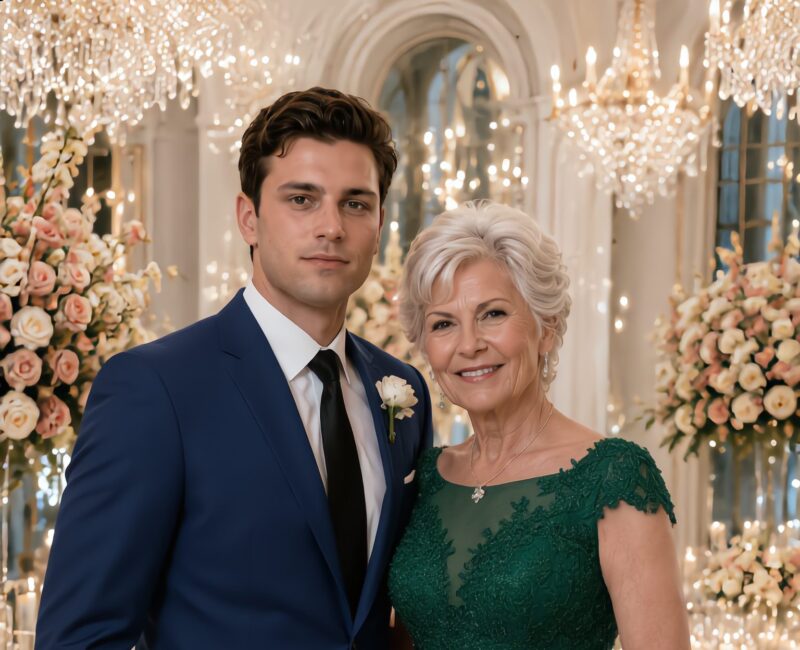
Margaret was seventy-three, a retired school librarian who had spent nearly a decade alone after losing her husband. Her little white house wasn’t luxurious, but it felt peaceful. She spoke softly, smiled often, and never made anyone feel unwelcome.
I saw security.
She saw a broken young man.
Our marriage wasn’t built on romance—at least not from my side. I convinced myself I was simply making a practical decision. I would be patient, play the role of a caring husband, and eventually inherit enough to leave my miserable life behind forever.
What I never understood was that Margaret recognized my true intentions almost immediately.
Yet she never judged me.
Instead, she filled every empty corner of my life with quiet acts of kindness.
She always made breakfast before I woke up. When she noticed my shirts were worn thin, she bought new ones without mentioning it. During my first winter in her house, I found heavy gloves and a thick scarf folded neatly beside the door.
“I don’t want you catching cold,” she said with a warm smile before pouring me another cup of coffee.
To her, those gestures were natural.
To me, they barely registered.
I remained focused on only one thing.
Time.
Whenever she mentioned a doctor’s appointment, I secretly wondered whether something serious had been discovered. Whenever she organized old paperwork or paid another medical bill, I caught myself imagining the future I expected to inherit.
Today those memories disgust me.
Back then, I called it planning ahead.
Then one rainy afternoon everything changed.
Margaret collapsed while watering flowers in the backyard.
The ambulance arrived within minutes.
She never returned home.
At her funeral, I could almost hear the accusations before anyone spoke.
“There stands the man who married her for convenience.”
“He waited for this day.”
No one bothered hiding their contempt.
I couldn’t even blame them.
After the service, everyone gathered at the attorney’s office for the reading of her will.
The house went to a local community foundation that would turn it into temporary housing for struggling families.
Her savings funded scholarships for children who couldn’t afford college.
I wasn’t mentioned.
For several long seconds, I simply stared at the attorney.
Then he reached beneath his desk and placed a small wooden box in front of me.
My name had been carved into the lid by hand.
“What is this?” I asked.
He smiled sadly.
“She said that when the time came, this would matter far more than money.”
I slowly lifted the lid.
Inside were dozens of handwritten letters tied together with blue ribbon.
Each letter described a different ordinary moment from our life together.
“The first night he slept without waking from nightmares.”
“Today he laughed while repairing the fence.”
“He still apologizes every time someone helps him.”
There were also small keepsakes I had completely forgotten.
A bus ticket from the day we met.
The receipt from the diner where we shared our first meal.
The broken keychain I thought I had lost years earlier.
At the bottom rested one final envelope.
It was addressed simply:
To My Husband.
I unfolded the pages with trembling hands.
“My dear,
You believed you came into my life because you needed my house.
I always believed you came because you needed someone who expected nothing from you.
The world convinced you that every kindness has a price.
I wanted to prove that wasn’t true.
If I had left you my money, you might have spent it and remained the same frightened young man who first stood on my porch.
Instead, I leave you something wealth can never purchase.
I leave you the evidence that every version of you—even the one you tried to hide—was worthy of compassion.
If these memories teach you to love yourself even a little more than you did yesterday, then I have left you richer than any bank account ever could.
Please don’t waste the years ahead chasing possessions.
Spend them becoming the person you were always meant to be.”
By the time I reached the last sentence, I couldn’t see through my tears.
I had entered Margaret’s life hoping to inherit her property.
Instead, she left me something far greater.
She gave me dignity when I believed I had none, forgiveness I never asked for, and the courage to become a better man.
That wooden box contained no fortune.
Yet it remains the most valuable inheritance anyone has ever received.