MY FAMILY LEFT ME OUT OF CHRISTMAS FOR FIFTEEN YEARS—BUT WHEN GRANDMA LEFT ME HER COASTAL HOUSE, 23 RELATIVES SUDDENLY REMEMBERED I EXISTED
The first Christmas my family excluded me, I assumed someone had made a mistake.
By the fifth, I knew better.
By the fifteenth, I no longer waited for an invitation.
Every December, the evidence appeared online anyway.
There was Mom beside an enormous decorated tree.
Dad carving dinner.
My sister Lauren wearing matching pajamas with our cousins.
Aunts, uncles, children, spouses—everyone crowded together for photographs.
Someone would inevitably post:
“Christmas means being surrounded by the people you love.”
Or:
“The whole family under one roof again!”
I wasn’t angry at the captions anymore.
Mostly, I found them revealing.
Because apparently their definition of “whole” had twenty-three people in it.
And I wasn’t one of them.
In the beginning, I confronted my parents.
“Why didn’t anyone tell me about Christmas dinner?”
Mom always acted surprised.
“We assumed you had plans, Nora.”
“What plans?”
“You’re always working.”
Dad would immediately become irritated.
“It’s Christmas. Do we really need to start an argument?”
Lauren eventually stopped pretending.
“You change the atmosphere when you’re there.”
That one stayed with me.
So I made things easier for everyone.
I stopped asking to be included.
Some Christmases I volunteered to work.
Other years, I stayed home with takeout and a movie.
I learned that loneliness hurt less when you expected it.
There was one exception.
Grandma Ruth.
She never invited me to the big family Christmas because she knew it wasn’t really her gathering to control.
Instead, every December 26, she called.
“I’ve got leftover pie.”
That meant: Come over.
I always did.
Grandma lived in a weathered cedar house overlooking the Maine coast.
We’d sit at her old kitchen table while winter wind rattled the windows and eat pie from blue ceramic plates.
She rarely asked why I hadn’t been invited the day before.
She knew.
Sometimes knowing was kinder than forcing me to explain.
Grandma died in October.
I thought losing her would be the hardest part.
Then my relatives started calling.
At first, I mistook their sudden attention for concern.
It wasn’t.
“Nora, did Ruth ever discuss the house with you?”
“Do you know what’s happening with the beach property?”
“We should probably organize next summer before everyone starts booking flights.”
Grandma hadn’t even been buried a week.
Nobody asked how I was doing.
They wanted the house.
For decades, my relatives had referred to it as “our Maine place.”
It wasn’t.
It had always belonged to Grandma.
The family simply treated it as if ownership were communal whenever that benefited them.
People arrived without warning.
They brought friends Grandma didn’t know.
Children tracked sand through the rooms.
Furniture got damaged.
Bathrooms were left filthy.
Someone once broke a bedroom window and didn’t mention it until rain damaged the wall beneath it.
Grandma paid for everything.
Whenever she complained, Patricia—my mother’s older sister—would laugh.
“That’s what happens when you’re the lucky one with the beach house.”
Grandma usually smiled.
But I noticed when the smile disappeared.
I was the person she called when something needed fixing.
I replaced damaged cabinet hinges.
I repainted the guest room after one particularly destructive summer.
When driving became difficult for her, I took her to appointments.
When she was tired, we sat without talking.
I never considered those things favors.
She was Grandma.
That was enough.
Apparently, she remembered.
At the will reading, Aunt Patricia arrived with a notebook.
A notebook.
She had already started planning how the property would be divided.
“We’ll need a reservation system,” she announced before the attorney even began. “Each branch of the family should get equal summer weeks.”
Lauren nodded.
“Christmas should probably rotate.”
The attorney waited until they finished.
Then he opened Grandma’s will.
“The coastal residence and its associated property have been left to Nora.”
Patricia stared at him.
“Left to Nora to manage?”
“No.”
He adjusted his glasses.
“Left to Nora.”
The room became so quiet I could hear someone tapping a shoe against the floor.
Mom turned toward me.
“Did you know about this?”
“No.”
Patricia leaned forward.
“Ruth wouldn’t exclude the family from that house.”
The attorney looked directly at her.
“Her instructions are quite specific.”
That should have ended the conversation.
Instead, everyone simply changed strategies.
By December, my phone was overflowing with messages.
Lauren: We want the ocean bedroom this year.
Patricia: Make sure the heat is turned up before we arrive.
Blake: Bringing two friends. Hope that’s okay.
He didn’t wait for an answer.
Mom sent a list of groceries “we’d need.”
Nobody asked permission.
They seemed to believe Grandma had given me legal ownership while somehow leaving them permanent access.
I didn’t correct them.
There was no point arguing over text messages.
December 23 arrived cold and windy.
At 2:17 that afternoon, four rental vans turned into the driveway.
I counted them from the front window.
Doors opened.
Out came suitcases.
Coolers.
Wrapped presents.
Boxes of food.
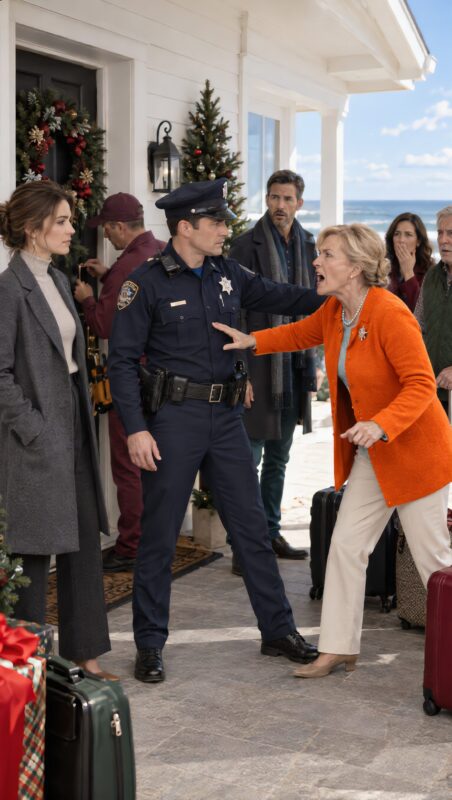
Twenty-three relatives prepared to move into a house where none of them had been invited.
I put on my coat and walked onto the porch.
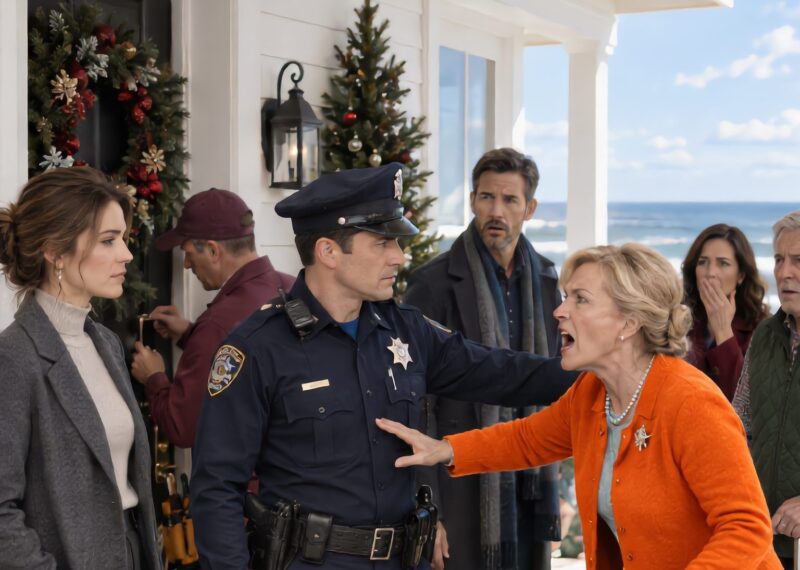
Sheriff Callahan was already standing near the steps.
Aunt Patricia emerged from the first van.
“Nora!”
She pointed toward the front door.
“Open up before the children freeze.”
“They aren’t coming inside.”
Patricia stopped.
Blake laughed from behind her.
“Come on. Enough with the performance.”
“There isn’t a performance.”
I looked across the driveway.
“You need to leave.”
Mom’s mouth fell open.
“Excuse me?”
“This house isn’t available for Christmas.”
Lauren dragged a suitcase from the van.
“We’ve celebrated here before.”
“You’ve stayed here before. That’s different.”
Patricia marched closer.
“This property has belonged to our family for decades.”
“No. It belonged to Grandma.”
“And now you think it belongs only to you?”
“Legally? Yes.”
Her face reddened.
“You selfish little—”
Sheriff Callahan stepped forward.
“I’d be careful how you finish that sentence.”
Patricia finally seemed to notice him.
“Why is law enforcement here?”
“Because Mrs. Ruth requested it.”
That changed the atmosphere.
I removed an envelope from my coat.
Grandma’s handwriting was across the front.
FOR NORA—IF THEY SHOW UP.
My hands shook when I opened it.
The message inside was short.
Grandma wrote that she knew certain relatives would treat my inheritance as if nothing had changed.
She wanted me to understand that I owed them no access.
No vacations.
No Christmas gatherings.
No keys.
If I refused them entry, I wasn’t being selfish.
I was following her wishes.
Patricia shook her head.
“I don’t believe that.”
Sheriff Callahan produced another document.
“You don’t have to.”
Grandma had placed the property under a private trust.
I controlled access.
Without written authorization, nobody had permission to occupy the residence.
Anyone refusing to leave after being notified could be treated as a trespasser.
Blake looked stunned.
“You seriously planned all this just to humiliate us?”
“I didn’t plan it.”
Sheriff Callahan answered.
“Ruth did.”
Mom walked toward me.
Her voice softened.
“Nora, we’re family.”
I almost laughed.
Instead, I asked:
“Were we family last Christmas?”
She looked away.
“The Christmas before that?”
No answer.
“How about fifteen years ago?”
Dad finally spoke.
“We made mistakes.”
“Fifteen identical mistakes?”
Lauren rolled her eyes.
“So this is revenge.”
“No.”
I looked toward Grandma’s house.
“This is the first time I’ve stopped letting you decide when I’m considered family.”
Patricia pointed toward the envelope.
“Ruth would never have wanted this.”
The sheriff glanced at me.
That was my cue.
Because Grandma hadn’t left only a letter.
She’d left records.
Years of them.
Every damaged item after family visits.
Every cleaning bill.
Every unpaid expense.
Every time someone borrowed money and failed to return it.
There were bank withdrawals Grandma couldn’t properly account for.
There were emails from relatives pressuring her to cover vacation expenses.
There were even calendar notes showing medical appointments she’d canceled because relatives announced they were arriving and expected her to host them.
Grandma had written names beside the entries.
Dates too.
Patricia reached toward the folder.
“I want to see that.”
“You’ll get your opportunity,” a voice said behind us.
Everyone turned.
Grandma’s estate attorney was walking up the driveway carrying a briefcase.
He joined us on the porch.
“The trust is conducting a financial review of Mrs. Ruth’s records,” he explained. “Where evidence supports improper use of her assets, reimbursement may be sought.”
The anger disappeared from several faces.
One cousin immediately stopped talking.
Another quietly returned a suitcase to the van.
The attorney continued.
“For clarity, previous access to this property created no continuing right to use it. All informal family access ended upon Ruth’s death.”
Patricia began crying.
Blake called the entire situation insane.
Lauren accused me of manipulating Grandma.
Mom repeated that we were destroying Christmas.
That was the sentence that finally made me respond.
“No.”
Everyone looked at me.
“You destroyed Christmas years ago. I’m just not providing the house this time.”
Dad approached after several minutes.
He looked exhausted.
“Nora, please.”
I waited.
“We didn’t reserve anywhere else.”
For a moment, I nearly gave in.
That old instinct returned immediately.
Be agreeable.
Don’t make people angry.
Don’t ruin the holiday.
Then I remembered sitting alone in my apartment while scrolling past pictures of them celebrating together.
Fifteen years.
Nobody had worried about where I would spend Christmas.
So I gave Dad the same consideration.
“There are several hotels along the coast.”
He stared at me.
Then slowly turned away.
By four o’clock, people were climbing back into the vans.
By sunset, the final vehicle disappeared beyond the trees.
I stood outside until I could no longer hear the engines.
Then I went inside.
The silence felt enormous.
But it didn’t feel lonely.
I lit the fireplace.
In the kitchen, I opened the freezer and found one of Grandma’s pies.
She had made several before becoming too ill to bake.
I cut myself a slice.
Then I took out her favorite blue plate.
The first bite broke me.
I sat at the kitchen table and cried harder than I had at the funeral.
Because suddenly I could hear her voice again.
I’ve got leftover pie.
For fifteen years, Grandma had given me a place to go the day after everyone else decided I didn’t belong.
Now she had given me that place permanently.
The estate investigation continued into spring.
Some money was eventually recovered.
I directed part of it toward a coastal literacy and library program Grandma had supported.
And despite what my relatives predicted, I didn’t lock the house away from everyone.
Quite the opposite.
Grandma’s former nurse visited.
Her neighbors came for dinners.
Her book-club friends drank coffee on the porch.
People stayed in the guest rooms.
The difference was simple.
They had loved Grandma even when there was nothing to gain from her.
The following Christmas, cards arrived.
Some contained apologies.
Some asked whether enough time had passed for everyone to “move forward.”
A few mentioned how much the children missed Christmas at the beach.
Most stayed in a drawer.
Maybe one day I’d read them.
Maybe I wouldn’t.
I no longer felt responsible for making everyone comfortable.
My family spent fifteen years telling me my exclusion was accidental.
Too busy.
Forgot to call.
Assumed I had plans.
Grandma never believed those excuses.
She had been watching the entire time.
And when she realized the people who repeatedly forgot her granddaughter would never forget the value of her house, she prepared for the day they would come knocking.
Twenty-three relatives eventually did.
They arrived expecting keys.
Bedrooms.
Food.
Another holiday paid for by someone else.
Grandma had left them something instead.
A locked door.
A documented history.
And one final reminder:
Family isn’t defined by who shows up when there’s something to inherit.
It’s defined by who made room for you when there was nothing to take.