My sixty-ninth birthday began with a gift I never expected from my son.
Michael arrived at my door holding a velvet-blue box from an expensive chocolatier. A pale ribbon was tied around it, and the card inside read:
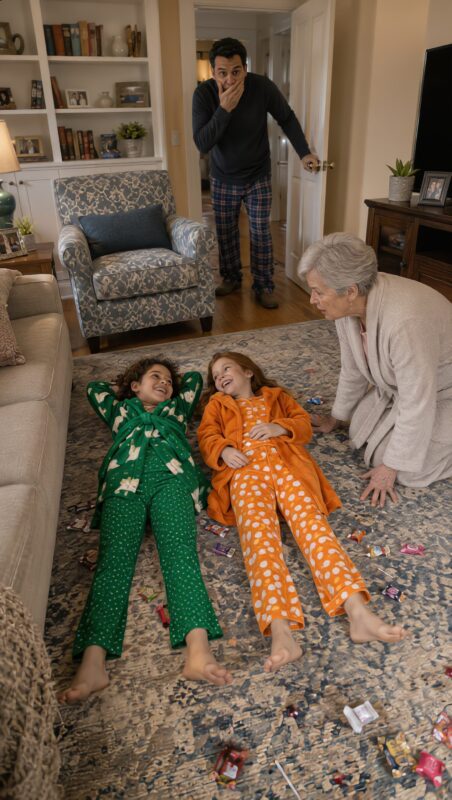
For the woman who gave me everything. Happy Birthday, Mom.
I almost cried when I read it.
Since my husband, George, died, Michael had become distant. We had adopted him when he was barely two years old, after a terrible accident took his parents. George and I had devoted our lives to him. I believed that was what love required: patience, forgiveness, and the willingness to give a child another chance.
Even after he became an adult, I kept giving him chances.
The chocolates looked far too beautiful to eat alone. Each piece was shaped like a tiny jewel and dusted with gold.
That afternoon, I visited Michael’s wife, Emma, and their children, Lily and Owen.
“Michael brought these for my birthday,” I told them. “But I thought the four of us should enjoy them together.”
The children were delighted.
The next morning, Michael called.
“Did you eat the chocolates?” he asked.
“No,” I said. “Emma and the children had them.”
There was a silence so sharp that I stopped breathing.
“You gave them to my family?” he said.
“Yes. Why are you asking?”
“Did they finish the box?”
His voice was wrong—tight, frightened, almost desperate.
Then he snapped at me for giving away something valuable and ended the call.
Less than an hour later, Emma phoned from the emergency department.
Lily and Owen had become dangerously ill.
Doctors were testing the chocolates.
The results were devastating. They contained a lethal toxic substance.
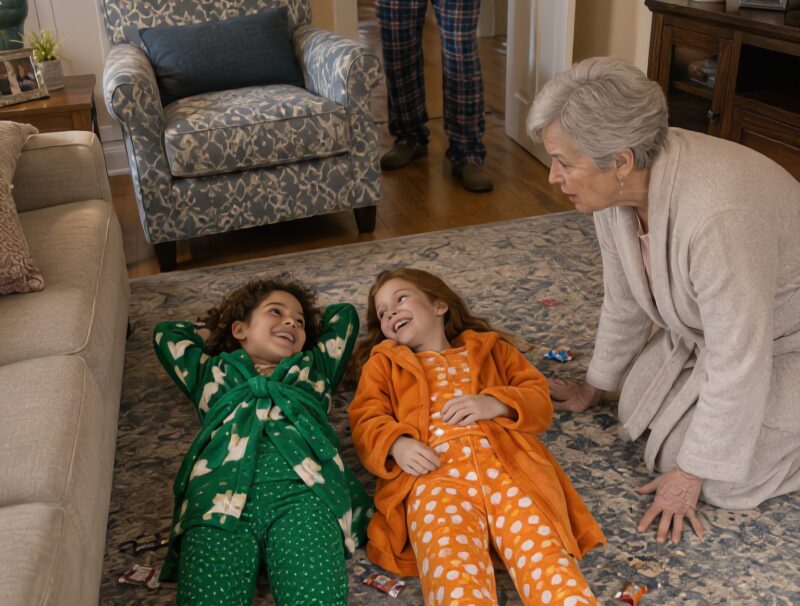
At that moment, Michael’s panic made sense.
The box had been intended for me.
Not long after the children were admitted, Michael disappeared. I found him at my sister Helen’s apartment, sitting in her kitchen with both hands over his face.
I did not ask where he had been.
I asked only one thing.
“How could you?”
He lifted his head slowly.
There was no remorse in his expression.
“There is money sitting in your accounts,” he said. “I need it, and I cannot wait for you to die naturally.”
George and I had saved nearly two hundred thousand dollars. Michael knew about the money because he had once helped me organize insurance papers after George’s funeral.
He had gambling debts, bills he had hidden from Emma, and people demanding repayment.
“You endangered your own children,” I said.
“They were never supposed to touch the box,” he replied. “You were.”
For years, I had told myself that Michael’s mistakes came from pain, insecurity, or bad luck. I had covered his rent, paid off small debts, and believed every promise that he would change.
That day, I saw the truth.
I had not been helping him become better.
I had been teaching him that someone else would always clean up the damage.
“I am done protecting you,” I told him.
He gave a humorless smile.
“You will not do anything. You have never been able to punish me.”
Perhaps he was right about the woman I had once been.
But I was no longer willing to be that woman.
I called my attorney, Margaret, and told her everything. She contacted law enforcement and arranged for a forensic investigator to examine Michael’s finances.
The evidence came quickly.
There were online searches about inheritance, toxic substances, and life-insurance payouts. There were hidden loan accounts, overdue gambling payments, and documents that showed Michael had been trying to secure money connected to my death.
Emma found more proof at home.
Michael had been telling her that I hated her. He told me that Emma thought I was intrusive and manipulative. He made sure we stayed polite but distant, never close enough to compare what he said behind our backs.
When the truth came out, Emma and I finally spoke openly for the first time in years.
Then Michael arrived at my house with a suitcase.
I saw him through the doorbell camera before he rang.
Margaret had warned me not to open the door. I called the police and locked myself in the bedroom.
“Mom!” Michael shouted from the porch. “Please, let me explain.”
I stayed silent.
His voice rose.
“You are ruining everything!”
A moment later, it softened.
“I was scared. I made a terrible mistake.”
For a second, I remembered the shy little boy who used to fall asleep holding George’s old sweater.
Then I remembered the children in the hospital.
“This was not a mistake,” I said through the locked door. “You made a plan.”
Michael admitted that the people he owed money to had threatened him.
“You could have asked me for help,” I told him.
“You would have refused.”
“You never asked.”
Then he said something that took away the last piece of hope I had left.
“It would have been painless.”
Police vehicles arrived moments later.
Michael tried to walk away, but officers stopped him at the end of the driveway. A search of his car uncovered another matching box of chocolates, prepared for the same purpose.
Afterward, I changed my estate plan. I placed funds in a trust for Lily and Owen, protected from their father’s control.
They were innocent.
They deserved a future untouched by his choices.
A year later, on my seventieth birthday, Emma brought the children to my house.
Owen handed me a small cardboard box he had decorated himself.
Inside were three ordinary chocolates wrapped in bright foil.
“Mom says we should always know what is in our food,” he told me.
I smiled and kissed his forehead.
“Your mom is very wise.”
Michael thought my love would make me helpless.
He did not understand that love can survive without surrender.
I did not carry hatred into the future.
But I no longer mistook forgiveness for a reason to leave the door open.