Two days after leaving home to share an apartment with his childhood best friend, my eighteen-year-old son appeared on our doorstep, trembling and fighting back tears.
“Mom, I found something you need to explain. And whatever you do, please don’t tell Ben I’m here.”
He stepped inside, locked the door, and placed a stack of papers on the kitchen table.
At the top was a DNA test report.
I glanced at the results, and my stomach tightened.
My son, Luke, shared 24.7% of his DNA with Ben Callahan, the boy he’d considered his closest friend since childhood.
The report identified their most likely relationship as biological half-brothers.
Then Luke showed me another document.
It listed the same sperm donor identification number for both boys.
4127.
“Mom,” he whispered, “you’ve known about this my entire life, haven’t you?”
I couldn’t deny it.
The secret we’d protected for eighteen years had finally found its way into our son’s hands.
My name is Sarah Whitman. My husband, Michael, and I raised our only child in a quiet neighborhood in Kansas City.
Our son, Luke, had always been the center of our world.
From the time he could walk, his constant companion was Benjamin Callahan, whose mother, Dana, lived just a few streets away.
The boys met at a neighborhood playgroup before their first birthdays.
They learned to ride bicycles together, attended the same elementary school, and eventually became teammates on their high school baseball team.
They were practically inseparable.
Ben spent so much time at our house that Mike jokingly called him our second son.
Their resemblance made the friendship even more remarkable.
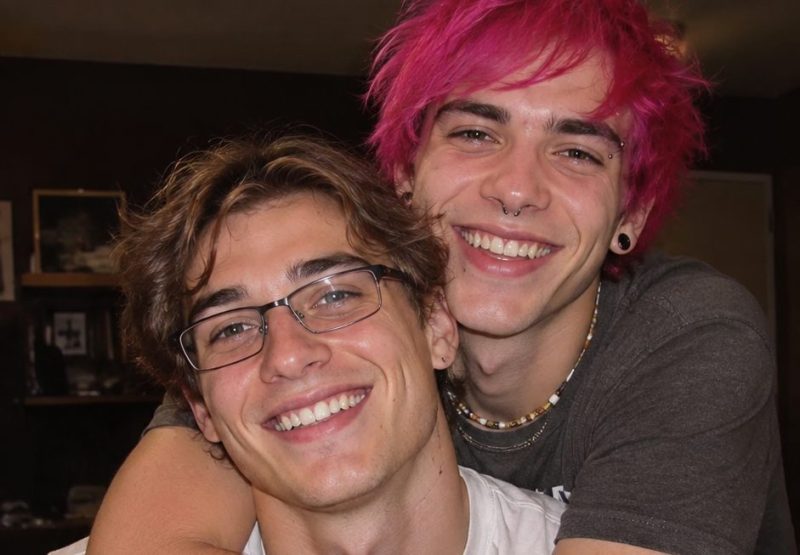
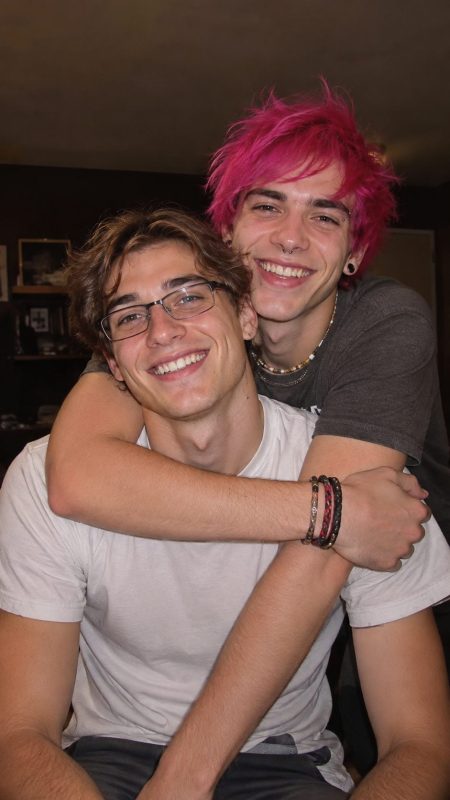
Both boys had dark, slightly wavy hair, gray-green eyes, and deep dimples that appeared whenever they laughed.
Teachers occasionally confused them.
Strangers regularly assumed they were twins.
The boys thought it was hilarious.
Sometimes they deliberately wore matching shirts just to confuse people.
But behind our laughter was a truth Dana and I had carried for nearly two decades.
The boys weren’t merely best friends.
They were brothers.
That Thursday afternoon, Luke sat across from me, staring at the DNA report.
“Tell me the truth, Mom. Is Dad really my father?”
I reached toward him.
“Luke, your dad is the man who raised you.”
He pulled his hands away.
“That’s not what I asked.”
His voice cracked.
“Is he my biological father?”
I lowered my eyes.
“No, sweetheart.”
Luke leaned back, stunned.
For a long moment, neither of us spoke.
Then he asked the question I’d feared for years.
“Why would you hide something like this from me?”
I took a deep breath.
“Because we were afraid that telling you would change everything. But that was our mistake, and I’m sorry.”
Nineteen years earlier, Mike and I had been married for several years and desperately wanted a child.
We’d imagined birthday parties, school mornings, and family vacations.
Every month, we hoped for good news.
Every month, we were disappointed.
Eventually, we sought medical help.
After several examinations, a specialist explained that Mike couldn’t conceive a child using his own sperm.
The diagnosis devastated him.
He had always imagined becoming a father.
He dreamed of building model airplanes with his son, teaching him to fish, and passing on the carpentry skills he’d inherited from his own father.
For weeks, Mike struggled to accept what the doctor had told us.
One evening, I found him sitting alone in the garage.
He was holding a small wooden rocking horse he’d started making for the baby we hoped to have.
“I wanted to give you a family,” he whispered.
I sat beside him.
“We can still have a family, Michael. We just might need a different path.”
After months of discussions, research, and medical consultations, we decided to try donor insemination.
The fertility clinic provided information about potential donors.
Mike wanted someone whose appearance resembled his own.
After reviewing several profiles, we selected donor #4127.
He was described as tall, with brown hair, gray-green eyes, and a university degree in chemistry.
The clinic also provided the medical and family-history information available at the time.
Several months later, I became pregnant.
I’ll never forget telling Mike.
I walked into the kitchen holding the positive pregnancy test.
He stared at it for several seconds.
“Sarah… is that what I think it is?”
I nodded.
His eyes filled with tears.
Then he lifted me into an embrace.
“We’re going to have a baby.”
During my pregnancy, I began attending meetings for expectant mothers.
That’s where I met Dana Callahan.
She was cheerful, thoughtful, and expecting her first child.
We quickly became friends.
We shared pregnancy stories, exchanged recommendations, and talked about our hopes for motherhood.
One afternoon, Dana mentioned that she’d conceived with the help of a sperm donor.
I told her that Mike and I had done the same.
Naturally, we started discussing the process.
Dana described the donor she’d chosen.
He was tall, had brown hair and gray-green eyes, and had studied chemistry.
I suddenly felt uneasy.
The description sounded exactly like ours.
“Do you remember the donor’s identification number?” I asked.
“Of course,” she answered. “It’s 4127.”
I stared at her.
“Dana, that’s our donor.”
She blinked.
“What?”
I repeated the number.
Her hand flew to her mouth.
We sat in stunned silence before realizing what it meant.
Our babies would have the same biological father.
At first, the coincidence seemed almost unbelievable.
But the clinic confirmed that the same donor identification number appeared in both sets of records.
Luke was born on March 11.
Thirteen days later, on March 24, Dana welcomed Ben.
Because our friendship had grown so strong, we spent countless afternoons together after the boys were born.
They crawled across the same living room floors and played with the same toys.
Before long, they were taking their first steps side by side.
As the years passed, their friendship became one of the most important parts of their lives.
Mike loved having Ben around.
He coached both boys in baseball, fixed their broken bicycles, and taught them how to build wooden birdhouses.
Dana often joked that Mike had enough patience for six children.
But despite how naturally our families fit together, there was one subject we rarely discussed.
The donor.
Mike feared that Luke might feel differently about him if he learned the truth.
One night, when Luke was still little, Mike admitted his greatest worry.
“What if he grows up and tells me I’m not his real dad?”
I held his hand.
“He would never stop loving you.”
Mike looked toward Luke’s bedroom.
“I know that in my head. But I can’t stop worrying.”
Dana had similar concerns.
She feared that relatives might treat Ben differently or that learning about their biological relationship could complicate the boys’ friendship.
Eventually, we made a decision.
We would raise the boys knowing each other as friends and explain their shared biological background when they were old enough to understand.
We agreed that eighteen would be the right age.
At the time, it seemed like a sensible plan.
But life moved quickly.
The boys started school.
They joined sports teams.
They celebrated birthdays, attended summer camps, and began making plans for college.
Each passing year made the conversation feel more difficult.
When their eighteenth birthdays arrived, we found excuses to delay it again.
Luke was preparing for graduation.
Ben was busy with exams.
Both were excited about moving into an apartment together.
We convinced ourselves that another few weeks wouldn’t matter.
We were wrong.
Unknown to us, Ben had recently taken a commercial DNA test.
He’d wanted to learn more about his ancestry.
When his results arrived, the testing service identified Luke as a close biological relative.
Luke had submitted a DNA sample through an ancestry kit years earlier, and his results were still available for relative matching.
The report estimated that the boys shared 24.7% of their DNA.
The predicted relationship was half-siblings.
Ben initially assumed there had been a mistake.
Then he remembered how often people commented on their resemblance.
At their graduation celebration, he showed Luke the report.
Both boys were bewildered.
After moving into their new apartment, they began looking for answers.
They compared their birth records and searched through family documents.
Eventually, they found an old folder belonging to Dana.
Inside were details about the fertility clinic and donor #4127.
The same identification number appeared in the documents Luke later obtained from our family’s records.
Suddenly, the resemblance, the shared birthdays, and the close relationship between our families made sense.
The boys were biological half-brothers.
Luke was so overwhelmed that he came straight home.
Now he sat opposite me, his eyes red.
“Mom, do you understand what this means?”
“I do.”
“I’ve spent my entire life calling Ben my best friend, and he’s actually my brother.”
I nodded.
He looked down.
“But that isn’t what scares me.”
“What does?”
He struggled to find the words.
“What happens when Dad finds out I know?”
I moved closer.
“Your father loves you, Luke.”
“I know he does. But what if he thinks I’ll see him differently?”
Before I could answer, we heard Mike’s truck in the driveway.
The front door opened a moment later.
“Hey, everybody! I’m home.”
Mike walked into the kitchen carrying his work bag.
Then he noticed Luke’s expression.
“What’s wrong?”
His eyes moved toward the paperwork.
I watched the color drain from his face.
He understood immediately.
Luke stood.
“Dad, can I ask you something?”
Mike placed his bag on the floor.
“Anything, son.”
“Did you know Ben and I have the same biological father?”
Mike closed his eyes briefly.
“Yes.”
Luke swallowed.
“And you aren’t my biological father?”
“No,” Mike answered gently. “I’m not.”
“Why didn’t you tell me?”
Mike pulled out a chair.
“Because I made a mistake, Luke. A big one.”
He paused.
“I was afraid that if you knew, you’d think the eighteen years we’ve shared somehow mattered less.”
Luke stared at him.
Mike continued.
“I remember the day you were born better than any other day of my life.”
His voice softened.
“A nurse handed you to me, wrapped in a little blue blanket. You were barely a few minutes old.”
Mike smiled through his tears.
“You grabbed my finger and refused to let go.”
Luke listened without moving.
“From that moment, I knew I wanted to spend the rest of my life being your dad.”
Mike took a shaky breath.
“I remember your first steps, your first day of school, and the time you insisted on sleeping with your baseball glove.”
Luke laughed weakly.
“You remember that?”
“Of course I do.”
Mike’s eyes filled with tears.
“I remember teaching you to ride your bike. I remember watching you score your first goal. I remember helping you through every disappointment.”
Then he looked directly at Luke.
“I didn’t give you your DNA, son. But I gave you my time, my love, and everything I knew about being a good man.”
Luke wiped his face.
Mike reached for his hand.
“You don’t owe me anything because I raised you. I chose to become your father, and I’d make that choice again a thousand times.”
For several seconds, Luke couldn’t speak.
Then he stood and wrapped his arms around Mike.
“Dad, you’re the only father I’ve ever known.”
Mike held him close.
“And you’re my son. Always.”
I turned away to wipe my own tears.
All those years, we’d imagined the truth would weaken their relationship.
Instead, I watched them discover how strong it already was.
That evening, we went to Dana’s house.
Ben was waiting nervously in the living room.
When Luke entered, Ben immediately stood.
“Luke, I’m really sorry.”
Luke looked confused.
“Why are you apologizing?”
“Because I showed you the DNA report. Now everything’s a mess.”
Luke shook his head.
“Ben, remember what I used to wish for every Christmas?”
Ben thought for a moment.
“A new gaming console?”
“No.”
“A puppy?”
Luke grinned.
“A brother!”
Ben stared at him.
Luke spread his arms.
“Turns out I’ve had one since the day you were born!”
Ben laughed.
Then the two young men embraced.
Dana began crying.
I held her hand as we watched our sons.
For the first time in eighteen years, the secret between our families was gone.
The following weeks weren’t easy.
Luke and Ben had countless questions.
They wanted to know more about donor conception, how their records had been handled, and whether they might have other biological siblings.
They also wanted to understand why we’d waited so long.
We didn’t try to defend every decision.
We apologized.
And we promised that from then on, we would answer their questions honestly.
When we told Mike’s mother, Eileen, she surprised everyone.
“I always wondered,” she admitted.
Mike looked stunned.
“You suspected?”
“I knew you and Sarah had struggled to have a baby. I didn’t know the details, and I didn’t want to pry.”
Then she turned to Luke.
“But I know something more important.”
She took his hand.
“I watched my son hold you when you were a newborn. I watched him become the father he’d always wanted to be.”
She smiled.
“You’ve been my grandson since the day you arrived. A DNA report doesn’t change that.”
Luke hugged her.
“Love you, Grandma.”
“Love you too,” she replied. “Now help me set the table before the food gets cold.”
Everyone laughed.
Several months later, the boys decided to learn more about their biological origins.
With help from the fertility clinic and the information available through its donor-contact procedures, they reached out to donor #4127.
His name was Thomas, though he preferred Tom.
He lived in Oregon and worked as a chemistry teacher.
When he received their message, he responded with warmth and curiosity.
He explained that he’d donated sperm while pursuing his education and had since built a family of his own.
He was married and had two daughters.
Tom offered to provide updated medical information and answer reasonable questions about their biological background.
But he also made something very clear.
“I respect the families who raised you,” he wrote. “I don’t want to interfere with those relationships or replace anyone. I’m simply happy to help you understand this part of your history.”
Luke and Ben appreciated his approach.
They exchanged occasional messages with him and agreed to take any future contact slowly.
Neither boy felt pressured to create a relationship before he was ready.
They were simply grateful to have answers.
That Christmas, Luke and Ben arrived at our house carrying a carefully wrapped package.
They insisted that Mike open it first.
Inside was a wooden sign they’d made together.
Across the top, they’d carved two family names:
WHITMAN & CALLAHAN
Beneath them were the words:
“Family Is Built by Those Who Stay.”
Mike ran his fingers over the letters.
“You two made this?”
Luke grinned.
“Yep. Although Ben almost messed up the measurements.”
Ben rolled his eyes.
“That’s because Luke kept changing the design.”
Mike laughed.
Then Ben stepped forward.
“Mike, there’s something I’ve wanted to tell you.”
The room grew quiet.
“You were always there for me when I was growing up. You taught me how to repair things, helped me with school projects, and treated me like I belonged here.”
He glanced toward Dana.
“My mom has always been amazing. But you were another adult I could count on.”
Mike’s eyes filled with tears.
“You’ve always been family, Ben.”
Ben smiled.
“Now we know we’re brothers, but I’ve always felt like I had a second home here.”
Mike pulled both young men into an embrace.
For a long time, nobody said anything.
Today, that wooden sign hangs above our front entrance.
Luke works with Mike, learning carpentry and discovering that building furniture requires considerably more patience than he expected.
Ben is studying nursing, following his mother’s example.
They still live together in their apartment.
They argue about whose turn it is to wash dishes, borrow each other’s clothes, and occasionally play childish pranks.
And they still have the ridiculous handshake they invented in elementary school.
People continue to mistake them for twins.
Now, instead of denying it, they usually exchange amused looks.
When someone asks whether they’re related, Luke says, “We’re brothers.”
Ben adds, “Different moms, same biological dad.”
Then they laugh.
Sometimes I look back and wonder how differently things might have unfolded if we’d told them the truth earlier.
I understand now that our fear wasn’t a good reason to keep their origins secret.
We believed we were protecting our sons.
But we were also protecting ourselves from an uncomfortable conversation.
Luke and Ben deserved to grow up knowing their own stories.
If I could change one thing, I would tell them about their biological connection when they were young, using words they could understand.
I would explain that families are formed in different ways and that needing medical assistance to have a child is nothing to be ashamed of.
Most importantly, I would make sure they never felt that their identities depended on a secret.
Last Thursday, Luke came home for dinner.
I was preparing vegetables when I noticed him standing quietly by the kitchen window.
Outside, Mike was working on a wooden birdhouse.
He was concentrating so intensely that he hadn’t noticed Luke watching him.
“Mom,” Luke said.
I looked up.
“Yes?”
“Can I tell you something?”
“Of course.”
“When I first saw those DNA results, I thought everything about my life was going to change.”
I put down what I was doing.
“And now?”
He smiled.
“Now I know some things were never going to change at all.”
He looked outside again.
“When I think about my father, I don’t imagine a chemistry teacher I’ve never met in person.”
He pointed toward Mike.
“I think about that guy.”
I followed his gaze.
“The one who taught me how to use a hammer. The one who sat in the rain during my baseball games. The one who helped me build my first bookshelf.”
Luke paused.
“The one who always came when I needed him.”
My throat tightened.
“Your dad loves you very much.”
“I know,” Luke replied.
Then he opened the back door.
“Dad! Dinner’s ready!”
Mike looked up from his workbench.
“Coming, son! Give me a minute.”
Luke laughed.
“You said that half an hour ago!”
Mike grinned.
“Good craftsmanship takes time!”
Their laughter carried through the kitchen.
As I watched them, I realized how much I’d misunderstood about family.
For eighteen years, I’d worried that a biological fact could somehow undo the love Mike and Luke shared.
But love isn’t a laboratory result.
It exists in ordinary moments that rarely seem important until we look back on them.
It’s in the parent who gets up early to prepare breakfast.
The person who stays awake when a child is sick.
The adult who shows up for school events, celebrates achievements, and offers reassurance after failures.
DNA can reveal biological relationships and answer questions about ancestry.
But it cannot tell the complete story of who raised us, guided us, or stood beside us.
Luke gained a brother when he learned the truth.
He didn’t lose a father.
And Mike discovered that the relationship he’d spent eighteen years protecting was strong enough to survive an honest conversation.
Our family didn’t become weaker when its secret was revealed.
We became closer because we finally allowed ourselves to speak openly.
I’ve learned that the most meaningful family bonds aren’t defined by a single biological connection.
They’re strengthened through trust, shared experiences, responsibility, and the decision to keep showing up for one another.
Because family isn’t simply about where our lives begin.
It’s also about the people who help us grow, the ones who stay through difficult times, and the love that continues long after every secret has been told.