A desperate mother divides her last meal between her children — and the man who witnesses it learns that true wealth begins where compassion takes over.
Every afternoon, Mateo returned to the same quiet plaza, disappearing into the flow of strangers. To anyone watching, he was just another passerby taking a break. But in truth, he was searching — trying to fill a silence that had followed him home for months.
Since his father’s death, life had moved on without pause. His company flourished, his calendar remained full, and success seemed constant. Yet none of it followed him into the empty rooms of his house. Each evening, he faced a stillness that felt heavier than any failure.
He often recalled something his father once told him: “When you feel lost, go where life is real. That’s where you’ll understand what matters.” Back then, the words felt vague. Now, they echoed differently.
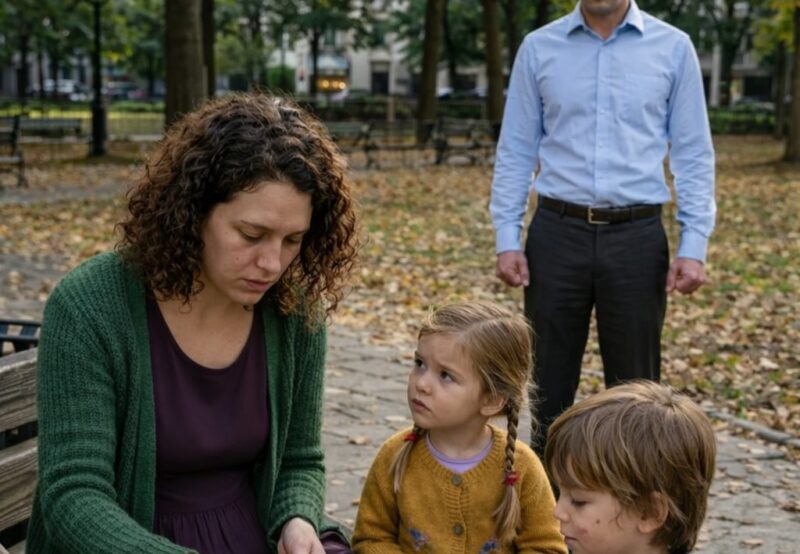
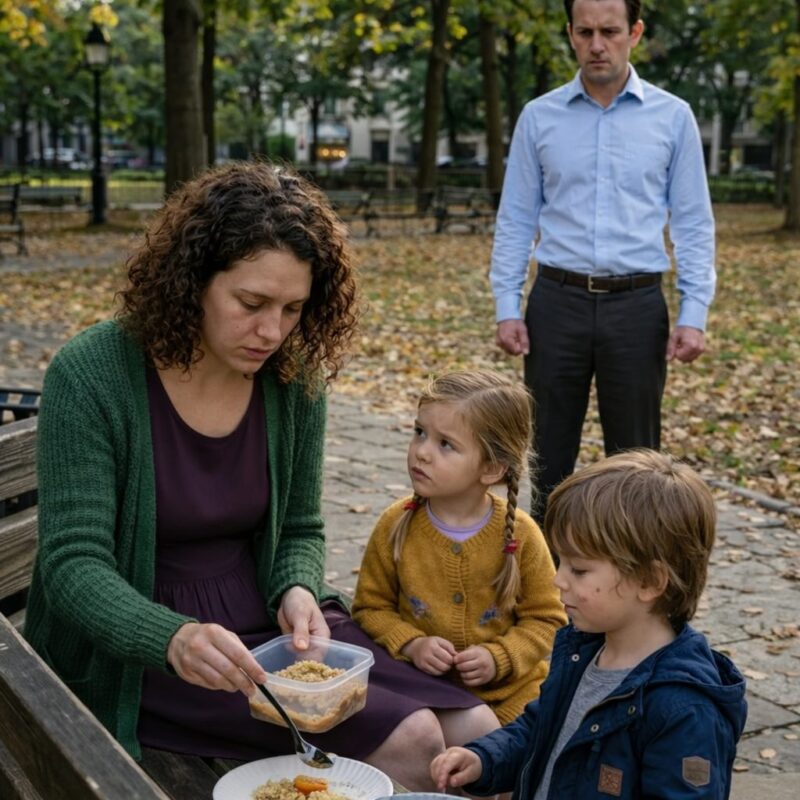
One afternoon, in the far corner of the plaza, he noticed a woman sitting beneath a fading tree. Two small children sat beside her on a worn bench. She didn’t ask for help, didn’t call out to anyone. In her lap rested a battered metal pot — everything they had.
Mateo slowed, drawn by something he couldn’t explain.
She served the children first, carefully filling their bowls with most of what was inside. When she reached the bottom, only a thin portion remained for herself. She gathered it quietly, as if it were enough.
He froze.
The children ate slowly, savoring every bite. The woman watched them with a calm, gentle expression, even as exhaustion showed in her trembling hands.
There was no attempt to be noticed. No performance. Just love, expressed through sacrifice.
Mateo had donated millions, attended countless charity events, and heard endless speeches about generosity. But nothing had ever struck him as deeply as this silent moment.
Then, without warning, everything shifted.
One of the children collapsed.
The air in the plaza changed instantly. People turned, watching from a distance, unsure what to do. For a second, no one moved.
Mateo did.
He rushed forward, acting on instinct.
At the hospital, the truth came quickly: dehydration and severe malnutrition. The mother stood beside her child, shaking, apologizing over and over — for not seeing the signs sooner, for not being able to provide more, for simply existing in that moment.
Mateo covered every cost without hesitation. But for once, money didn’t feel like control.
It felt like responsibility.
Later, they sat in a small café. The woman spoke quietly about her life — losing her job after the factory shut down, being forced out of her home, and being abandoned by someone she trusted. She spoke without bitterness, as if hardship had become something she carried rather than fought.
Mateo listened in silence.
While he had been grieving in isolation, surrounded by comfort, she had been battling every day just to survive — and still managed to give everything to her children.
That truth unsettled him more than anything else.
That evening, he made a decision.
He offered them a place to stay. Not as an act of charity, but as a simple solution — a safe space where they could breathe and begin again.
Slowly, the house changed.
Where silence once lived, there was now laughter. The children no longer counted bites at the table. Their voices filled the halls with life.
The woman refused to depend on anyone for long. She returned to sewing, rediscovering a skill that had once supported her family. Her work was precise, refined — a reflection of quiet strength and experience.
Mateo saw its potential immediately.
He set up a small workshop, provided materials, and treated her craft like a true business. Orders began to come in. With each success, her confidence grew, and the weight she carried began to lift.
Her children started sleeping peacefully again.
And over time, something genuine developed between them — not a story of rescue, but one of partnership and respect.
Months later, beneath a soft night sky, Mateo made a promise.
He knelt — not just before her, but before the life they had begun to build together.
He didn’t promise perfection. He didn’t offer an easy future.
He promised something simpler: to stay, to choose them every day, and to never let them feel invisible again.
The children were the first to embrace him.
Then she did, her tears no longer born from struggle, but from relief.
Because the real miracle had never been a wealthy man stepping in.
It was a mother who gave everything, even when she had nothing.
And a man who finally understood that wealth only matters when it is used with heart.