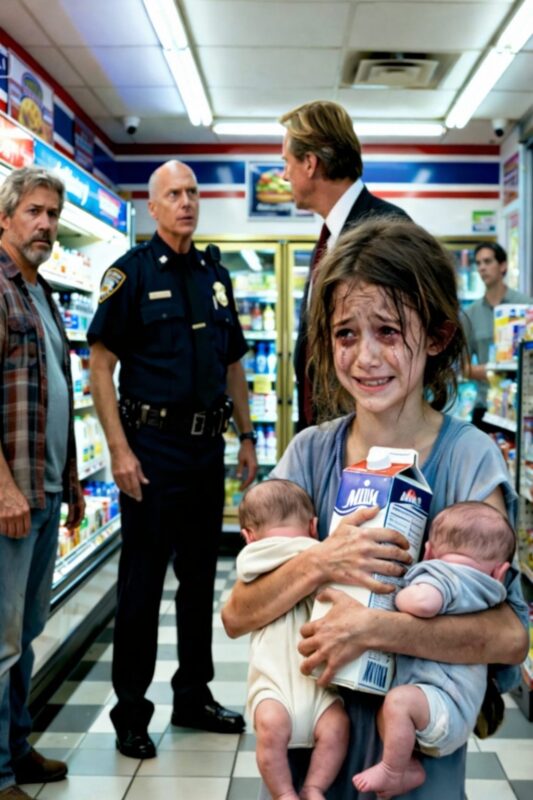
A small girl was stopped just before she could leave the store, her thin wrist firmly held by the manager. His sharp voice cut through the room, accusing her of stealing, and the usual noise of the shop faded into uneasy silence.
She stood there—no more than eight years old—her oversized jacket slipping down her arm, her worn shoes dragging slightly across the floor. Clutched tightly in her hands was a single carton of milk, as if it were something priceless.
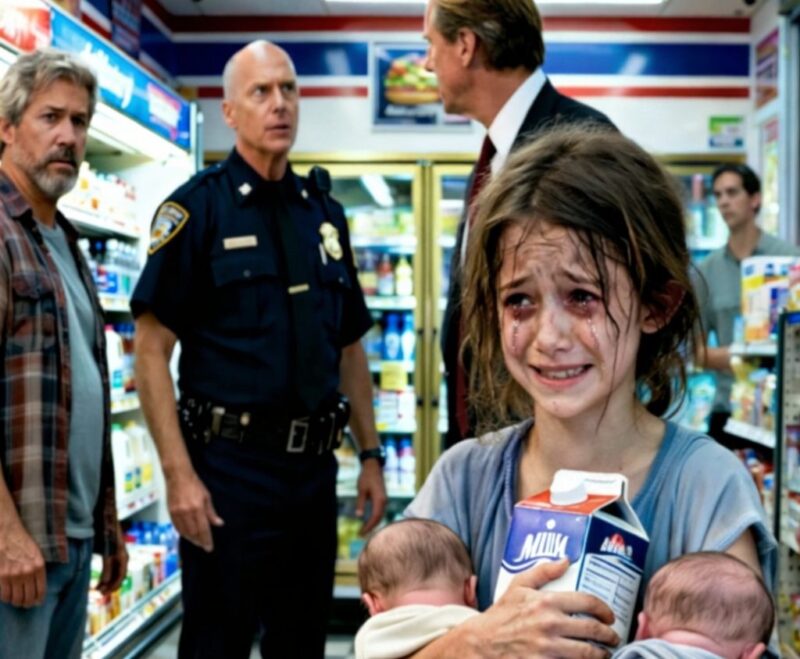
“I’m sorry,” she murmured, her voice shaking. “My baby brothers haven’t eaten.”
Whispers spread among the customers. Some watched quietly; others lifted their phones. The manager pulled the milk away, insisting that rules could not be broken. The girl’s hands remained raised for a moment, now empty, her eyes filling with tears she tried hard to hold back.
A police officer walked in, immediately sensing something was wrong. After hearing what had happened, he lowered himself to her level and gently asked her name. “Lily,” she replied. When he asked why she had taken the milk, she hesitated before admitting that her mother was too sick to get out of bed, and her baby brothers were crying from hunger.
Though clearly unsure, the officer explained that he might have to take her with him. Fear spread across her face as she pleaded not to be taken away—her brothers depended on her.
Then a calm voice broke through the tension.
A man who had been standing nearby stepped forward. He was well dressed, composed, and observant. Without raising his voice, he offered to pay—not just for the milk, but for whatever the girl needed. The manager objected, but the man calmly pointed out that nothing had actually been lost. He wasn’t dismissing the rules—only questioning whether they should be applied without compassion.
He knelt beside Lily and made her a simple request: someday, when she had the chance, she should help someone else in need. With tears still in her eyes, she agreed without hesitation.
Moments later, the checkout counter was filled with necessities—food, baby supplies, and more. The man paid without a second thought. The officer, now visibly moved, offered to go with Lily to her home.
The building she led them to was worn and quiet, marked by neglect. Inside, the situation was heartbreaking. Her mother lay weak and barely conscious on a thin mattress, while two infants cried softly beside her. The officer quickly called for medical assistance. The man gently picked up one of the babies, calming it, while Lily rushed to her mother, telling her that help had arrived.
Paramedics soon came, taking the mother to the hospital and caring for the children. Lily stood near the doorway, overwhelmed by everything that had happened. The man reassured her that what she had done was not wrong—it was driven by love. The officer added that her safety and well-being would come first.
In the following weeks, things slowly improved. Her mother received treatment and regained her strength. The babies grew healthier. Lily, for the first time, experienced stability—warm meals, clean clothes, and a safe place to sleep.
The man continued to visit, never drawing attention to himself, simply offering quiet support. One day, Lily asked why he had helped her. He told her that he had once been in a similar situation—hungry, struggling, and given a second chance by someone who chose kindness instead of punishment.
That single moment, he explained, had shaped the course of his life.
About a month later, Lily returned to the same store. This time, she walked in calmly and placed a few coins on the counter.
“For the milk,” she said.
The manager hesitated, then accepted the money, offering a quiet apology. Lily smiled softly and forgave him.
Outside, the man was waiting. He was no longer a stranger, but someone who had changed everything.
As they walked away together, one simple truth remained:
Sometimes, all it takes is one compassionate decision to change a life forever.