The Stranger at the Corner Table
A steady drizzle had turned the pavement outside Bennett Street Bakery black and shining by the time Emily Carter began locking up for the evening. At twenty-four, she knew how to make a small paycheck last. She worked nearly every day, put aside what she could, and helped her mother manage the bills after her father’s death.
It was a modest life, but it was familiar.
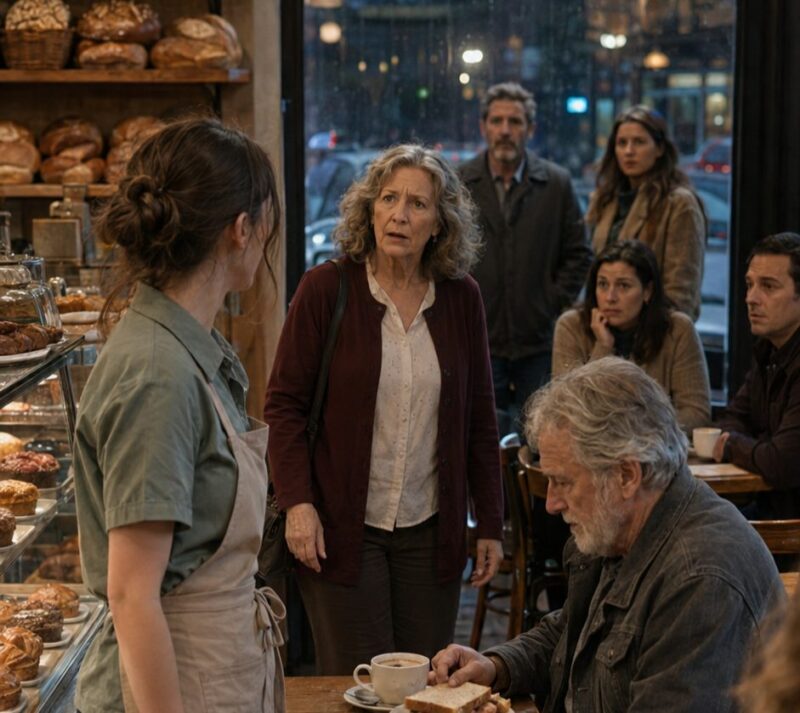
One of the bakery’s regulars was a quiet older man named Walter. He always wore an old charcoal-colored coat and claimed the same table near the window. Most days, he ordered only coffee. On better days, he added soup.
When Emily asked how he was, he usually gave a faint smile.
“Getting by.”
That evening, Walter appeared unusually tired. As he searched his wallet for payment, Emily noticed it was empty.
She did not embarrass him. She simply placed a hot bowl of soup, a sandwich, and a piece of bread in front of him.
Mrs. Parker, the manager, saw what she had done.
“You cannot keep giving food away, Emily.”
“I’ll have it deducted from my pay.”
“You have already done that several times.”
“He needs to eat.”
Mrs. Parker’s face tightened. “Then you may consider this your last night working here.”
For a moment, Emily said nothing. She thought of the rent, the repairs her old car needed, and the medication her mother could barely afford.
Then she looked at Walter.
“I would make the same choice tomorrow,” she said.
The elderly man slowly put his wallet away. Then he reached into his coat and removed a phone that clearly did not belong to someone struggling to buy dinner.
His posture straightened.
“It’s Walter,” he said into the phone. “I’ve located her.”
He listened briefly before continuing.
“Yes, I’m sure. Bring Daniel. No guards, no spectacle. Tell the legal team to stay ready.”
A short time later, three black vehicles pulled into the nearly empty parking lot.
Walter rose from his chair and faced Emily.
“My full name is Walter Bennett,” he said. “I established Bennett Group.”
Emily could only stare.
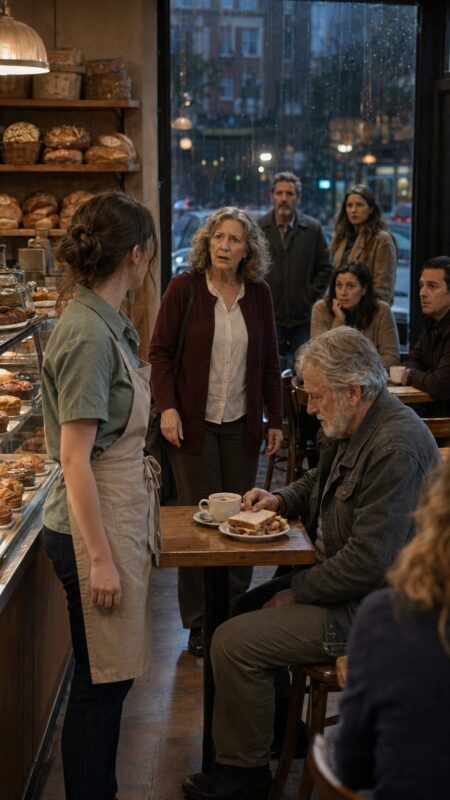
“Why would someone like you sit here pretending to have nothing?”
“I was not searching for a restaurant,” Walter replied. “I was searching for you.”
A lawyer named Daniel entered carrying a slim case. Inside were financial documents, old photographs, and a sealed letter with Emily’s name on the front.
She recognized her father’s handwriting immediately.
Thomas Carter had died five years earlier in a crash that authorities called an accident. Emily had always believed that he left Bennett Group after selling his interest in the company. Her family had received no inheritance and no explanation.
Walter told her that the story was incomplete.
Thomas had uncovered a secret scheme connected to an internal development known as Phoenix. Company shares belonging to him had been moved without authorization. As he investigated, he found evidence of diverted funds, unpaid vendors, damaged pension accounts, and senior employees enriching themselves while workers suffered.
If Thomas’s ownership stake was restored, it could now be worth an extraordinary amount of money.
“My father died in debt,” Emily said. “My mother took every job she could find. We had to count every dollar.”
Walter’s expression fell.
“We know,” he said. “And we failed you.”
The letter had been written by Thomas the night before he died.
Emily, if this letter reaches you through Daniel, then I did not have time to complete what I discovered.
Thomas wrote that he did not want the recovery to become a private windfall for his family. The people harmed by Phoenix deserved justice first: workers who had lost pensions, contractors who had never been paid, and families left without help. He wanted a portion reserved for their recovery, along with education programs and long-term security for Emily and her mother.
His final message was simple:
Let proof guide you when sorrow cannot.
Daniel then revealed that Thomas had hidden an encrypted drive containing records of the entire operation. Walter insisted that it be opened before the board and outside investigators.
What they found changed Bennett Group forever.
The files linked Walter’s godson, Michael Bennett, to a network of executives and attorneys who had concealed the fraud for years. Thomas’s death could not be proven to be murder, but investigators discovered threatening calls, repeated pressure, and evidence that Michael had followed him on the night of the crash.
Michael resigned before he could be removed. Several lawyers lost their licenses. Former employees and contractors received compensation, pension plans were repaired, and the company paid major settlements.
Walter stepped down as chairman.
“I did not take the money,” he told Emily. “But I allowed a company to exist where people believed they could.”
Emily refused the attention that came with the case. She did not appear on television or treat the recovered wealth as a victory prize.
Instead, she helped establish the Carter Fund. It provided emergency grocery support, small relief grants, legal and workplace protections, and practical help for people who had nowhere else to turn.
Five years later, Bennett Street Bakery was owned by the people who worked there. Business was thriving, and a small wooden container sat beside the register, filled with meal cards for anyone who could not afford food.
No worker risked losing a job for helping someone hungry.
Walter, now eighty-one, still stopped by every Thursday.
One night, he sat down and admitted he had forgotten his wallet.
Emily placed a meal card beside his bowl.
“Tonight, the neighborhood is paying.”
Walter narrowed his eyes. “That is a very impersonal way to say it.”
“Then stop complaining and eat while it is hot,” Emily replied.
He laughed softly.
For the first time in years, neither of them had to hide their loneliness behind an empty wallet.