A successful businessman learns his housekeeper is on the verge of giving up her child because of poverty—and the choice he makes reshapes all of their futures.
Michael Harrison woke at six sharp, as he always did, no alarm needed. Years of discipline had trained his body to rise on time, even if his heart felt unmoved. He stared at the pristine ceiling of his sprawling Beverly Hills mansion—flawless, silent, and devoid of life.
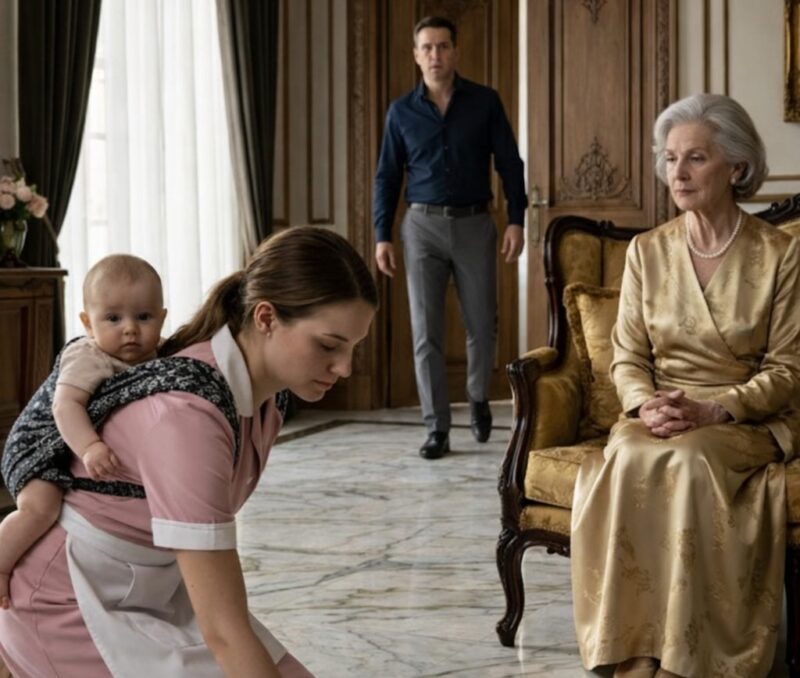
Empty.
Three years earlier, his wife Danielle had left with two suitcases and half his wealth, taking with her the dream of a family they had once planned together. There had been no shouting, no dramatic ending—just paperwork and a quiet that settled into the house like a permanent presence.
In the morning, he stood alone in his oversized kitchen, sipping espresso as the city stirred beyond the glass walls. He had spent years building a powerful real estate empire. Now he had more than enough—except someone to share it with.
That day, a soft sound echoed through the corridor.
Elena Ruiz had arrived.
She came every Saturday without fail, working in silence and leaving just as quietly. Michael had never asked much about her life. But recently, he couldn’t ignore the signs—her unsteady hands, the dark circles under her eyes, the way she seemed to fade a little more each week.
Something was weighing on her.
Almost without thinking, he followed the sound to the laundry room. Elena stood there folding towels. On the washing machine rested a stack of documents. The heading immediately stood out: family court records.
“Elena… is everything alright?” he asked gently.
She turned abruptly, forcing a polite smile. “Yes, sir. I’m just tired.”
Michael glanced at the papers, then back at her. “You don’t have to explain,” he said softly. “But if you need someone to hear you out… I’m here.”
For a moment, she said nothing.
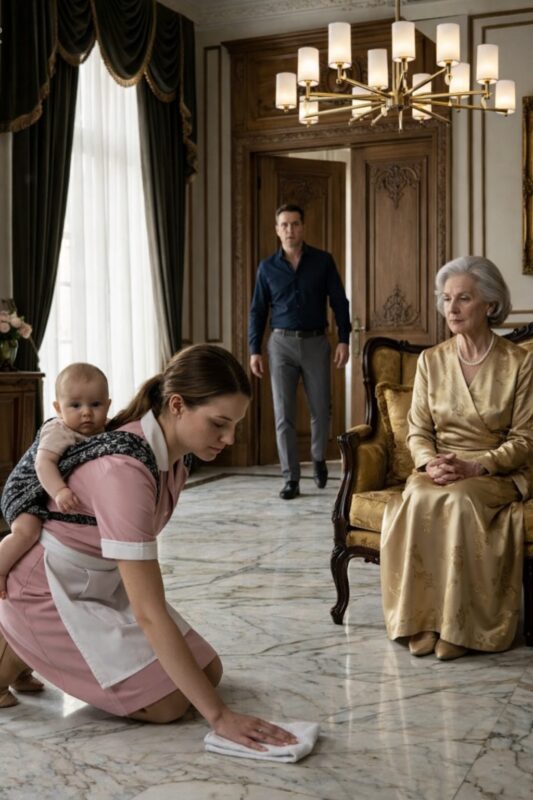
Then, barely above a whisper, she spoke. “I have a baby. His name is Gabriel. He’s four months old.”
Michael was caught off guard—she had never mentioned him before.
“My mother is very ill,” she continued. “Diabetes… heart complications. I can’t afford her treatment.”
Her voice trembled.
“I work in four different houses. I hardly sleep. I eat once a day just to make sure there’s enough for her medication and for my baby… and still, it’s not enough.”
Michael listened in silence.
“The father left when he found out I was pregnant,” she added quietly. “On Monday… I’m signing adoption papers.”
The words hung heavy in the air.
“Do you love your son?” Michael asked.
Elena broke down instantly. “More than anything. But love doesn’t pay the bills. It doesn’t buy medicine. It doesn’t keep him safe. He deserves a better life.”
Something shifted inside him.
“How long do you have?” he asked.
“Forty-seven hours.”
Less than two days before a mother and child would be separated—not by lack of love, but by lack of means.
“Go home,” Michael said firmly. “Spend the weekend with your son. Don’t sign anything until we talk on Monday.”
She looked at him, uncertain. “Why?”
“Because I can’t ignore this.”
That afternoon, Michael sat alone, reviewing numbers—medical expenses, living costs, long-term care. To Elena, it was an impossible burden. To him, it was manageable.
The real question wasn’t financial.
It was whether he was ready to let his life change.
Upstairs, a room he had once imagined as a nursery had remained untouched for years. He stood in the doorway, picturing it alive—with warmth, with noise, with purpose.
On Sunday morning, he called Elena.
“Come by at ten,” he said. “Bring your son—and your mother.”
They arrived in a worn car, their modest appearance sharply contrasting his world. Inside, he spoke directly.
“You’re giving him up because you can’t handle everything at once. What if you didn’t have to choose?”
She shook her head. “This isn’t something you can fix.”
“I can’t fix everything,” he replied calmly. “But I can fix this.”
He took a breath.
“You can work here full-time—with a proper contract, benefits, and salary. You and your mother can live here. Medical care will be covered. This isn’t charity—it’s a fair arrangement.”
Her mother stiffened. “We don’t want pity.”
“It’s not pity,” Michael said. “You’ll be working. I’ll be paying. Your child stays with you.”
Elena’s voice trembled. “Why would you do this?”
This time, he didn’t hesitate.
“Because I’ve always wanted to be a father… and I won’t stand by while a child loses his mother over something I can change.”
Tears filled her eyes—this time, not from despair, but from hope.
“I need everything in writing,” she said.
“You’ll have it,” he assured her.
On Monday, just minutes before she was meant to sign the adoption papers, Michael arrived with finalized documents. Everything was prepared—insurance, employment, medical care.
Elena looked down at her baby… then slowly tore the papers apart.
Months went by, and the house transformed. The silence gave way to laughter. Bottles filled the sink. Soft cries echoed at night.
Elena regained her strength and began studying. Her mother recovered after surgery.
One afternoon, little Gabriel reached toward Michael and murmured something that sounded like “Da.”
Michael stood frozen.
Years later, the house was no longer empty. Gabriel raced through the halls, Elena built her future, and her mother tended a small garden outside.
And Michael—once a man who had everything except meaning—finally understood something simple:
He hadn’t saved them.
They had given his life purpose.
One quiet evening, standing by Gabriel’s door, he whispered:
“In this home… no one will ever be left behind again.”