A twelve-year-old girl reached out for help, hoping her aunt could lend her a little money to buy milk for her baby brother. But one small error changed everything—her message went to a stranger instead. That unexpected moment would go on to reshape more than just her own life.
My name is Emily Carter, and even at twelve, I had already learned lessons no child should face. Growing up wasn’t a choice—it was something life demanded from me far too early.
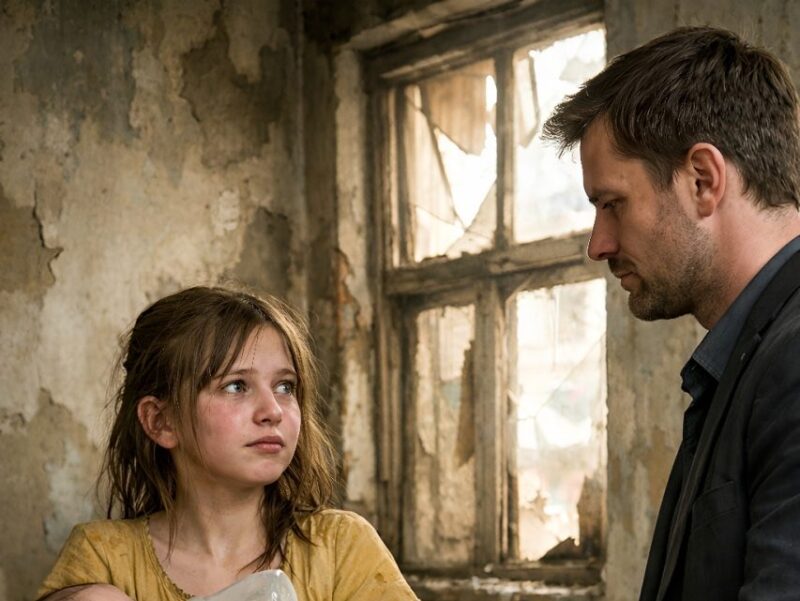
We lived in a worn-out house on the edge of Detroit, where cold air slipped through cracks in the walls and empty shelves were nothing unusual. My mother worked long hours cleaning other people’s homes, leaving before sunrise and coming back after dark. She carried exhaustion in her body, yet she still smiled—for our sake.
It was just me and my little brother, Noah. He was too young to understand why food wasn’t always there, but his hunger didn’t need explaining. That afternoon, his cries weren’t ordinary—they came from real pain.
I searched the kitchen again and again, hoping something might appear. It never did. The emptiness of the fridge felt louder each time I opened it. I wanted to cry, but I couldn’t. Noah needed me.
Then I remembered my aunt. She didn’t always help, but sometimes she did—and sometimes was enough. I picked up my mom’s old, cracked phone and carefully typed a message asking for $20 to buy milk. I checked every word before sending it, not knowing that single tap would change everything.
A reply came quickly, but it wasn’t from my aunt. A stranger wrote back, asking who I was.
I hesitated, but Noah’s cries made the decision for me. I explained the situation and admitted I had texted the wrong number. The man asked for my location. Fear lingered, but I sent it anyway.
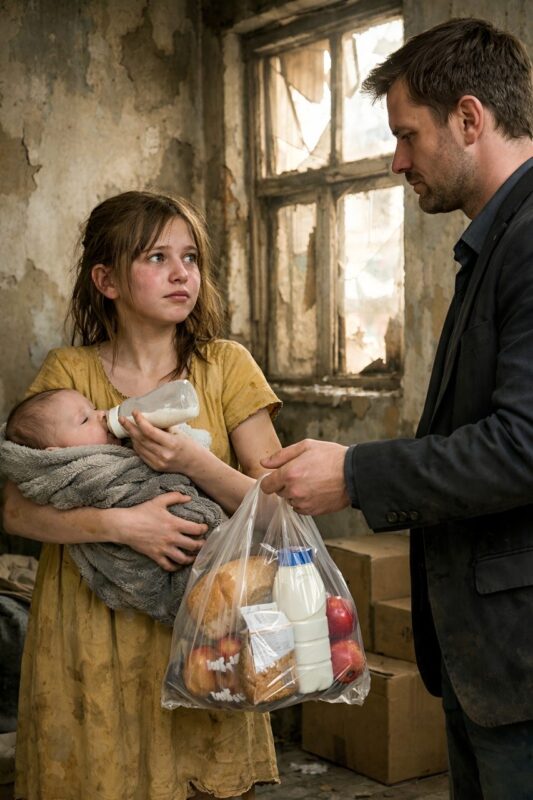
Thirty minutes later, a sleek black car stopped in front of our house. It looked completely out of place. A tall, well-dressed man stepped out. His name was Daniel Reynolds—a man from a world far removed from ours. But when he saw us, he didn’t question anything. He understood.
He handed me a bag filled with groceries—milk, bread, fruit—more than I had ever hoped for. My hands shook as I thanked him. Noah stopped crying as soon as he was fed. In that moment, something shifted.
For me, it was relief. For Daniel, it was something deeper—something he hadn’t felt in a long time: peace.
He didn’t vanish after that day. He kept returning—not just to give, but to be present. He supported my family, made sure Noah received medical care, and opened doors I never knew existed. Most importantly, he showed me that my future didn’t have to look like my past.
Years went by. I worked hard, studied, and carried those memories with me. I became a pediatrician—not only because I wanted to help children, but because I knew what it meant to go without.
One day, a frightened mother rushed into the hospital, clutching her baby and begging for help she couldn’t afford. I didn’t see a stranger—I saw my own story.
“It’s okay,” I told her gently. “I’ll take care of it.”
That evening, I saw Daniel again. Time had changed his appearance, but not his kindness. He looked at me with quiet pride. I told him everything began with a message sent by mistake. He shook his head.
“It wasn’t a mistake,” he said softly. “It was life making sure someone answered.”
And in that moment, I understood something simple but powerful: life doesn’t always change through grand decisions. Sometimes, it changes because someone chooses to respond to a single word—“please.”
Because even the smallest moment, sent to the wrong person, can become something greater than chance.
It can become hope.