After Spending Two Weeks in California With My Mistress, I Returned to My $92 Million Mansion and Found My Wife Gone. Our Newborn Twins Were Missing, and the Heartbreaking Letter She Had Left Behind Forced Me to Confront the Man I Had Become
At precisely 3:52 a.m., I walked through the front door of my Manhattan mansion, expecting to find my wife asleep upstairs.

Instead, an unsettling silence greeted me.
On the bed were Amelia’s wedding ring, two miniature socks, a photograph of our newborn twins, and a handwritten note.
The first sentence stopped me in my tracks.
“While you were building memories with another woman, I was fighting to bring our babies safely into this world.”
I’m Harrison Cole, a forty-eight-year-old businessman who built a technology empire valued at $17 billion.
For decades, I believed there was no problem a sufficiently large bank account couldn’t solve.
That morning, I discovered how wrong I was.
Amelia had been by my side when I had practically nothing.
During the early years of our relationship, we sometimes shared a single sandwich because we couldn’t afford two. Somehow, she always found an excuse to give me the bigger portion.
Back then, I promised that one day I would give her everything.
Unfortunately, somewhere along the journey to becoming wealthy, I stopped giving her the one thing she wanted most: my time.
After years of fertility treatments, we finally received the news we had been dreaming about.
Amelia was expecting twins.
However, her pregnancy became complicated, and doctors warned that the babies might arrive earlier than expected.
Despite those warnings, I planned a two-week getaway to California with Madison, the woman with whom I was having an affair.
Before I left, Amelia stood beside my suitcase.
“Please stay, Harrison. I don’t want another expensive specialist. I want the man I married.”
I walked away anyway.
During those fourteen days, she called me thirty-one times.
When she went into labor, she managed to reach me and begged me not to hang up.
“Amelia, this isn’t a good time,” I told her.
I had no idea how much I would eventually regret those words.
Caleb and Grace were delivered prematurely through emergency surgery. Both babies needed intensive medical care, and Amelia experienced serious complications.
She sent me a photograph of our children, hoping I would finally come home.
I didn’t even respond.
Now, alone in our enormous bedroom, I read the remainder of her letter.
“Our children deserve a father whose presence doesn’t have to be negotiated. I won’t teach them that love is something they must plead for. I’m leaving because they deserve better, and so do I.”
I tried calling her, but her number was no longer active.
When I contacted the hospital, the staff couldn’t disclose any information about her whereabouts.
I wandered into the nursery.
The carefully selected furniture, expensive decorations, and two empty cribs suddenly seemed meaningless.
I had everything money could purchase, yet the people who mattered most were gone.
Three days later, Amelia’s attorney finally contacted me.
She had agreed to let me meet the twins, provided I respected her privacy and accepted her boundaries.
I arrived at the hospital carrying bags filled with costly baby items.
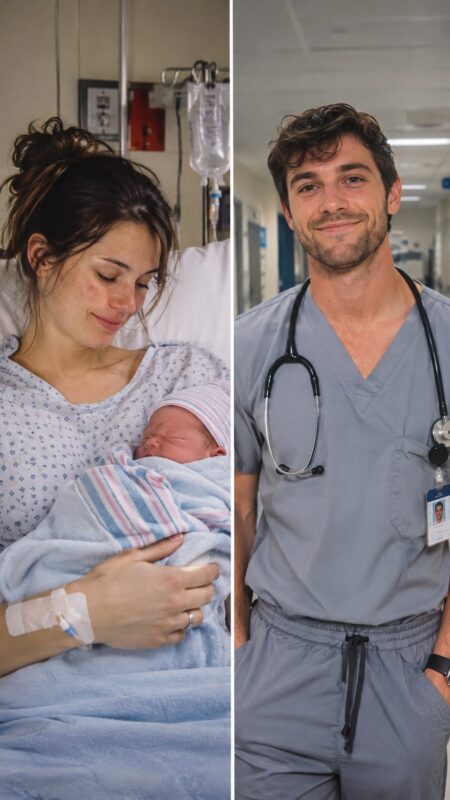
Amelia looked at them briefly.
“Harrison, you still don’t understand. They don’t need designer clothes. They need someone who will be there when they’re frightened, sick, or lonely.”
For the first time, I had no argument.
When a nurse helped me hold Caleb, his tiny hand closed around my finger.
I stared at him, overwhelmed by the realization that I had missed the beginning of his life.
Then came Grace.
As I held my daughter, I whispered, “I’m here now.”
Amelia’s expression remained sorrowful.
“You were needed long before today.”
She was right.
I couldn’t justify my behavior, and I stopped trying.
I ended my affair with Madison, handed over many of my executive duties, and sought professional counseling.
For once, I wanted to understand why I had neglected the people who had given my life meaning.
When Amelia decided to end our marriage, I respected her choice.
I signed the divorce papers without protest and ensured that she and the twins would never have to worry about financial stability.
I also understood that providing money wasn’t a substitute for being a parent.
Over the following months, my daily routine changed completely.
Board meetings gave way to feeding schedules. Business dinners were replaced by pediatric appointments, and late-night negotiations became bedtime stories.
I learned how to prepare bottles, change diapers, and soothe two crying babies.
Their first smiles brought me more happiness than any successful business deal ever had.
Little by little, Amelia noticed that my promises were finally being followed by actions.
She didn’t forgive me overnight, nor did she owe me another chance at marriage.
But she gradually came to trust me as Caleb and Grace’s father.
Three years later, during their birthday celebration, the twins presented me with a handmade card covered in colorful drawings and crooked little hearts.
With their mother’s help, they had included a short message.
“Daddy, thank you for always coming back.”
I read those words several times before tears blurred my vision.
Later that evening, Amelia joined me on the terrace.
“I barely recognize the person you’ve become,” she admitted.
“I wish I’d understood all this before breaking your heart.”
“So do I,” she replied. “But I’m happy our children get to grow up knowing they can depend on you.”
Our marriage was never restored, but we built a healthy relationship as co-parents, grounded in mutual respect and our shared commitment to the twins.
Remembering the challenges surrounding their premature birth, I established a foundation that provides accommodation and financial assistance to families whose newborns require extended hospital stays.
I wanted other parents to have the opportunity to remain close to their children during those difficult weeks.
One evening, I sat on the couch with Grace sleeping against my shoulder and Caleb holding my hand.
My phone vibrated with an urgent call concerning a major business transaction.
I turned it off.
For years, I had treated every business opportunity as though it were more important than anything happening at home.
I finally understood that some moments were irreplaceable.
No amount of money could restore the trust I had destroyed or give Amelia back the support she had needed during her pregnancy.
But I could take responsibility for my mistakes and make sure my children never grew up questioning their importance in my life.
I once thought a $92 million mansion was proof that I had succeeded.
Yet the most valuable things I possessed had no price tags.
They were the sound of my children’s laughter, their excitement when I arrived, their sleepy requests for another bedtime story, and the trust I had worked so hard to earn.
Building a multibillion-dollar company had taken me decades.
Learning how to become a dependable father had taught me something far more important.
Success means very little if you neglect the people who love you.
Money can purchase magnificent houses, but only patience, affection, and commitment can turn a house into a home.
THE END