Barely an hour after we laid my wife to rest, my son informed me that he would no longer give me a monthly allowance. His wife stood beside him, looking thoroughly pleased with their decision.
I simply nodded and accepted their terms. What neither of them understood was that their privileged lifestyle existed entirely because of my generosity. That evening, I discovered a final message from Dorothy that changed the course of my life.
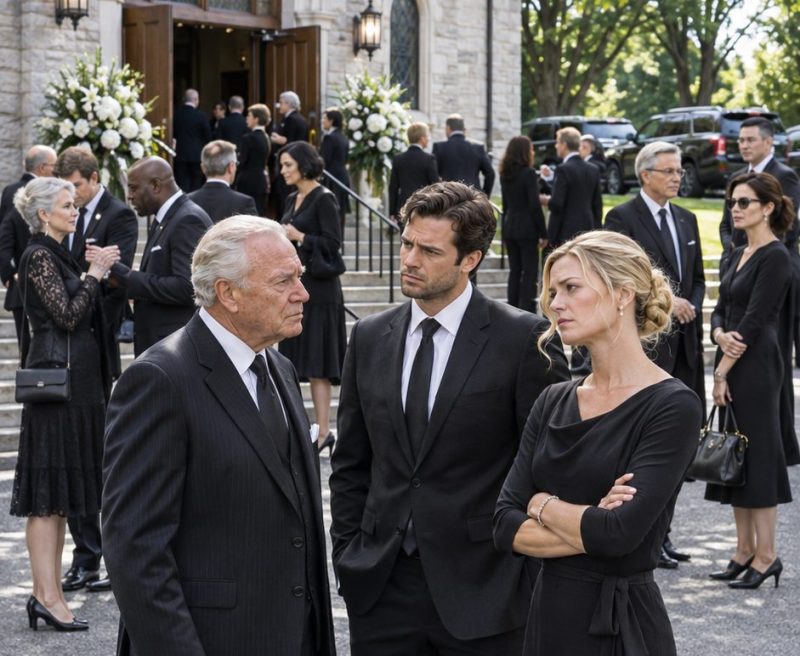
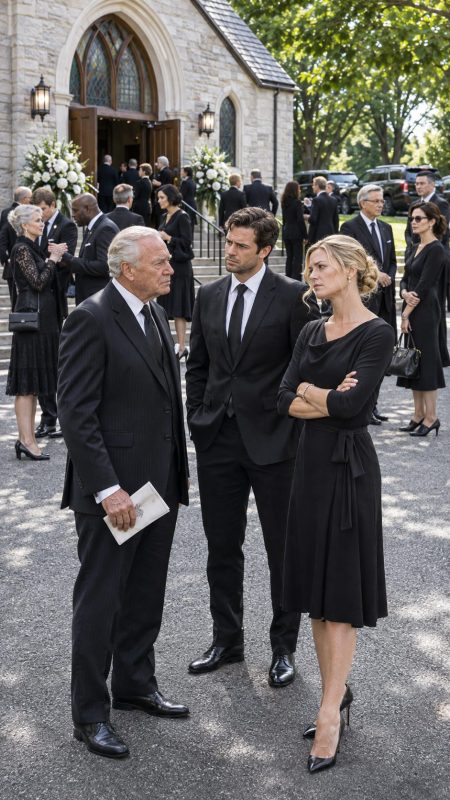
The last mourners were preparing to leave the cemetery when Trevor approached me.
“Dad, we need to have a serious conversation about money.”
I looked at him in disbelief.
“Today, Trevor? Of all days?”
Before he could answer, his wife, Kendra, stepped forward.
“We’ve decided to stop supporting you financially. You’re seventy-one, Gerald, but we have responsibilities of our own. You need to learn to live independently.”
I studied their expressions, wondering whether either of them understood the irony of those words.
Every month for the previous three years, Trevor had transferred $2,000 into my bank account. He liked telling people that he provided his elderly father with financial assistance.
The truth was considerably different.
Those payments were reduced rent for the luxurious six-bedroom house where he lived with his wife and children.
The property belonged to Hollis Property Holdings, a business I owned.
Dorothy and I had been covering property taxes, insurance premiums, maintenance costs, housekeeping services, and other expenses. Altogether, our support amounted to almost $80,000 a year.
That figure did not include the additional $4,000 I contributed every month toward our grandchildren’s education.
Yet somehow, Trevor had convinced himself that I was the dependent one.
“You make an excellent point,” I replied. “Financial independence is important. Everyone should be responsible for their own expenses.”
Kendra exchanged a satisfied glance with my son.
Neither noticed the sadness behind my agreement.
Later that afternoon, I returned to the guest apartment located behind their house. The silence felt overwhelming without Dorothy.
As I walked into our bedroom, I noticed an envelope beside her photograph.
My name was written across the front in her familiar handwriting.
Inside, I found a short message.
“Gerald, please start living for yourself.”
Six words.
That was all.
Yet they carried the weight of every conversation we had shared about Trevor.
For years, Dorothy had warned me that constantly solving our son’s problems was preventing him from becoming responsible for his own life.
I had dismissed her concerns, believing that a good father should always help his children.
Standing alone in that bedroom, I finally understood the difference between helping someone and allowing them to take advantage of you.
The following morning, I contacted our longtime attorney, Patricia Quinn.
“I need to make some changes,” I explained. “Trevor and Kendra must start paying their own way. But I refuse to let the grandchildren suffer because of their parents’ decisions.”
Patricia reviewed the financial arrangements, property records, and rental agreement.
We prepared formal documentation confirming that Trevor’s lease would not be renewed.
His supplementary credit card was canceled, and the household services I financed were scheduled to end when their contracts expired.
The grandchildren’s educational trust remained completely secure.
On Saturday, while Trevor and Kendra were dining at an upscale restaurant, I packed my clothes, collected Dorothy’s photographs, and drove to the lakeside cottage we had purchased years earlier.
It was the place where we had dreamed of spending our retirement together.
Before departing, I left a letter on the kitchen counter.
“Trevor, thank you for encouraging me to become financially independent. I believe the same principle should apply to your family. From now on, your expenses are your responsibility. Patricia will explain the arrangements concerning the house.”
My phone rang for the first time at 4:12 p.m.
Then it rang again.
And again.
By midnight, there were 140 missed calls on my screen.
Among the angry messages and desperate demands, not one person asked whether I was eating properly, sleeping peacefully, or coping with the loss of my wife.
However, one message from Kendra immediately concerned me.
“We put $180,000 into renovating that house! You can’t pretend it belongs exclusively to you!”
I stared at the screen.
What $180,000?
I had never approved renovations costing anything close to that amount.
Patricia began investigating immediately.
The next morning, she sent me a document that made my stomach tighten.
It was a loan agreement secured against my property.
At the bottom appeared a signature bearing my name.
But it wasn’t mine.
Trevor had falsely claimed to possess the authority to act on behalf of my company. He had even suggested that my age prevented me from managing my own financial affairs.
My own son had betrayed my trust to conceal his financial difficulties.
Patricia contacted the credit union and provided evidence establishing that the transaction had never received my authorization.
That evening, Trevor and Kendra arrived at the cottage.
For the first time, my son appeared genuinely frightened.
“Dad, the business was failing,” he admitted. “I needed money. I thought I could fix everything before you discovered what happened.”
I shook my head.
“You were more concerned about looking successful than being honest with your own father.”
Kendra began explaining their expenses and asking whether I could help them recover financially.
I reminded her of the conversation we had shared at the cemetery.
“You told me that everyone must learn to support themselves. I have accepted your advice. Now I expect you to do the same.”
Trevor could no longer defend his actions.
His shoulders dropped, and tears filled his eyes.
Although I was deeply hurt, I wasn’t interested in destroying his future. I wanted him to understand that his decisions carried consequences.
I offered him a chance to make things right.
He would cooperate with the credit union, provide a written acknowledgment of his wrongdoing, and assume responsibility for repaying the debt. If he refused, Patricia would present the evidence to the authorities.
I also allowed the family an additional ninety days to find somewhere else to live.
Eight months later, their circumstances looked remarkably different.
Trevor had sold his luxury vehicle and found a steady salaried job. Kendra had returned to work, and they had moved into a smaller rented home.
For the first time, they were managing their household without relying on my money.
Trevor was also making regular repayments toward his debt.
Rebuilding our relationship, however, required more than financial restitution.
It required honesty.
One Sunday afternoon, my son came to visit me.
He arrived without an expensive gift, an elaborate excuse, or another request for assistance.
We sat overlooking the lake, remembering Dorothy, sharing childhood stories, and talking about his children.
Before leaving, Trevor hugged me and quietly thanked me for giving him another chance.
That simple moment meant more to me than any material possession ever could.
My grandchildren still spend their Sundays at the cottage. Their laughter fills the rooms, and their presence reminds me that life can hold beautiful moments even after tremendous loss.
Dorothy’s final message remains beside her framed photograph.
Sometimes, I read it aloud and think about how much wisdom she managed to express in just six words.
She helped me understand that unconditional love does not require unlimited sacrifice.
We can care deeply about our children without financing every mistake, excusing every betrayal, or surrendering our own happiness.
Generosity should come from affection, not obligation. Forgiveness should be accompanied by accountability. And family relationships should never depend on the size of someone’s bank account.
At seventy-one, I finally learned that choosing to respect myself did not mean I loved my family any less.
It meant I was giving all of us an opportunity to build something more genuine.