During a violent storm, a woman allowed four wolves into her home, believing she was rescuing them from the freezing cold. By morning, however, she would face a scene inside her own house that filled her with dread.
After my husband died, I sold our apartment and moved into my childhood home, which I had inherited. The house stood alone at the edge of the village, pressed against the forest line. In daylight, it seemed quiet and almost comforting. I spent my days lighting the stove, going through old belongings, stepping into the yard, and slowly learning to live with the silence.
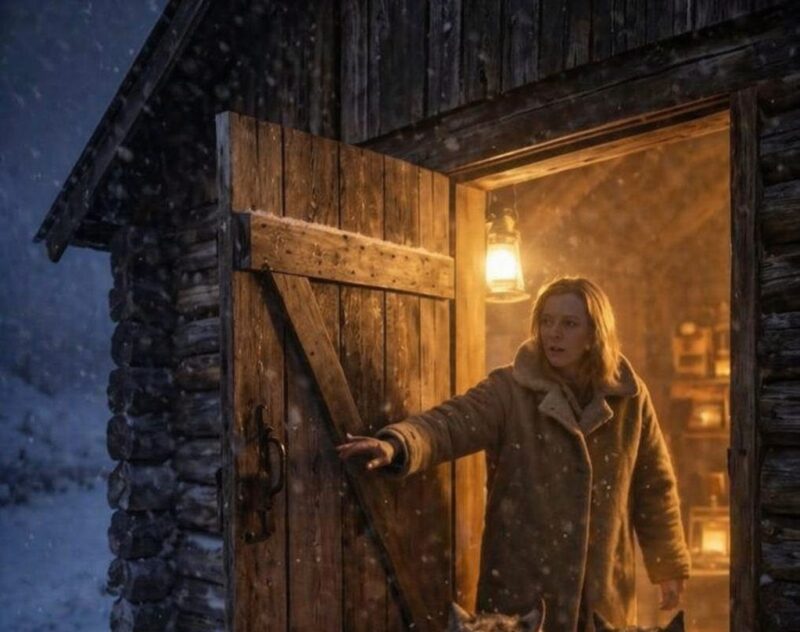
But everything changed once night arrived. Darkness fell over the forest with unsettling speed, and the wind swept across the fields, striking the house as though it were testing its strength. At night, unfamiliar sounds filled the air—branch snaps, lingering howls, and distant cries that made it feel as if something was moving just beyond the trees. Frost made the windows shiver, and the door rattled with every gust. Often, I would simply sit still, listening, unable to shake the feeling that I was not alone.
One night, the howling sounded different—closer, heavier, almost intentional. I went to the window and froze.
Four wolves stood outside my door.
They were not circling or snarling. They simply stood there, still and watchful, their eyes reflecting the faint light from inside. Frost clung to their fur, and their bodies looked exhausted, as if they had been fighting the storm for hours.
I hesitated for a long time before opening the door. Yet there was no aggression in them—only weariness and cold. Slowly, I opened it and stepped aside.
One by one, they entered.
They moved cautiously, almost quietly, as if understanding the space better than expected. One sniffed the floorboards, another checked the stove, a third curled up near the window. The last one paced for a while, restless, scanning the room as though searching for something unseen, before finally lying down.
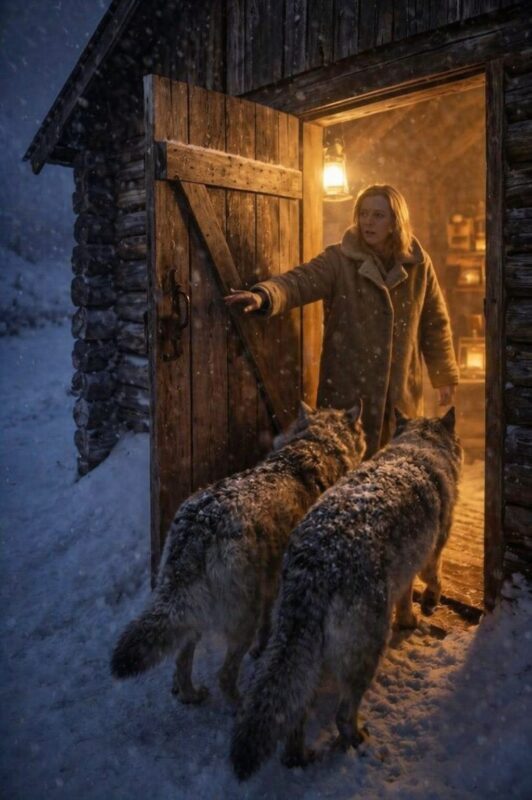
They ignored me for the most part. During the night, I heard faint scratching beneath the floor, but I assumed they were uneasy or simply trying to settle in.
By morning, the house was unnaturally silent.
The wolves were gone.
The door was shut.
But the hallway floor had been ripped open.
The wooden planks were broken apart, and the soil underneath was exposed, as if something had been deliberately unearthed.
At first, fear hit me at the sight of the damage. Then I noticed something sticking out from beneath the debris—a worn, heavy sack tied tightly with an old rope.
My hands shook as I pulled it free and untied it on the spot.
Inside were pieces of jewelry.
Gold chains, rings, gemstone earrings, and antique brooches—aged but unmistakably real.
Then a memory surfaced.
As a child, I had heard stories about my great-grandmother hiding her valuables during the Second World War, burying them somewhere in the house before soldiers arrived. After her death, the secret was lost. Generations searched—behind walls, in the attic, across the yard—but no one ever thought to check beneath the hallway floor.
I stood among the shattered boards, staring at the hidden fortune.
But what unsettled me most was not the destruction.
It was the thought that the wolves had somehow known exactly where the secret lay buried.