Evelyn had worked at Maple Street Café for nearly forty years. The little diner had aged alongside her — the leather booths were cracked, the wooden floors creaked with every step, and the old neon sign outside flickered whenever it rained. Still, to Evelyn, the café was more than a workplace. It was a refuge for people carrying invisible burdens.
She had a habit of noticing the customers no one else paid attention to.
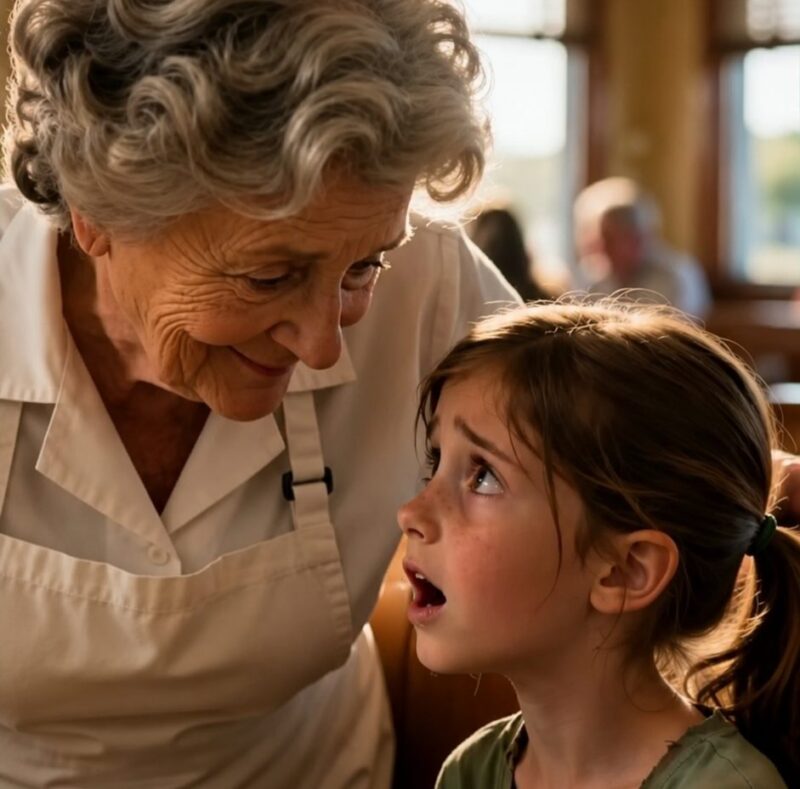
One cold November morning, her eyes settled on a young girl sitting alone near the back window. The child looked exhausted. Her faded jacket hung loosely over her tiny shoulders, and her trembling hands stayed hidden beneath the table as if she were trying to disappear.
Evelyn approached quietly and placed a bowl of hot soup and fresh bread in front of her.
The girl’s eyes widened in panic.
“I can’t afford this,” she whispered nervously. “I don’t even have enough for tea.”
Evelyn pulled out the chair across from her and sat down for a moment.
“Then today, it’s not about money,” she said gently. “You need to eat.”
The girl stared at her in disbelief.
“Why would you help me?”
Evelyn smiled softly, the kind of smile that made people feel safe.
“Because when someone is hurting,” she replied, “turning away should never be an option.”
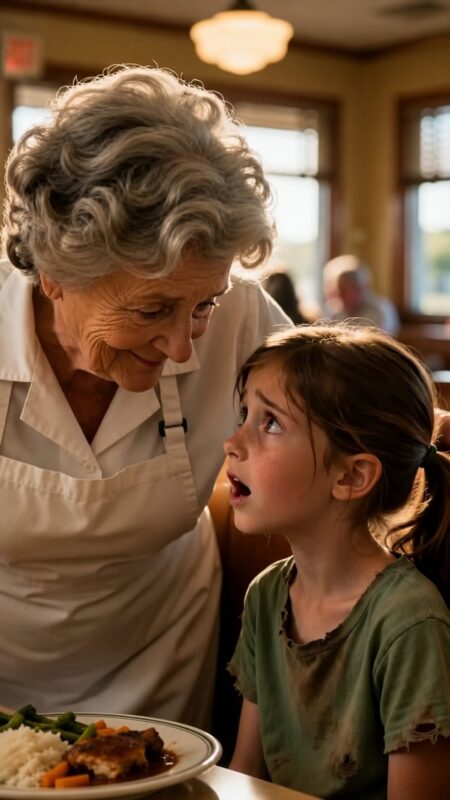
The child lowered her head and began eating slowly, trying to hold back tears. Before leaving, she quietly thanked Evelyn and slipped back out into the gray morning air.
Evelyn never learned her name.
Life moved forward.
The years left their marks on the café and on Evelyn herself. Her once-dark hair faded to silver, and arthritis stiffened her hands during long shifts. Yet she continued showing up every morning before sunrise. She still offered free meals to people who were struggling, still listened to lonely customers who needed someone to talk to, and still believed small acts of kindness mattered more than most people realized.
Then one autumn afternoon, the bell above the front door rang.
A well-dressed woman entered the café wearing a cream-colored coat and carrying a leather briefcase. She appeared successful and composed, but her anxious expression suggested she was carrying something deeply personal.
She walked directly to the counter where Evelyn was wiping down coffee cups.
“Excuse me,” the woman said softly. “Years ago, there was a little girl who came here hungry. She had no money, but a waitress fed her anyway.”
Evelyn paused mid-motion.
Memories surfaced slowly, like pages from an old book.
Then she remembered the frightened child by the window.
“I remember,” Evelyn answered quietly.
The woman’s eyes immediately filled with tears.
“That little girl was me.”
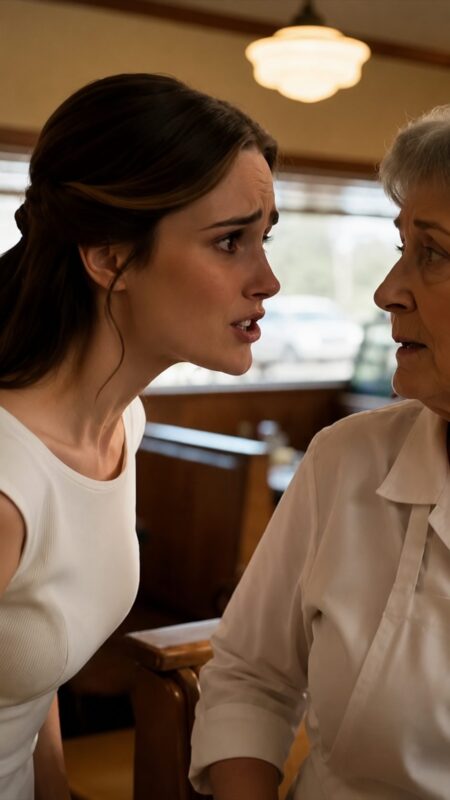
For a moment, neither of them spoke.
“My name is Claire,” the woman continued. “I’m an attorney now. After that day, I promised myself I would never forget the woman who helped me when I had absolutely nothing.”
She opened her briefcase and carefully placed several documents on the counter.
“I recently purchased this building,” Claire explained. “The café is yours now. Completely. No rent, no debt, no landlord who can take it away from you.”
Evelyn looked down at the papers with trembling hands, unable to speak.
Claire reached forward and gently held her hand.
“You taught me something important that day,” she said through tears. “You showed me that kindness can save a person long before they even realize they need saving.”
Evelyn looked around the small café she had spent most of her life protecting. The worn booths, the humming coffee machine, the familiar smell of cinnamon and fresh bread — suddenly it all felt overwhelming.
Tears slipped down her cheeks as she understood the truth she had spent her whole life proving:
No act of kindness is ever wasted. Somehow, it always finds its way back.