Every Saturday, My Seven-Year-Old Son Refused to Leave His Mother’s Hospital Room. When I Finally Understood Why, I Broke Down in Tears.
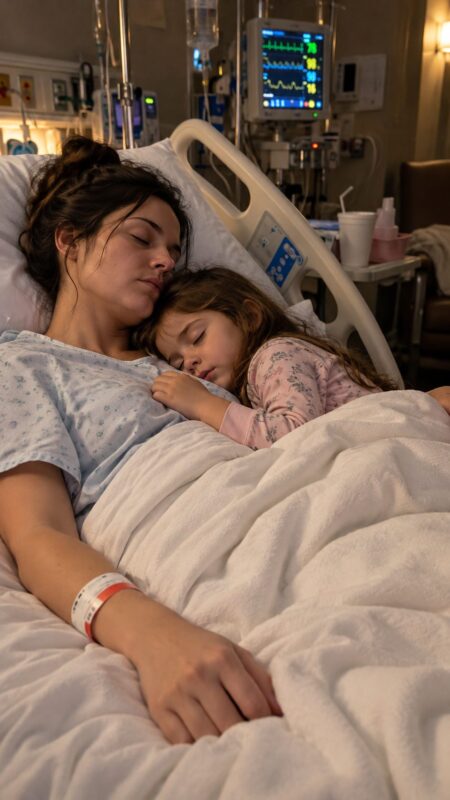
For sixty-three days, my wife lay unconscious in a hospital bed. Doctors couldn’t tell us when—or whether—she would wake up.

Our seven-year-old son, Noah, visited her almost every afternoon. He’d pull his chair close, hold her hand, and tell her stories about school.
But every Saturday, something strange happened.
No matter how late it became, he refused to leave.
One evening, I gently touched his shoulder.
“Come on, buddy. Grandma’s waiting.”
He shook his head.
“I have to stay, Dad.”
“Why?”
He glanced toward his mother before whispering something that sent a chill through me.
“Because Saturday is the only day Mommy answers my questions.”
I thought grief was playing tricks on his imagination.
Until I saw her answer him myself.
My name is Jeremy, and two months earlier, our family had been living a perfectly ordinary life.
Then everything changed.
I was attending a conference several hours from home when my mother called.
“Jeremy, you need to get to the hospital. It’s Emma.”
My wife had suffered an unexpected medical emergency and lost consciousness.
By the time I arrived, she was surrounded by monitors and medical equipment.
Noah sat beside her, clutching his favorite stuffed dinosaur.
When he saw me, he asked a question I’ll never forget.
“Daddy, does Mommy know we’re here?”
I looked at my wife, then back at my son.
“I hope so, sweetheart.”
I couldn’t bring myself to say anything else.
Over the next several weeks, the hospital became part of our daily routine.
My mother brought Noah after school. He sat beside Emma, showing her his drawings and reading aloud from his favorite books.
At first, I thought the visits helped him.
But soon, I noticed changes.
He stopped asking to see his friends. His teacher mentioned that he seemed distracted. At home, he often sat quietly, staring at photographs of his mother.
I began worrying that spending so much time at the hospital was making things harder for him.
So one Saturday, I decided we needed a break.
“Noah, let’s go home early today. We can order pizza and watch a movie.”
He didn’t even look up.
“Not today.”
“Why not?”
“Because Mommy hasn’t talked to me yet.”
I pulled another chair beside him.
“Noah, your mom can’t talk right now.”
He frowned.
“Not with her mouth, Daddy.”
“What do you mean?”
He lifted Emma’s hand carefully.
“She talks with this finger.”
He pointed to her index finger.
“One little move means yes. Two means no.”
I felt a familiar ache in my chest.
Children sometimes find ways to cope with things they don’t understand. I assumed Noah had invented a comforting game.
But I didn’t want to dismiss him.
“Can you show me?”
He nodded.
For nearly forty minutes, nothing happened.
I was about to suggest we try again another day when Noah leaned close to Emma.
“Mommy, can you hear me?”
Her finger moved.
Just once.
I sat perfectly still.
Noah turned toward me.
“See?”
“Maybe that was just a reflex,” I said, more to reassure myself than him.
He shook his head.
“Ask her something.”
I looked at Emma.
“Sweetheart, if you can hear Noah, try moving your finger again.”
Several seconds passed.
Then her finger twitched.
My heartbeat quickened.
Noah leaned forward.
“Mom, is my name Oliver?”
Two small movements.
“Is my name Noah?”
One movement.
I stared at her hand, trying to understand what I’d witnessed.
I knew the movements might have been involuntary. But I also knew they deserved to be brought to her doctors’ attention.
“How long has this been happening?” I asked.
“Since last month.”
“Why didn’t you tell anyone?”
His expression fell.
“I did tell you.”
I searched my memory.
Then I remembered him saying, several weeks earlier, that Mommy had squeezed his finger.
I’d told him that sometimes people move without knowing it.
“You said I was imagining things,” he whispered.
My throat tightened.
“I’m sorry, Noah.”
He looked down at his shoes.
“Then I heard you and Grandma talking about not bringing me here every day.”
“We were worried about you, sweetheart.”
“I know. But I thought if you knew Mommy was answering me, you might say I was making it up again. And then she wouldn’t have anyone to talk to.”
I felt as though someone had knocked the air out of my lungs.
My little boy genuinely believed he was responsible for keeping his mother company.
I knelt beside him.
“Noah, your mom has doctors and nurses taking care of her. And I love her very much. You don’t have to stay here to keep her safe.”
He considered my words.
Then he asked quietly, “So why don’t you ever stay?”
I blinked.
“What?”
“You always come, but you’re never really here.”
He glanced at my phone lying on the windowsill.
“You’re always working or talking to someone. When Grandma takes me home, you leave too.”
I almost corrected him.
I visited Emma every day. I handled her medical paperwork, spoke with specialists, paid bills, and made sure our household continued functioning.
But the more I considered his words, the more uncomfortable I became.
He was right about one thing.
I rarely sat quietly beside my wife.
Because silence frightened me.
Whenever I stopped moving, I remembered our last conversation before her hospitalization.
We’d argued the night before my business trip.
“Jeremy, could you please stay home this weekend?” Emma had asked.
“I’ve already committed to the conference.”
“You’ve been away so much lately.”
“It’s important for my career.”
She’d sighed.
“And we’re important too.”
I remembered being irritated.
“I’ll make it up to you when I get back.”
But I never got that chance.
Two days later, my mother called with the terrible news.
Emma’s illness had nothing to do with our argument, yet I couldn’t stop replaying those final moments.
I wished I’d listened.
I wished I’d stayed long enough to understand why she felt so alone.
Most of all, I wished I’d told her that no meeting or promotion mattered more than our family.
“Daddy?”
Noah’s voice brought me back.
“Are you sad because you and Mommy had a fight?”
I stared at him.
“How did you know?”
“I heard you before you left.”
My eyes burned.
“Yes, buddy. I am sad about that.”
He slipped his small hand into mine.
“Mommy doesn’t like it when you’re sad.”
Then he turned toward Emma.
“Mom, can Daddy stay with you tonight?”
We waited.
Nothing happened.
I was about to speak when her index finger moved once.
Noah smiled.
“She said yes.”
I couldn’t know whether it was a deliberate response.
But I knew what I needed to do.
I sat beside my wife and took her hand.
“Emma, I’ve been so busy trying to keep everything together that I forgot you might need me simply to be here.”
My voice trembled.
“I can’t change what happened before my trip. But I can change what I do now.”
That evening, I told Noah that Grandma would take him home while I remained with Emma.
He looked uncertain.
“What if she needs something?”
“The nurses and I will help her.”
“What if you have work?”
“It can wait until tomorrow.”
He wrapped his arms around my neck.
“Okay, Daddy.”
For the first time in weeks, he left without arguing.
I spent the night beside Emma.
Sometimes I talked.
Sometimes I read from the book she’d been enjoying before she became ill.
And sometimes I simply sat there, holding her hand.
The next morning, I explained everything to her medical team.
They took Noah’s observations seriously and began evaluating whether Emma’s movements represented purposeful responses.
The doctors cautioned us that individual movements didn’t necessarily prove awareness, but repeated patterns could provide valuable information.
Over the following weeks, Emma began showing gradual signs of improvement.
At times, she opened her eyes. During some assessments, she appeared to respond to simple requests.
Her recovery remained uncertain, and the doctors continued monitoring her closely.
But our family had found a new way forward.
Noah no longer felt obligated to spend every free moment at the hospital.
He returned to playing soccer, laughing with his classmates, and enjoying ordinary childhood activities.
And every Saturday, we visited Emma together.
Instead of treating those visits like a duty, we made them moments of connection.
We brought her favorite music. Noah shared his newest drawings. I told stories about our early years together.
One afternoon, Noah arrived carrying a spelling test.
He’d gotten nearly every word correct.
“Mommy,” he announced proudly, “I only missed one!”
I smiled.
“Want to guess which one, Em?”
Noah groaned.
“Dad, don’t!”
I leaned toward Emma.
“Do you think our son will ever learn how to spell ‘Wednesday’?”
We both laughed.
A moment later, Emma’s finger moved.
Noah burst into giggles.
“Even Mommy thinks you’re funny!”
I couldn’t be certain what the movement meant.
But for the first time in a long while, the hospital room felt like a place where our family could still share happiness.
Several weeks later, Noah and I were walking to the parking lot when he stopped.
“Daddy, can I ask you something?”
“Of course.”
“Do you think Mommy knows we love her?”
I crouched beside him.
“I don’t know exactly what she can understand right now. But I hope she can hear our voices. And I know we’re doing everything possible to help her.”
He nodded thoughtfully.
Then he asked, “If I go play with my friends next Saturday, will you still visit her?”
I pulled him into a hug.
“Of course I will.”
“Even if I’m not there?”
“Especially then. You don’t have to take care of everything, Noah. That’s my job, along with the grown-ups helping us.”
He smiled with obvious relief.
“Good. Because Tommy invited me to his birthday party.”
I laughed.
“Then you’d better go. You can tell Mommy all about it afterward.”
He raced toward the car, talking excitedly about balloons, cake, and party games.
As I watched him, I realized just how much had changed.
For weeks, I’d thought my son refused to leave his mother’s bedside because he couldn’t accept what had happened.
But I’d misunderstood him.
He wasn’t clinging to an impossible fantasy.
He was holding on to the possibility that his mother could still hear him.
And because the adults around him hadn’t understood what he was trying to say, he’d convinced himself he needed to remain there until someone finally listened.
That realization changed the way I approached everything.
I continued managing Emma’s care, but I also made time to sit beside her without distractions.
I listened more carefully to Noah.
I made sure he understood that he could love his mother deeply and still enjoy being a child.
And I learned to ask for help rather than pretending I could handle every responsibility alone.
Emma’s journey was still unfolding.
We didn’t know what the future would bring.
But there was one thing I knew for certain.
My seven-year-old son had spent four Saturdays trying to tell me that his mother might be reaching out to us.
What he’d really needed was someone willing to listen.
And in the process, he taught me something I should have understood long before that day:
Love isn’t measured by how many hours you spend beside someone. It’s reflected in how deeply you listen, how gently you care, and whether you’re willing to be truly present when they need you.
My son had been trying to protect his mother.
From then on, I made sure he understood that protecting our family was never a responsibility he had to carry alone.