Grandpa set down his fork the second he discovered I was paying my parents every month to live in their house while my older sister stayed there for free with her two children.
“Hold on,” he said, staring at me across the Thanksgiving table. “You actually pay them rent?”
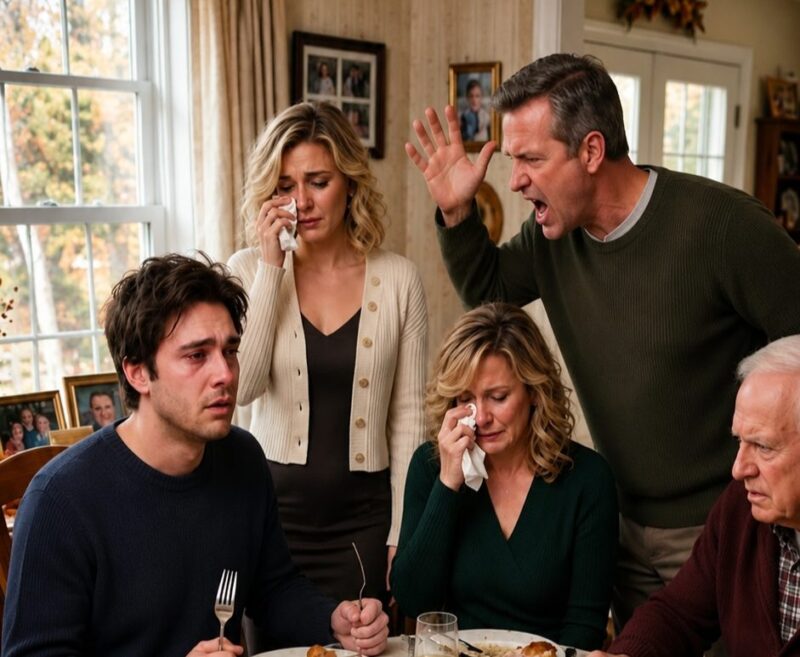
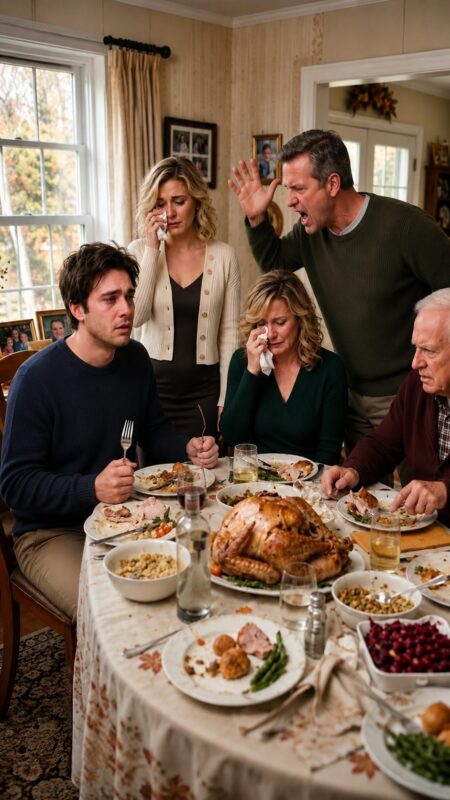
An awkward silence settled over the room.
Dad shrugged. “Claire has two kids. She needs the extra support.”
Grandpa didn’t even look at him.
“How much do you pay?”
“Eight hundred dollars a month.”
Grandma’s eyes widened.
Mom rushed to explain. “It’s not really rent. He’s just helping with household expenses.”
I shook my head.
“I live in the basement. I buy my own food, pay my own insurance, gas, phone bill—everything.”
Grandpa slowly turned toward Claire.
“And what do you contribute?”
No one answered.
After several uncomfortable seconds, Dad cleared his throat.
“She’s still getting back on her feet after the divorce.”
Grandpa’s expression hardened.
“So one child is expected to support the household while the other receives free housing, free childcare, free meals, and financial help?”
Nobody had a response.
For years, I had been the dependable one. I worked full-time, handed money to my parents every month, babysat my nephews, ran errands, and solved problems whenever they called. Claire rarely contributed, yet somehow she was always treated like the one who needed protecting.
Grandpa looked at me again.
“How long has this been going on?”
“Since I was nineteen.”
Grandma covered her mouth in disbelief.
I explained how the payments had started at two hundred dollars and gradually climbed until they reached eight hundred. Then I admitted the part that embarrassed me most.
Despite years of working, I had only managed to save around eleven hundred dollars.
Grandpa leaned back in his chair.
“You should have had your own place years ago.”
Dad immediately became defensive, but Grandpa stood up before the argument could begin.
Then he changed my life with a single sentence.
“Pack a bag. You’re coming home with us.”
Mom started crying.
Dad protested.
Claire accused me of overreacting.
For the first time, I refused to give in.
Less than half an hour later, I walked out the door with my grandparents.
At their house, nobody demanded explanations. Nobody tried to make me feel guilty. Nobody expected me to fix their problems.
The next morning, Grandpa spread my financial records across the kitchen table.
Together, we reviewed every paycheck, every expense, and every dollar I had handed over during the previous decade.
When he calculated the total amount I had contributed, he circled the figure so aggressively that the pen nearly tore through the paper.
“You’ve spent years building everyone else’s future while neglecting your own.”
His words hit harder than anything I had ever heard.
And for the first time, I couldn’t argue with them.
Over the next several weeks, Grandpa helped me create a realistic plan. We looked at apartments, built a budget, and discussed goals I had never allowed myself to imagine.
Meanwhile, my phone constantly rang.
Dad accused me of abandoning my family.
One evening, I finally answered honestly.
“No. I’m choosing myself for once.”
Two weeks later, I signed the lease on a small one-bedroom apartment.
It wasn’t luxurious.
It wasn’t impressive.
But it belonged to me.
That first night, I sat on the floor eating takeout pizza from the box.
The silence felt strange.
Nobody needed a favor.
Nobody criticized my decisions.
Nobody handed me responsibilities that weren’t mine.
For the first time in years, I slept peacefully.
The family backlash didn’t disappear overnight.
Claire called me selfish whenever I refused to babysit.
Mom sent messages designed to make me feel guilty.
Dad acted as if I had personally betrayed him.
But something inside me had changed.
I learned that “no” didn’t require an explanation.
Several months later, during Christmas dinner, Dad finally admitted what everyone already knew.
“It wasn’t fair.”
It wasn’t much, but it was the first genuine acknowledgment I had received.
Mom took longer.
Almost a year later, she showed up at my apartment carrying a container of homemade soup.
After looking around at the life I had built, she quietly said:
“I convinced myself you were fine because I needed to believe you were.”
The apology couldn’t undo the past, but it mattered.
Then life delivered the loss I wasn’t prepared for.
Two years later, Grandpa suffered a fatal heart attack.
After the funeral, Grandma handed me a sealed envelope with my name written on it.
Inside was a short letter.
“Daniel,
You were never weak for staying. You were doing the best you could with what you knew.
What makes me proud is that you eventually chose yourself.
Family should help a person become stronger, never smaller.
Don’t carry bitterness forward.
Carry clarity.
Love,
Grandpa.”
I kept that letter.
Years passed.
I advanced in my career.
I bought a townhouse.
I created the stability I once thought was impossible.
My relationship with my parents slowly healed.
Claire never became easy to deal with, but she eventually stopped treating me like a backup bank account.
Five years after that unforgettable Thanksgiving, the entire family gathered for dinner at my house.
My nephews were teenagers.
My parents sat at my table as guests.
The home belonged to me.
As everyone settled into their seats, Grandma raised her glass.
“To Daniel.”
The room fell quiet.
I smiled and lifted my own glass.
“To Grandpa.”
As I looked around the house I had built for myself, I finally understood the greatest gift he had ever given me.
It wasn’t money.
It wasn’t a place to stay.
It wasn’t even his advice.
He simply reminded me that I was allowed to walk away from a life that was holding me back—and build one that was truly my own.