My Daughter-in-Law Tried to Take Over My Home on Her First Night — She Wasn’t Prepared for My Response
Linda had been living in my house for less than twenty-four hours when she decided it belonged to her.
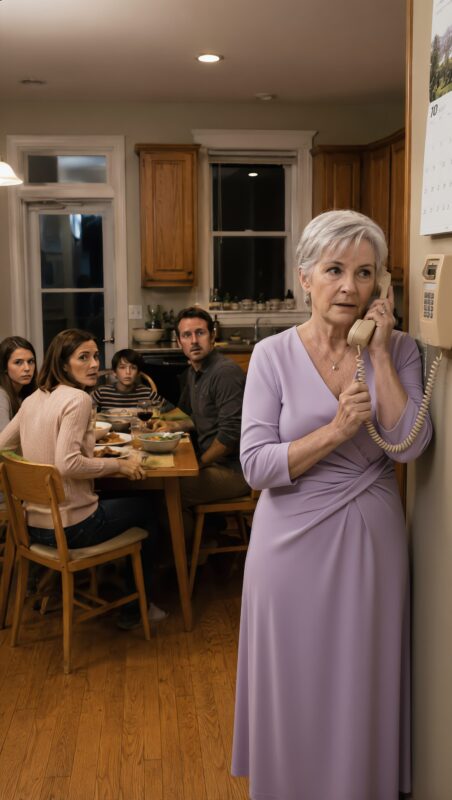
She pointed toward the patio door and said, “You can take your plate outside. From now on, I’m running this house.”
My son sat three feet away.
He heard every word.
And he said nothing.
That silence was the moment everything changed.
I’m Margaret, sixty-eight years old, and the red-brick house on a quiet Chicago street had been mine for more than thirty years.
My late husband, Anthony, and I bought it when we were both teachers and every dollar mattered.
We didn’t inherit money.
We didn’t have wealthy parents helping with the down payment.
We saved.
We clipped coupons, postponed vacations, repaired appliances ourselves, and kept an aging car running long after common sense suggested replacing it.
Eventually, we paid off every cent of the mortgage.
Anthony used to joke that the final payment tasted better than champagne.
After he died, the house became more than property to me. Every room contained pieces of the life we had built together.
Then my son Edward lost his job.
He called late one Tuesday night.
“Mom, I don’t know what we’re going to do.”
There was fear in his voice, and whatever problems existed between Linda and me suddenly seemed unimportant.
“You’ll stay here,” I said.
“Mom, we can’t ask you to—”
“You didn’t. I offered.”
I prepared the guest room for Edward and Linda and made space for the children.
I filled the pantry with things my grandson Dylan liked and told Edward that rent was the last thing he should worry about.
“Get yourself steady again,” I said. “That’s what matters.”
They arrived three weeks later.
Linda began inspecting the house almost immediately.
The guest room wasn’t large enough.
The bathroom mirror was badly positioned.
There wasn’t enough storage.
The neighborhood was quieter than she liked.
Then she wandered into my bedroom.
She studied the windows, opened the closet, and examined the attached bathroom.
“This would work much better for Edward and me.”
I stared at her.
“This is my bedroom.”
“I know. But you’re only one person.”
“No.”
Linda smiled.
Not apologetically.
Patiently.
As though I simply needed time to understand that she intended to get her way.
I should have recognized the warning.
That evening, I cooked Edward’s favorite beef stew.
When he was sixteen, he could empty two bowls after soccer practice and still ask what we had for dessert.
I baked bread, lit candles, and used the wedding china Anthony and I had saved for special occasions.
I wanted the evening to say something simple:
You’re safe here.
Instead, Linda turned dinner into a declaration of ownership.
Once everyone was seated, she folded her hands on the table.
“We need to discuss how things are going to work while we’re living together.”
I looked up.
“Go ahead.”
“There are too many people trying to make decisions.”
“Who?”
She hesitated.
“You and me.”
I almost smiled.
“There aren’t two people making decisions about this house.”
Linda nodded.
“Exactly. Which is why I think I should handle things from now on.”
Edward stared at his dinner.
“Handle what?”
“The household.”
She said it casually, as if the matter had already been settled.
Then she looked directly at me.
“I’m responsible for my family. That means I need authority here.”
“You’re a guest in my home.”
Her expression changed.
“A guest?”
“Yes.”
She laughed once.
“We live here now.”
“You arrived this morning.”
The room went silent.
Then Linda pointed toward the back door.
“If you’re going to make dinner uncomfortable, take your plate outside and eat with your friend.”
My grandson stopped chewing.
Across the table, Sarah lowered her eyes.
I barely noticed them.
I was looking at Edward.
I waited for him to speak.
Five seconds.
Ten.
Nothing.
“Edward?”
He rubbed the back of his neck.
“Mom, maybe everyone should just calm down.”
Everyone.
That word told me everything.
His wife had ordered his sixty-eight-year-old mother out of her own dining room, and somehow we were all equally responsible for the conflict.
For years, I had made excuses for moments like that.
Linda was tired.
Linda was stressed.
Edward was caught in the middle.
It was easier for me to compromise.
I had called that keeping the peace.
Sitting there that evening, I finally gave it the correct name.
Surrender.
I placed my napkin beside my plate.
Then I stood.
Linda relaxed visibly.
She thought she had won.
I walked into the kitchen.
The clock above the doorway showed 6:48.
There was an old number stored in my phone that I rarely needed but never deleted.
I called it.
Edward followed me with his eyes.
“Mom, who are you calling?”
The call connected.
“Gabriella?”
My attorney recognized my voice immediately.
“Margaret? Is everything all right?”
I looked through the doorway at Linda.
“It will be.”
Then I said the words I had never expected to need.
“Please start the process we discussed.”
Linda’s smile vanished.
Edward stood.
“What process?”
Gabriella asked me to confirm my decision.
I did.
Years earlier, Anthony and I had transferred the house into a carefully structured family trust.
We wanted our children to benefit from what we had built someday, but Anthony had insisted on one protection.
As long as either of us was alive, no future beneficiary could dictate what happened inside our home.
After Anthony died, that authority remained with me.
Edward could eventually inherit an interest in the property.
But he didn’t own it.
Linda had no claim whatsoever.
Most importantly, neither of them had an automatic right to live there against my wishes.
Gabriella would prepare the appropriate notice.
Edward’s face changed immediately.
“Mom, you’re making us leave?”
“No,” I replied. “Your choices are making you leave.”
Linda stood.
“You can’t seriously throw out your own son.”
I looked at her.
“You were comfortable throwing me out of my own dining room.”
She opened her mouth, then closed it.
Edward approached me.
“Mom, I should have said something.”
“Yes.”
“I didn’t want to make things worse.”
I shook my head.
“That’s what I told myself for years.”
His eyes dropped.
“I thought silence prevented arguments. All it really did was teach people how much disrespect I was willing to tolerate.”
“Please don’t do this.”
That hurt.
Not because I wanted to change my mind, but because part of me still remembered the little boy who used to run through that kitchen after school.
“I opened my door because you were struggling,” I told him. “I asked for no rent. I prepared rooms for your family. I tried to make this place feel like home.”
“I know.”
“No, Edward. Tonight you showed me that you didn’t.”
The room became completely still.
I returned to the dining table.
My stew had begun to cool.
I sat down in my usual chair.
Linda remained standing.
I picked up my spoon.
“You misunderstood something when you arrived,” I said.
She looked at me.
“My generosity was an invitation. It was never a transfer of ownership.”
No one answered.
For a moment, my eyes moved toward Anthony’s old chair.
I could almost hear something he used to tell me whenever I gave people too many chances.
Kindness needs a door.
You decide when it opens, and you decide when it closes.
I had spent years leaving mine wide open because I was terrified that boundaries would push my family away.
That evening, I understood the opposite.
Without boundaries, I was the one slowly disappearing.
So I finished my dinner at my own table.
I didn’t shout.
I didn’t threaten anyone.
And I didn’t follow Linda’s order to take my plate outside.
I simply stopped confusing love with permission.
The house had never been the real issue.
Respect was.
And for the first time in years, I decided that the peace inside my home included me too.