I Married a Stranger to Give Him Peace in His Final Days. After His Funeral, I Learned He Had Been Carrying a Secret About Me for Most of His Life.
Every week, I spent three afternoons at a hospice, offering my time to people who needed a little comfort.
Most residents wanted the same things: a warm meal, a clean blanket, or simply a familiar voice beside them.
Carl wanted something different.
He wanted someone to play Scrabble with.
At forty years old, Carl was already losing his battle with advanced cancer. His body had grown weak, but his spirit remained surprisingly strong. He lived alone in a small, peaceful home where every wall seemed covered with books. What started as a simple game between a volunteer and a patient slowly became something deeper.
We talked about childhood memories, forgotten dreams, and the little moments that made life meaningful.
Carl never wanted people to see him only as a sick man. When pain interrupted our conversations, he never complained. He would close his eyes, wait quietly, and continue our discussion as if nothing had happened.
One afternoon, he struggled to get his words out. I could see his frustration, so instead of making him feel helpless, I began telling him a completely absurd story about a cat that believed it was a detective.
Within minutes, he was laughing.
I didn’t realize that moment would stay with him forever.
Seven days later, Carl asked me to become his wife.
I stared at him in disbelief.
“We barely know each other,” I whispered. “We’ve only spent four months together.”
He smiled gently.
“I know. But I don’t want my final days to pass with nobody who knows me standing beside me. I don’t want my name on a form with an empty space where a family member should be. I just want someone to be there.”
My decision wasn’t made because I felt sorry for him.
There was something about Carl that felt strangely familiar, like finding a missing piece of a puzzle I never knew was incomplete.
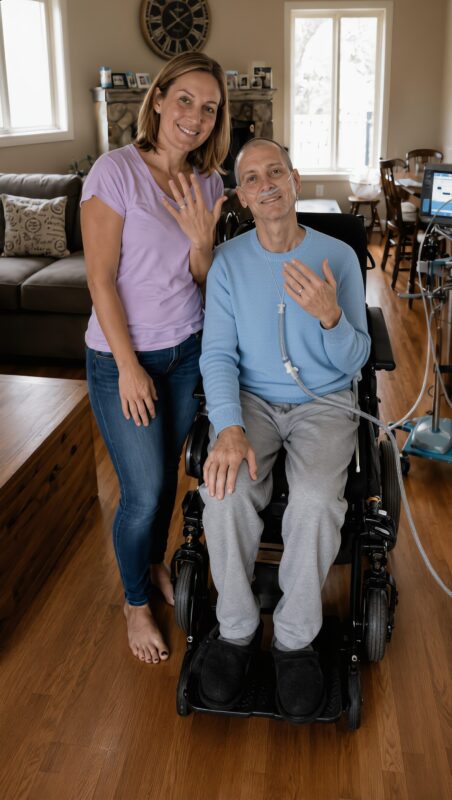
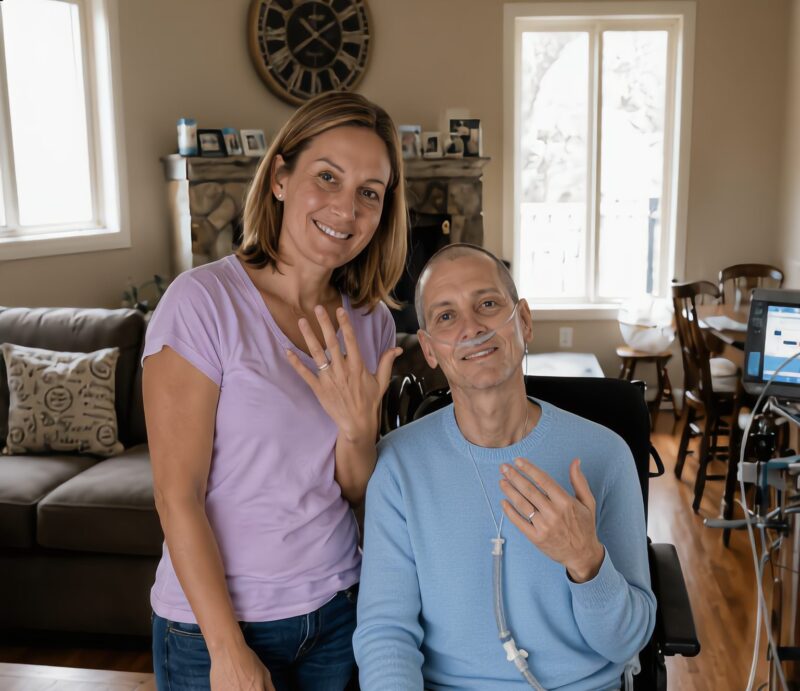
A small ceremony was held in his living room. A priest married us while sunlight filled the room through the old windows. Carl’s hands shook so much that I helped him place the ring on my finger.
Ten days later, I was standing at my husband’s funeral.
That same evening, Carl’s attorney arrived at my door with a sealed envelope.
“He made me promise not to give this to you until after the funeral,” the lawyer explained. “Carl wanted you to remember him as the man you loved before you learned the truth he kept hidden.”
Inside the envelope was a letter.
The first sentence made my heart stop.
“You and I have met before.”
Carl revealed that we had grown up on the same street decades earlier—Silver Oak Street, before my parents passed away and I entered the foster system.
He wasn’t just a stranger I met at a hospice.
He was the quiet boy who repaired broken bicycles in his grandfather Arthur’s tiny workshop a few houses from my childhood home.
I had completely forgotten him.
But Carl had remembered everything.
He remembered the day a customer laughed at him because his stutter made it difficult to speak. While others walked away, I sat beside him and started talking about a kitten I had found near my house until he stopped feeling embarrassed and began smiling.
To me, it was nothing special.
To Carl, it was the first time someone made him feel accepted.
His lawyer placed an old journal in my hands.
For more than twenty years, Carl had written a private entry every birthday. Each page carried a wish for the little girl who had unknowingly changed his life.
“Fifteen years old—I hope she finds people who see her worth.”
“Twenty years old—I hope she finds someone who appreciates her heart.”
“Thirty-four years old—I hope she knows that kindness given at the right moment can stay with someone forever.”
Carl grew up to become a history teacher. His students remembered him as the teacher who noticed the lonely ones, kept extra food in his desk for children who came to school hungry, and always found time for someone who needed help.
He spent his life passing on the same kindness I had shown him as a child.
Years earlier, he had tried to find me. He sent a letter, but it was returned unopened. Believing I had moved on and created a life of my own, he chose not to interfere.
Then, after receiving his diagnosis, he saw my name on the hospice volunteer list.
He requested me.
Not because he wanted me to remember the past.
Because he wanted to meet the woman I had become.
The final page of his journal contained the truth that affected me most.
“I knew who you were the moment you made me laugh instead of looking at me with sadness. You didn’t remember me, and that made your kindness even more genuine.”
That was when I understood why Carl had never told me who he was.
He didn’t want my love to come from a childhood memory.
He didn’t want my answer to be influenced by guilt.
He wanted me to choose him exactly as he was in that moment.
Several weeks later, I returned to Silver Oak Street.
The bicycle shop where Arthur once worked was gone. New buildings stood in its place. But the old maple tree was still there, quietly watching over the street.
Inside Carl’s favorite book, I discovered something I had forgotten for decades.
A pressed red maple leaf.
I had placed it there as a child.
I held it against my heart before carefully returning it to the earth beneath the tree.
It wasn’t something I was losing.
It was something I was bringing back where it belonged.
Walking home with Carl’s book in my hands, I finally understood.
The smallest gestures can create the biggest echoes. A moment of kindness given without expectation can survive for decades—and sometimes, without us ever realizing it, become the greatest story of love we were ever part of.