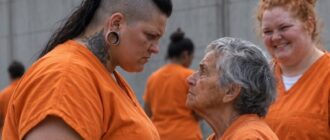
When I was sixteen, my parents sent me away with my belongings stuffed into a garbage bag.
Nineteen years later, they stood inside my Manhattan penthouse asking me for one million dollars.
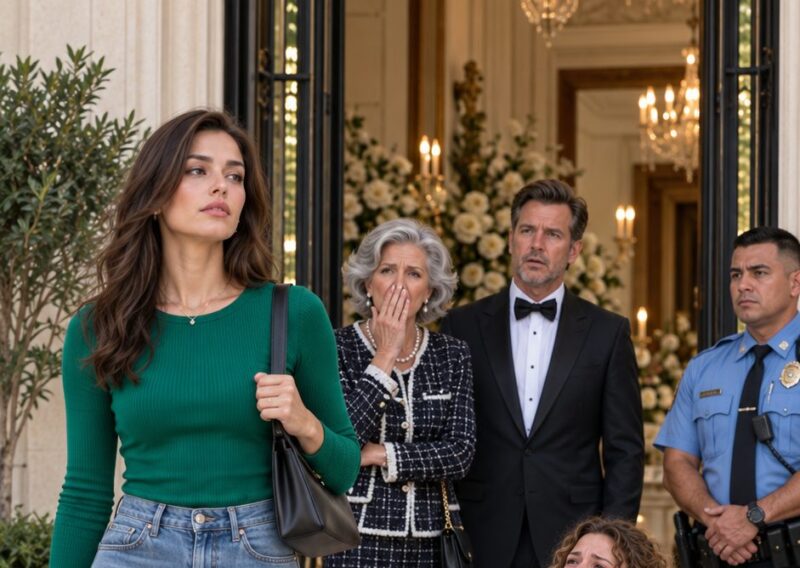
My mother didn’t bother with an apology.
“Chloe needs you.”
I looked down at the prosthetic leg they had once treated like a family embarrassment, picked up my phone, and called my attorney.
They still thought I was the scared girl they had discarded.
They were wrong.
I lost my left leg to aggressive bone cancer when I was ten. The surgery saved my life, but it changed the way my parents looked at me.
Before the illness, I had been their daughter.
Afterward, I became something they seemed desperate to hide.
If guests came over, I was encouraged to stay upstairs. If I asked about a better prosthetic, my father complained about the price. My mother acted as though every medical expense was an inconvenience.
My younger sister, Chloe, had a very different childhood.
She was the one they photographed, praised, and introduced with pride.
There was always money for her clothes, activities, vacations, and celebrations.
For me, there were excuses.
The night everything finally broke apart, I was sixteen.
I was crossing the living room on crutches when one of them slipped. My elbow struck a side table, and a glass of red wine spilled across an expensive rug.
My father didn’t ask whether I was hurt.
He stared at the stain.
Then he walked into the kitchen and came back holding a trash bag.
“Put your things in this.”
I thought he was bluffing.
He wasn’t.
My mother opened the front door.
Chloe remained on the couch and stared at the television.
I packed what I could carry and left.
Nearly two miles later, exhausted and sore, I reached Aunt Sarah’s house.
She opened the door and looked at me for less than a second before stepping aside.
“Come in.”
That was it.
No interrogation.
No lecture.
No hesitation.
She simply gave me a place to stay.
Two years later, I discovered another betrayal.
While trying to build my credit, I learned that accounts had been opened in my name. My parents had used my Social Security number to accumulate more than forty thousand dollars in debt.
A large portion of the spending traced back to Chloe.
Repairing the damage took years.
I filed reports, challenged accounts, met with attorneys, rebuilt my credit, and worked harder than I knew I could.
Eventually, I stopped thinking about survival and started thinking about building something.
By the time I was thirty-five, I owned a thriving real estate company in Manhattan.
I had employees, investors, major clients, and a penthouse overlooking the city.
Then my parents appeared.
My father looked older than I remembered. My mother looked nervous.
Neither one asked how I had been.
They came because Chloe was in trouble.
According to them, she had made a “financial mistake.”
One million dollars was missing, and an audit was coming.
My mother leaned toward me.
“She’s your sister.”
I stared at her.
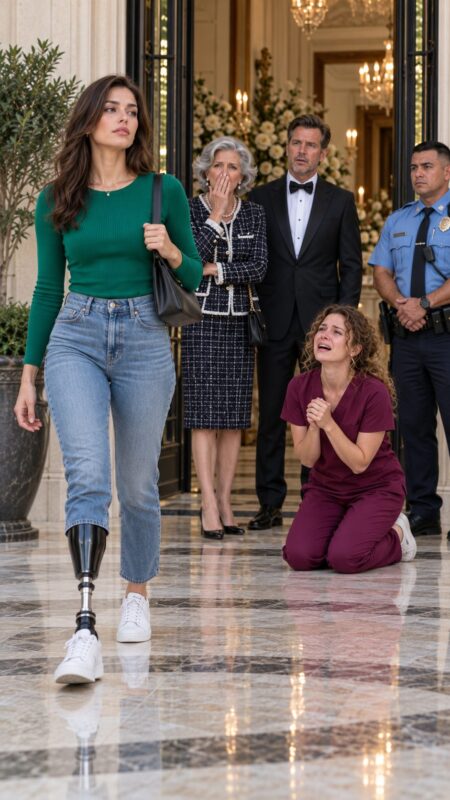
“Family takes care of family,” she added.
The irony almost made me laugh.
I told them no.
Then I hired someone to find out what they were hiding.
The truth was far uglier than missing money.
Months earlier, Chloe had been driving after drinking when she ran a red light and collided with another car.
The other driver was Daniela Ruiz, a twenty-four-year-old accountant.
Daniela survived, but her injuries were serious. Doctors warned that she might face a long rehabilitation and possibly permanent mobility problems.
At the time, Chloe was engaged to Marcus Montalvo.
His family was wealthy, influential, and closely associated with a large medical charity.
Chloe became convinced that if the circumstances of the crash became public, Marcus would leave her.
So she tried to bury the problem.
She pressured Daniela to remain quiet.
Then she began moving money.
Using fake vendor accounts and concealed transfers, Chloe diverted one million dollars from the Montalvo Foundation.
The missing funds were tied to her attempt to control the fallout from the crash.
That was when everything became clear.
My parents had not come back because they regretted losing me.
They came because I had money.
A few days later, Chloe arrived at my office without an appointment.
She marched past reception and demanded that I help her.
I let her talk.
Then I said one name.
“Daniela Ruiz.”
Chloe went still.
For the first time, she looked afraid.
A moment later, fear turned into cruelty.
She started mocking my prosthetic and throwing the same insults at me that she had used when we were teenagers.
Years earlier, those words would have crushed me.
Now they sounded small.
I called security.
They escorted her out while she shouted that I was ruining the family.
Not long after that, Aunt Sarah brought me a box of old paperwork.
Inside were statements, account records, and documents connected to the identity theft my parents had committed years before.
She had kept everything.
I finally had proof.
Then I arranged to meet Daniela.
She watched me carefully when I sat down across from her.
“I’m not here to offer you money for your silence,” I said.
Her expression changed.
“Then why are you here?”
“Because everyone seems to be deciding what should happen to you without listening to you.”
Daniela was quiet for a moment.
Then she told me something Chloe had overlooked.
Before the crash, Daniela had worked inside the Montalvo organization.
She understood their financial systems.
More importantly, she had preserved encrypted accounting data showing suspicious vendor accounts, transfers, and records that pointed directly to Chloe.
Four days later, the Montalvo family hosted Chloe and Marcus’s engagement gala at their East Hampton estate.
My parents assumed I had no connection to the Montalvos.
They were mistaken.
My company was in the final stages of negotiating a fifty-million-dollar real estate partnership with Marcus’s father, Arthur Montalvo.
When I entered the gala, my mother froze.
My father stared.
Arthur walked across the room, shook my hand warmly, and introduced me to several investors as one of his company’s newest strategic partners.
For nearly two decades, my parents had convinced themselves that abandoning me had proved I was weak.
They had never bothered to learn what happened afterward.
Before the agreement was signed, I asked Arthur for a private conversation.
I gave him the documents.
He read them in silence.
Then Daniela arrived with her attorney.
Within minutes, the celebration stopped feeling like an engagement party.
In front of Arthur, Marcus, my parents, and several advisers, Daniela calmly described the crash and what followed.
She explained the pressure placed on her.
Her attorney then presented the accounting records.
Chloe denied everything at first.
Then the server logs were shown.
Her story changed.
She claimed she had panicked.
She said she had only wanted to make the problem disappear before it destroyed her future.
But by then, there was nothing left to hide behind.
Marcus ended the engagement that evening.
The records were turned over to investigators.
Further evidence surfaced during the investigation.
Eventually, Chloe pleaded guilty to charges related to the stolen funds, obstruction, and the crash. She was sentenced to prison and ordered to pay restitution.
My parents spent a large part of their savings trying to protect her.
About a year later, my mother came back.
This time, Chloe was not the reason.
She and my father were in danger of losing their home.
She asked me for money.
I refused.
She stared at me and said, “I don’t understand how you became so heartless.”
For a few seconds, I was sixteen again.
I could feel the weight of the garbage bag over my shoulder.
I could remember the pain in my arms from the crutches.
I could see my mother holding the front door open while I walked away.
I looked at her and rested one hand against my prosthetic.
“If I know how to stand on my own now,” I said, “it’s because you made sure I had to.”
She left without another word.
And something inside me finally went quiet.
I no longer wanted an apology.
I no longer needed them to understand.
Later, I created an independent medical trust to support Daniela’s rehabilitation. It was designed so that neither I nor anyone connected to Chloe could control her treatment or decisions.
About a year later, Daniela sent me a video.
She was standing between parallel bars in a rehabilitation center.
She shifted her weight carefully.
Then she took one step.
A second followed.
I watched the video twice and cried both times.
I still spend many Sundays with Aunt Sarah.
She taught me a definition of family that has stayed with me all these years.
Family is not always the people whose names appear beside yours on legal documents.
Sometimes family is the person who sees you standing on the doorstep with nowhere to go and simply says, “Come in.”
There is a photograph on my desk from when I was seventeen.
I am standing beside my old crutches, trying to smile like everything is going to be fine.
Aunt Sarah wrote something on the back.
“This girl doesn’t know yet how far she’s going to go.”
My parents once believed losing a leg meant I was damaged.
In the end, the hardest lesson they faced was that the thing that had been broken in our family was never me.