I never expected that a simple act of kindness would turn my life upside down. All I wanted was to bring a bit of comfort to sick children by giving them homemade marshmallows. Instead, I uncovered a truth that changed everything I thought I knew about myself.
Every day after school, I went straight to the hospital to visit my grandmother. She had always been my entire world—the person who raised me, protected me, and filled every role in my life. I grew up believing my mother had died shortly after my birth and that my father had never been involved. It was a story I accepted without question.
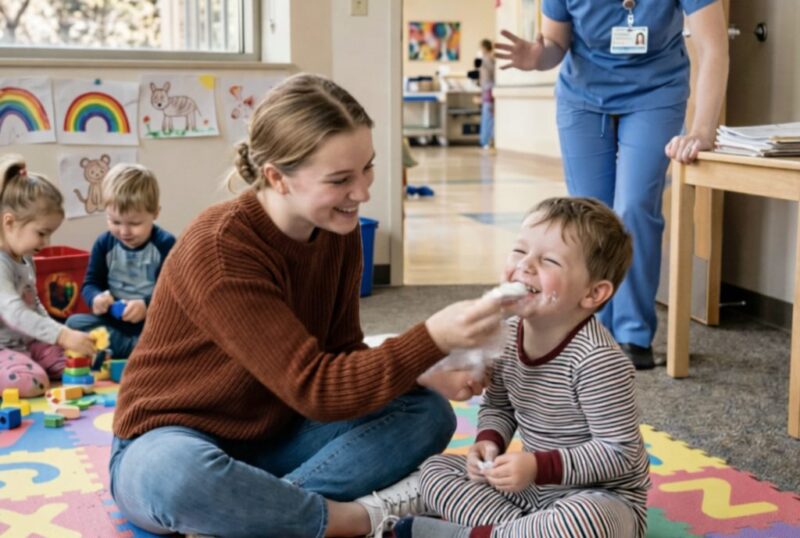
One afternoon, after reading to Grandma until she drifted off to sleep, I wandered into the pediatric wing. The walls were bright and cheerful, but the atmosphere felt heavy. Some children stared silently at vending machines, others sat quietly, too tired to ask for anything. I recognized that quiet strength—the kind you show when you are scared but trying not to be.
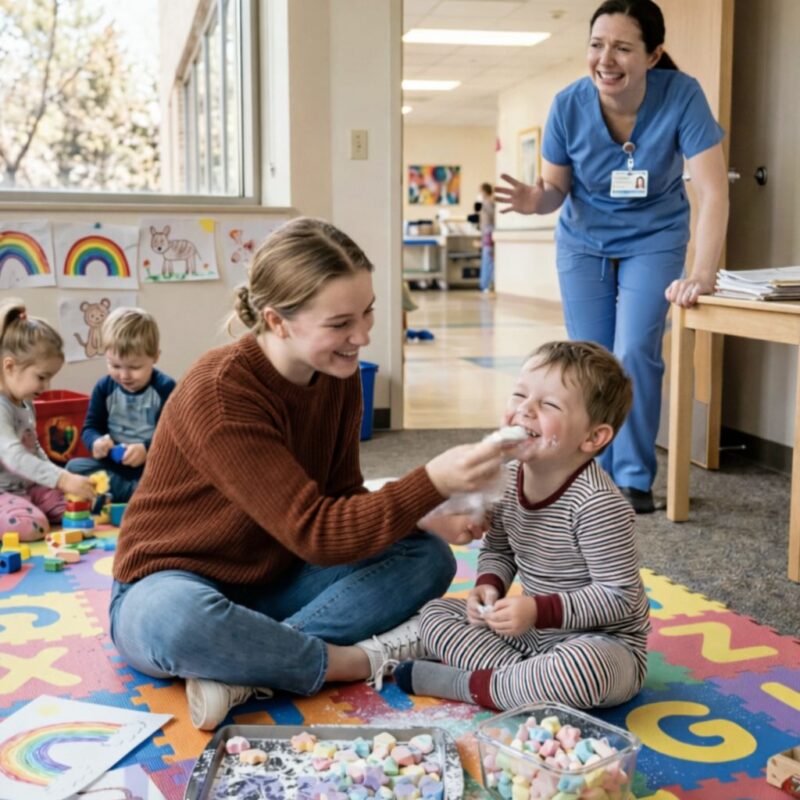
In that moment, I decided to do something small to lift their spirits. I asked for permission and spent the evening in the kitchen making marshmallows—cutting them into fun shapes, coating them in sugar, and packing them neatly. The next day, I handed them out. The children’s faces lit up, and laughter quickly replaced the silence.
While I was sitting with them, a nurse approached me. At first, she seemed warm and kind, asking my name and whether I would return. But the moment I introduced myself fully, her expression changed. She turned pale and grabbed onto the desk for support.
“I’ve been searching for you for 16 years,” she said quietly.
I assumed she had mistaken me for someone else. But then she showed me an old photograph—of a woman holding a tiny newborn. That baby was me.
The nurse, Diane, explained that she had worked in neonatal care when I was born. She remembered my case because something about it had never made sense. Over time, my records had disappeared from the system, which only deepened her suspicion.
Shaken, I asked her why she had been looking for me. Her answer left me even more unsettled.
“You need to speak with your grandmother,” she said. “Ask her what happened when your mother came back for you.”
Came back?
That didn’t make sense. I had always been told my mother was gone.
I rushed back to Grandma’s room, my chest tight with anxiety. When I confronted her, she denied everything at first. But something in her expression gave her away.
Then Diane entered with a doctor, and the tension in the room became unbearable. Finally, Grandma gave in.
“My mother didn’t die… did she?” I asked.
After a long silence, she admitted, “No. She didn’t.”
The truth unfolded slowly. My mother had struggled after I was born. Overwhelmed, she walked away. But before I left the hospital, she returned, claiming she wanted to try again.
Grandma refused to let that happen.
She believed my mother could not provide a stable life. She told the authorities my mother was unfit and chose to raise me herself. In her mind, she was doing what was best for me.
But she never told me any of it.
Instead, she let me grow up believing my mother had died, sparing me the pain of wondering why I had been left behind.
Standing there, I realized my entire life had been built on a version of the truth that wasn’t real.
“You didn’t protect me,” I said softly. “You chose what I was allowed to believe.”
She broke down in tears, but I couldn’t ignore what I had just learned.
I turned to Diane. “Can you help me find her?”
Grandma looked heartbroken, but I knew I couldn’t turn back.
“I love you,” I told her gently. “But I need to know the truth.”
As I stepped out into the hallway, everything felt different—uncertain, unfamiliar. Diane placed a reassuring hand on my shoulder and promised to help me search.
For the first time in my life, I wasn’t living someone else’s version of my story.
I was ready to discover my own.