I Paid $19,000 for My Son’s Wedding—But in His Speech He Thanked Someone Else as His “Real Mother”
My name is Stephanie. I am seventy years old, and for most of my life I believed I was truly someone’s mother.
Ethan came into my life when he was only five.
His parents died in a car accident on a wet interstate outside Chicago. One moment he belonged to a family; the next he was a quiet little boy sitting in a social worker’s office, clutching a plastic dinosaur and staring at the floor. I was twenty-five at the time, working long factory shifts and living in a cramped walk-up apartment where the refrigerator covered half the window.
But when they placed him in my arms, something inside me became certain.
I didn’t hesitate.
I raised Ethan with overtime wages and stubborn determination. I packed his school lunches, stayed awake through long nights when he had fevers, and helped him study at the kitchen table. I taught him how to read, how to ride a bicycle, and how to say “please,” “thank you,” and “I’m sorry.”
I gave him my time, my savings, and every quiet dream I set aside because motherhood came first.
For many years, I believed he understood what that meant.
When Ethan turned eighteen, I told him the truth. We sat at the same kitchen table where he had done his homework for years, and I gently explained that he had been adopted.
He didn’t cry.
He didn’t hug me.
He barely glanced away from the television.
“I figured you weren’t really my mom anyway,” he said casually, watching a basketball game.
That moment was the first crack.
I told myself it was shock. Teenagers say careless things.
But I was wrong.
Later, Ethan met Ashley.
She grew up in a comfortable suburb—big houses, ambitious expectations, and a mother named Carol who wore her country club membership like a crown. The first time we met, Carol looked at my cardigan the way someone examines spoiled milk.
Still, I tried to be polite. I always tried.
Several months before the wedding, Ethan came to my apartment and got straight to the point.
“We need your help,” he said. “Ashley’s parents already contributed, but we’re still short nineteen thousand dollars.”
I hesitated. “Do you really need that much?”
He shrugged.
“If you love me, yes.”
That sum represented everything I had saved—decades of skipped vacations, worn coats, and weekends spent mending clothes for neighbors instead of going out. It was my safety net. My future.
The next morning, I went to the bank and withdrew the money.
I told myself that this was simply what mothers did.
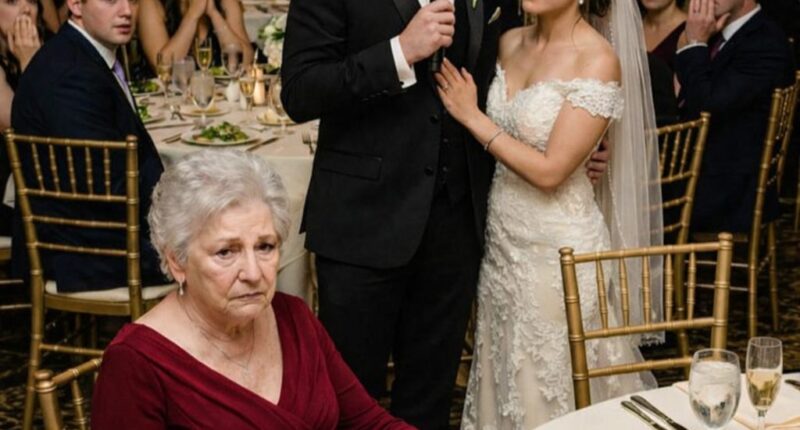
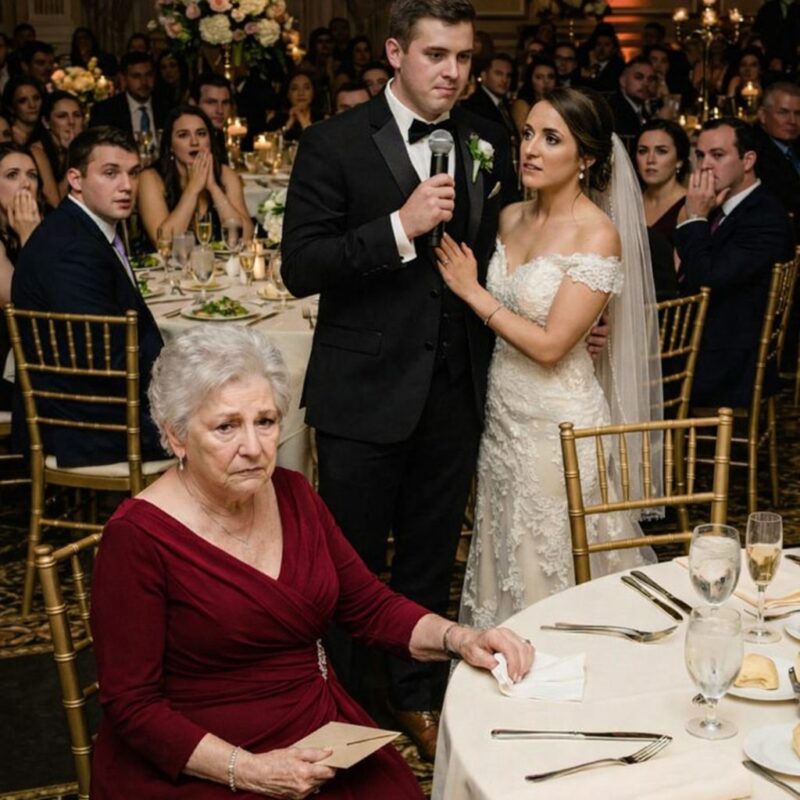
The wedding was beautiful in the way expensive events often are—crystal chandeliers, silk table settings, and a dessert display larger than the kitchen where I had raised my son. I sat near the back of the ballroom. Officially I was the groom’s mother, but it felt more like I was a distant guest no one quite knew how to place.
Then Ethan stood up with a microphone.
He smiled and looked directly at Carol.
“I want to thank my real mother, Carol, for making this day so perfect.”
The room filled with laughter and applause. Guests lifted their phones to record the moment.
Slowly, dozens of faces turned toward me.
I didn’t cry.
I simply folded my napkin, placed it on the table, stood up, and quietly walked out of the ballroom while the band rushed to start playing.
No one came after me.
That night I returned to my modest apartment—the same one I had never upgraded even after Ethan moved away. I hung up my dress, sat at the kitchen table, and opened a yellow folder labeled **LEGAL**.
Inside were documents I had prepared years earlier—after that basketball game, after the first crack, when I realized that love does not always bring respect.
Three days later, I called Ethan.
“Stop by,” I said calmly. “I need your signature on something related to the wedding.”
He arrived relaxed, sitting on the couch as though he owned the place.
I slid the folder across the table.
Inside was a notarized loan agreement.
Nineteen thousand dollars.
No interest.
Ten years to repay it.
His smile disappeared.
“You’re joking,” he said.
“No,” I replied. “You asked whether I loved you. You never asked if the money was a gift.”
“You’re doing this because you’re upset,” he snapped.
“You don’t get to decide what hurts someone,” I answered quietly.
“And if I refuse?”
“Then I will recover it through the courts.”
He stared at me as if I were someone he didn’t know.
But in the end, he signed.
Two weeks later the payments began arriving—always on time, always formal, written as if I were just another creditor.
I deposited them without comment.
With that money, I finally began doing things I had postponed my entire life. I traveled to the coast. I bought a coat that actually fit me. I joined a ceramics class and discovered that clay, like people, responds best to patience and steady hands.
Two years later, Ethan visited again.
“I never said you weren’t my mom,” he said quietly.
I studied him for a long moment.
“You showed everyone who you were grateful to,” I replied. “That told me everything.”
He left shortly afterward.
I don’t know whether he regrets it.
And I no longer need to know.
Because the moment he called someone else his “real mother,” I finally understood how to value myself.
And after seventy years, that kind of clarity is something no one can ever take away.