I walked into my husband’s hospital carrying his favorite lunch, expecting to surprise him between surgeries.
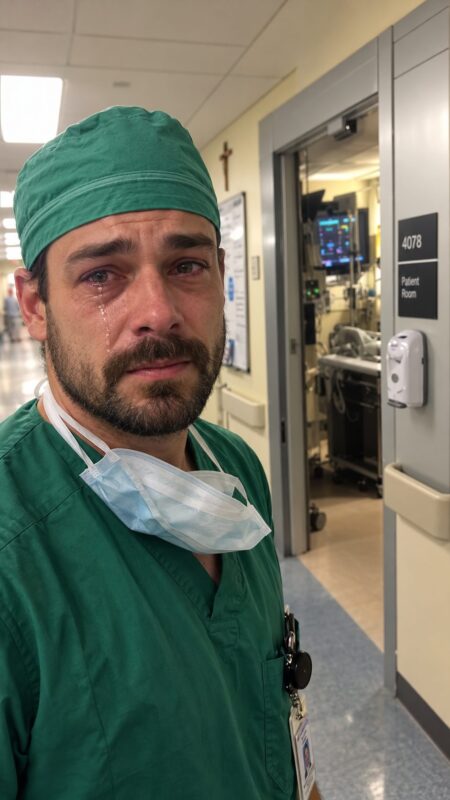
Instead, one of his closest colleagues stared at me with tears gathering in his eyes.
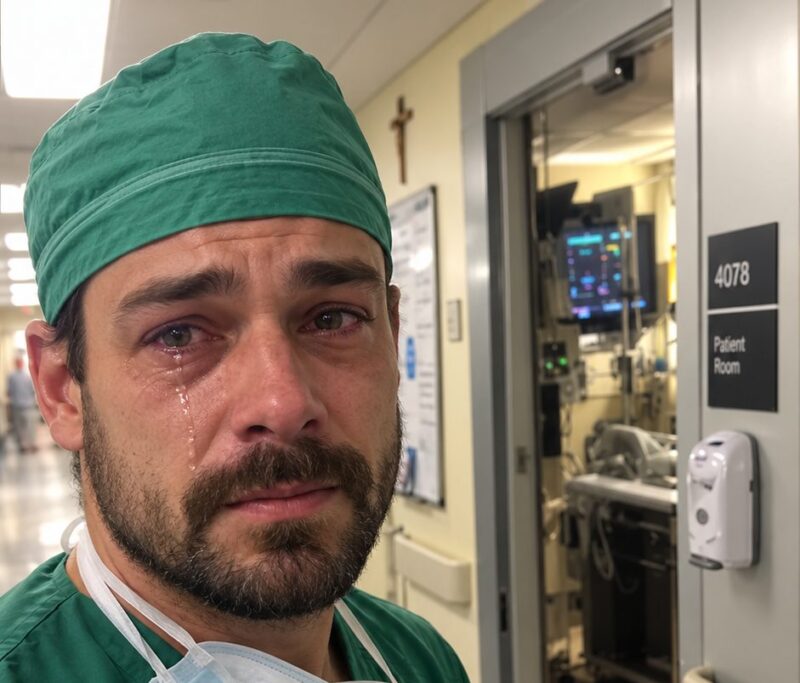
“Claire,” he whispered, “Ben hasn’t told you, has he?”
My heart seemed to stop.
“Told me what?”
Until that moment, I’d believed I understood why my husband was rarely home.
Ben and I had been married for eleven years. He was a talented surgeon, the kind of doctor who could spend hours fighting for a stranger’s life and still worry afterward that he hadn’t done enough.
I had always admired that about him.
But during the previous year, admiration had slowly become loneliness.
Ben’s shifts grew longer. His calls home became shorter.
Eventually, I stopped setting a place for him at dinner because most nights his food ended up wrapped in foil and placed in the refrigerator.
He missed Thanksgiving because of an emergency.
Our anniversary disappeared beneath another supposedly impossible shift.
Then he missed Emma’s eighth birthday.
That one hurt.
Our daughter kept looking toward the front door while blowing out her candles, convinced her father would appear at the last second.
He never did.
“Hospital’s short-staffed again,” Ben told me later. “I’m sorry.”
Sometimes an entire night passed without him coming home.
I tried not to complain.
Whenever he finally returned, exhaustion seemed carved into his face.
Once, sometime after midnight, I woke and realized he wasn’t lying beside me.
He was sitting on the edge of the bed with his head lowered and his shoulders trembling.
“Ben?”
He quickly wiped his cheeks.
“Long day.”
I reached toward him, but he stood.
“Get some sleep, Claire. I’m okay.”
Those three words had become his answer to everything.
I’m okay.
So I believed him.
Or perhaps I simply wanted to.
One Tuesday morning, after watching him leave wearing his hospital badge, I decided he deserved a surprise.
I packed the lunch he always ordered on his days off and added a thick slice of apple pie.
Before closing the bag, I slipped a note inside.
YOU’RE ALWAYS TAKING CARE OF EVERYONE ELSE. TODAY, LET SOMEONE TAKE CARE OF YOU.
I imagined him rolling his eyes affectionately when he read it.
Instead, when I arrived at his department, the atmosphere changed the moment people recognized me.
A nurse I’d known for years suddenly became fascinated with the paperwork on her desk.
“I’m looking for Ben,” I said cheerfully. “Don’t call him. I want to surprise him.”
She glanced at another nurse.
The second woman looked away.
My smile vanished.
“What’s going on?”
Neither answered.
“Is Ben okay?”
Before they could respond, I saw Arnold, another surgeon who’d worked beside my husband for years.
Relief washed over me.
“Arnold! Where are you hiding my husband?”
He stopped walking.
His face went pale.
Then he noticed the lunch bag.
Something in his expression frightened me more than anything the nurses had done.
“Claire…”
“What?”
His eyes filled with tears.
“He really didn’t tell you.”
The hallway suddenly felt too quiet.
“Tell me what?”
Arnold guided me into an empty room and closed the door behind us.
He struggled for several seconds before speaking.
“Ben has been receiving treatment here for the last six months.”
I stared at him.
“Treatment?”
“He has a serious heart condition.”
I almost laughed because the sentence sounded impossible.
“My husband is a surgeon here.”
“I know.”
“He treats patients here.”
“Yes.”
“Then what are you saying?”
Arnold’s voice softened.
“Some of the nights you thought Ben was working, he wasn’t here as a doctor.”
My fingers went numb.
“He was here as a patient.”
The lunch bag nearly slipped from my hand.
Suddenly, every unexplained absence returned at once.
Thanksgiving.
Our anniversary.
Emma waiting beside her birthday cake.
The untouched dinners.
The exhaustion.
Ben crying in the darkness.
I had spent months believing the hospital mattered more to him than we did.
All that time, he’d been sick.
“Why didn’t he tell me?”
“He thought he was protecting you,” Arnold said. “Especially Emma. He kept telling us he’d explain everything when his condition improved.”
I barely heard the rest.
“Where is he?”
Arnold pointed toward the elevators.
I was already moving.
When I reached Ben’s room, I stopped in the doorway.
I’d seen my husband wearing scrubs thousands of times.
I’d never seen him in a hospital gown.
He sat beside the window, staring outside.
His wedding ring and employee badge rested together on the table beside his bed.
Then he turned.
His face changed the instant he saw me.
“Claire?”
I lifted the lunch bag.
For some ridiculous reason, that was when I started crying.
“You lied.”
Ben closed his eyes.
“I know.”
“Six months?”
He nodded.
“Six months, Ben.”
“I didn’t know how to tell you.”
“You could’ve started with the truth.”
“I wanted to protect you.”
I crossed the room.
Part of me wanted to shout at him.
Instead, I wrapped my arms around him.
His body shook against mine.
“I was supposed to be the strong one,” he whispered.
“Who told you that?”
He didn’t answer.
“I didn’t want Emma seeing me sick.”
I pulled back and took his face between my hands.
“She doesn’t need a perfect father. She needs you.”
His eyes closed.
“And I don’t need some invincible surgeon who never struggles,” I said. “I need my husband.”
“I was scared.”
“I know.”
“What if she remembers me like this?”
“She’ll remember the man who read her bedtime stories. The father who burns pancakes every Sunday. The person who taught her to ride a bike.”
His tears finally came.
“You don’t get to choose which version of you we’re allowed to love,” I whispered.
Something inside him seemed to give way.
For the first time since I’d known him, Ben stopped trying to reassure everyone else.
He simply let me hold him.
The months afterward tested all three of us.
There were treatments, appointments, exhausting days, and nights filled with uncertainty.
But there were good things too.
Ben started coming home earlier whenever he could.
We ate breakfast together.
Emma introduced him to movies he’d somehow missed while working.
Sometimes the three of us sat on the couch doing absolutely nothing important.
Those became my favorite evenings.
Ben eventually reduced his hospital schedule.
At first, he struggled with the decision. He had spent so many years measuring his worth by how many people needed him.
Gradually, he learned that his family needed something different.
Not the surgeon.
Not the provider.
Just Ben.
Months later, I came downstairs expecting another ordinary dinner.
Instead, I found my husband already sitting at the table.
Emma was beside him, laughing because he’d turned cutting an apple pie into some kind of geometry problem.
“All slices must be equal,” he announced seriously.
“Dad, nobody cares!”
“I care.”
He noticed me standing in the doorway.
“Well?”
“Well what?”
“Are you surprised I’m home before you?”
I laughed.
“Completely.”
Then I saw a familiar piece of paper beside my plate.
It was worn around the edges and carefully flattened.
My note.
The one I’d placed inside his lunch months earlier.
Ben had saved it.
Underneath my original message, he’d added another line.
I FINALLY UNDERSTAND. TAKING CARE OF EVERYONE DOESN’T MEAN DOING EVERYTHING ALONE.
I read it twice.
Then I looked across the table.
Emma was stealing pie from Ben’s plate while he pretended not to notice.
For years, I’d thought being a supportive wife meant waiting patiently.
Waiting for his shift to end.
Waiting for him to come through the door.
Waiting for work to become less demanding.
Waiting for our life to begin again.
But love wasn’t supposed to be one person waiting while the other carried every burden alone.
Love was allowing someone to see you when you weren’t strong.
It was saying, “I’m scared,” and trusting them to stay.
It was making room for another person inside the parts of your life you would rather hide.
That Tuesday, I’d gone to the hospital hoping to surprise my husband with lunch.
Instead, I discovered a secret that changed our marriage.
And months later, sitting around that dinner table with apple pie between us, I finally understood what had changed most.
Ben hadn’t simply learned how to spend less time at the hospital.
He’d learned how to let us stand beside him.
And after years of waiting for my husband to come home, I finally felt like he truly had.