I was seven years old when I realized that childhood could be surprisingly cruel.
My younger sister, Rosie, was born with Down syndrome. She found joy in the simplest gestures—a smile, a compliment, someone inviting her to play. Sadly, those moments were rare. Most children ignored her or laughed until she ran home in tears.
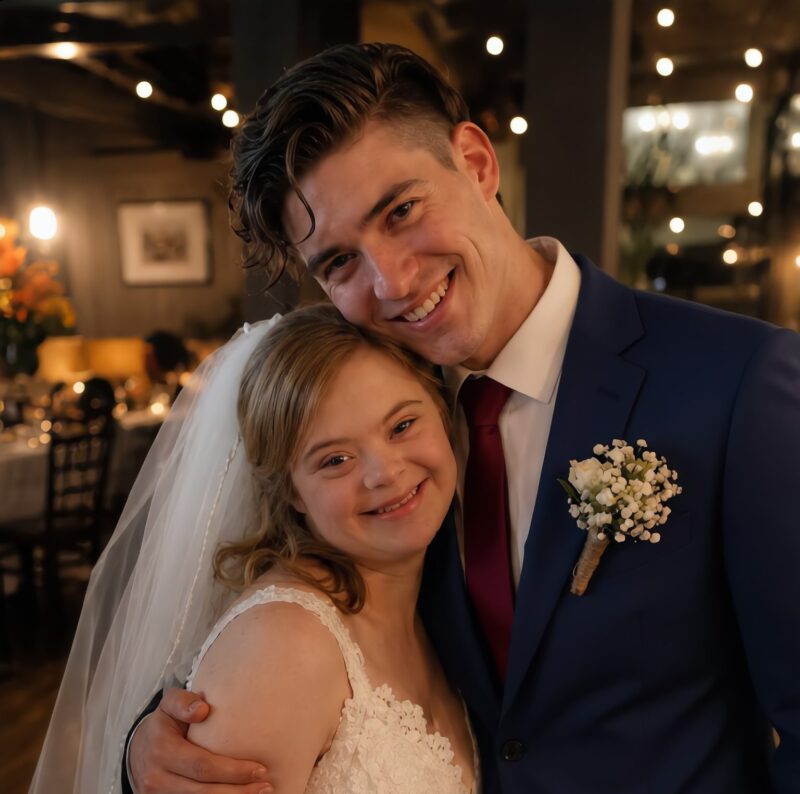
Only one person never treated her that way.
My best friend, Ben.
He stood up for Rosie whenever anyone mocked her, made sure she was included in every game, and once, with complete confidence, told her, “When we’re older, I’ll be the one taking you to prom.”
Everyone laughed.
He never did.
As the years passed, my friendship with Ben slowly became something deeper. I imagined we would eventually build a future together, with Rosie always close to us.
Then, when we were twenty-two, Ben showed up at our front door carrying a small ring box.
I was certain that my dreams were about to come true.
Instead, he quietly asked, “Is Rosie home? I’d like to speak with her.”
Minutes later, I watched him kneel before my sister.
Without hesitation, she accepted.
That night, I cried until I had no tears left.
I convinced myself his decision couldn’t possibly be about love. There had to be another explanation.
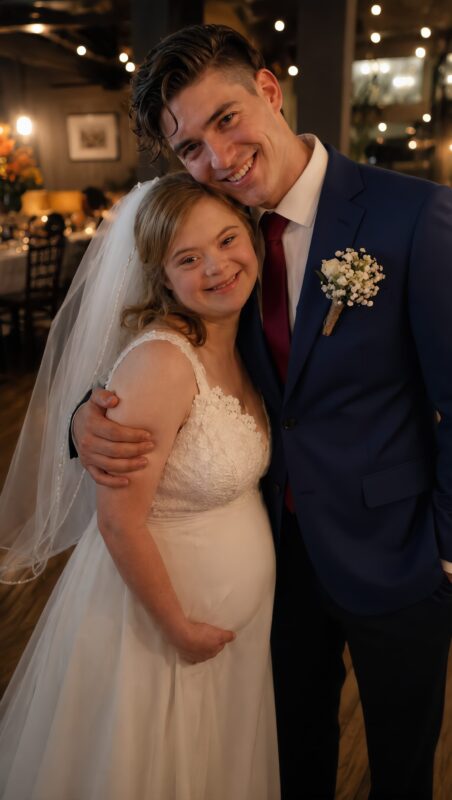
No matter how broken I felt, I stood beside Rosie as her maid of honor. During the ceremony, Ben wept as she walked toward him, while guests whispered about the remarkable man willing to “care for someone like her.”
They misunderstood everything.
Three years later, Ben and Rosie had built a peaceful life in a cheerful little yellow house.
Then came the happiest news imaginable.
Rosie was pregnant with twins.
Our celebration ended too soon.
At thirty-four weeks, severe complications sent her into emergency surgery. Doctors warned that she had lost an alarming amount of blood and prepared us for the possibility that she might not survive.
As we waited outside the operating room, Ben asked me to follow him into a quiet hallway.
His voice shook.
“If Rosie doesn’t wake up, I promised I’d finally tell you the truth.”
He placed a legal document in my hands.
The letterhead belonged to my father’s law firm.
According to the contract, my parents had offered Ben a substantial payment if he agreed to marry Rosie.
I could barely breathe.
“So… you accepted?”
He wiped away tears before answering.
“I never touched the money. Every payment went into an investment account under Rosie’s name. It has always been hers.”
His explanation only raised another question.
“Then why agree?”
He looked directly at me.
“Because I loved her.”
He explained that my parents feared Rosie would depend on our family forever. They wanted someone else to become legally responsible for her so I could live my own life without feeling obligated to care for my sister.
Ben realized he could use their offer against them.
He accepted the agreement, protected Rosie financially, and married the woman he truly loved.
Money had never been the reason.
Love had.
About a year after the wedding, he confessed everything to Rosie. Instead of feeling betrayed, she smiled through her tears, forgave him, and chose to keep building their life together.
The only condition she gave him was simple.
“Never tell my sister. I don’t want her to lose our parents.”
Standing in that hospital corridor, I finally understood what I had failed to see for years.
Their marriage wasn’t built on sacrifice.
It was built on genuine devotion.
Every anniversary they celebrated, every bouquet Ben brought home, every joke they shared, every quiet moment between them—it had all been real.
Then the surgeon returned.
Rosie had survived.
So had both babies.
Before we could celebrate, my parents arrived wearing carefully rehearsed expressions of concern.
Without saying a word, I lifted the contract where everyone nearby could see it.
“You tried to hand Rosie off to someone else,” I said.
They insisted they had only been protecting my future.
I shook my head.
“No. You treated your own daughter like a responsibility you wanted to transfer. Ben signed this contract to secure her future. You signed it because you wanted to escape yours.”
The hallway fell silent.
Doctors, nurses, visitors, and staff stopped to listen.
My parents couldn’t answer.
They simply turned around and left.
Within a few weeks, they voluntarily stepped down as trustees of Rosie’s trust after attorneys warned them the agreement would never survive public scrutiny.
Other family members assumed responsibility for managing her finances, and the truth quickly spread throughout our extended family.
The admiration my parents had spent years earning disappeared almost overnight.
Several months later, during the twins’ dedication ceremony, my uncle stood to make a toast.
“Many people promise to love someone,” he said. “Ben proved it every single day.”
Everyone applauded.
I watched Ben gently rocking one baby while Rosie cradled the other, both smiling with the quiet happiness they had fought so hard to protect.
For years, I believed my best friend had stolen the future I wanted.
Only then did I understand the truth.
He hadn’t taken anything from me.
He had given my sister the life she deserved.
That day, I learned that family is not defined by shared blood, legal papers, or childhood promises.
Family is built by those who choose compassion, loyalty, and love—even when everyone else chooses the easier path.