I was twelve when I pulled a dying man out of the river.
At the time, I had no idea who he was.
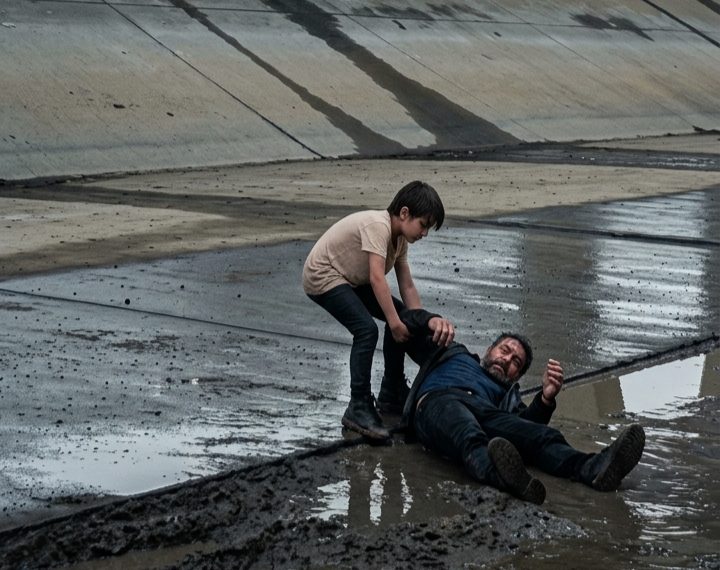
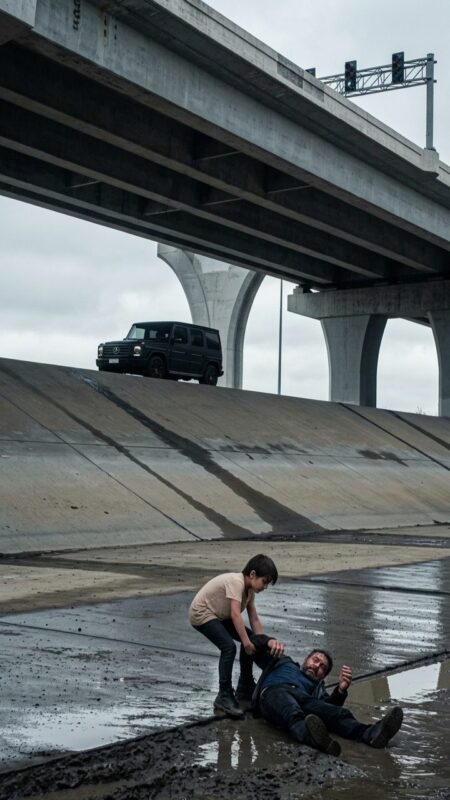
I only knew that I had seen someone disappear beneath the current, so I threw off my shoes, jumped from the embankment, and fought the water until I managed to drag him close enough for two men onshore to help us out.
Less than ten minutes later, I was sitting inside a black armored SUV, wrapped in a blanket, staring at Mateo Vargas.
Everyone in Ciudad de Esperanza knew that name.
Politicians avoided saying it in public.
Police officers lowered their voices when they mentioned him.
Newspapers called him a businessman.
Everyone else called him the most dangerous man in the city.
Vargas sat opposite me, water still dripping from his dark hair. He adjusted the silver frames of his glasses and studied my face with an intensity that made me uncomfortable.
Finally, he said, “You look like her.”
“Like who?”
“Esperanza.”
The name hit me immediately.
“My grandmother?”
He nodded.
“She’s dead.”
“I know.”
Vargas reached into his coat and placed something in his palm.
A small silver locket.
The metal was dark with age, and one side was scratched near the hinge.
I recognized it instantly.
My grandmother had worn it for years.
I stared at him.
“Where did you get that?”
“From Esperanza.”
My throat tightened.
“She never gave that to anyone.”
“She did once.”
He closed his fingers around it.
“Thirty years ago, your grandmother saved my life.”
I said nothing.
“She pulled me out of a canal after men tried to kill me,” Vargas continued. “You did almost exactly the same thing today.”
Then his voice changed.
“There is something else you deserve to know.”
I watched him carefully.
“The fire that killed your family was set deliberately.”
For several seconds, I forgot how to breathe.
The authorities had always called it an electrical fire.
Old wiring.
A tragic accident.
A house that burned too quickly for anyone to escape.
“You’re lying.”
“I wish I were.”
Later that evening, Vargas took me to his estate high above the coast.
Inside a locked study, he opened a weathered police file and pushed it across the desk.
The first pages contained the official findings.
Electrical failure.
Accidental ignition.
No evidence of foul play.
Then Vargas turned to documents that had never appeared in the public report.
Laboratory photographs.
Forensic notes.
Material analysis.
Traces of military incendiary compound had been found around several windows and along the rear exit.
Whoever started the fire had not simply wanted the house to burn.
They had wanted everyone inside trapped.
My hands tightened around the file.
“Who did it?”
Vargas leaned back.
“Men working for Julian Sterling.”
Mayor Sterling.
His face covered half the city.
Schools carried his name.
He opened hospitals, attended charity events, and appeared on television promising law and order.
“Why would the mayor want my grandmother dead?”
“Because she stole something from him.”
“What?”
“A ledger.”
Vargas opened another folder.
“Sterling spent decades building his political empire through bribery, extortion, murder, cartel money, and offshore accounts. Your grandmother found proof.”
I almost laughed because it sounded impossible.
“My grandmother sold medicinal herbs in the central market.”
“That was the woman you knew.”
He leaned forward.
“The woman Sterling knew had evidence that could put half his administration in prison.”
I looked down at the locket.
“Where is the ledger?”
“If I knew,” Vargas said, “Sterling wouldn’t still be looking for it.”
Before I could answer, the lights went out.
Not dimmed.
Not flickered.
Gone.
Vargas stood immediately.
“Get down.”
The window exploded inward.
I hit the floor.
Gunshots tore through the study.
Men in tactical gear rushed through the broken glass.
Vargas pulled a pistol from beneath the desk and fired back.
I crawled behind a heavy cabinet.
One attacker spotted me.
He raised his rifle.
I saw his finger tighten near the trigger.
Then his body jerked backward.
Marco, Vargas’s security chief, appeared in the doorway with a weapon in both hands.
“Move!”
More guards rushed in behind him.
Within seconds, they pushed the attackers out of the room.
Vargas reloaded calmly.
“Who were they?” I asked.
He looked toward the ruined window.
“Sterling has decided waiting is no longer useful.”
Marco’s face was grim.
“If they came here, they know about the boy.”
Vargas looked at me.
“They think Esperanza told you where she hid the ledger.”
We escaped through a hidden corridor beneath the estate and entered a bunker built into the cliff.
Around a steel table sat more than a dozen men.
They stopped speaking as soon as I entered.
Vargas placed his hand on my shoulder.
“Gentlemen, this is Aurelio Mendoza.”
Several expressions changed.
Then he added, “Esperanza Mendoza’s grandson.”
Silence filled the bunker.
One of the older men whispered something under his breath.
Vargas explained that Sterling had searched for the missing evidence for decades.
My grandmother had disappeared from public life shortly before the fire.
Sterling apparently believed she had passed the ledger to someone.
Now he believed that person was me.
“I don’t know where it is,” I said.
Then I remembered the key.
Three nights before my grandmother died, she had called me into her room.
She had been feverish and barely able to speak.
Still, she had reached beneath her pillow and pressed a brass key into my hand.
“If anyone ever comes asking about my papers,” she whispered, “you go to Punta Negra.”
I had assumed she was confused.
“What’s there?”
“The lighthouse.”
Then she gave me one final instruction.
“Find the stone facing the ocean. Turn it left three times.”
I had never understood what she meant.
Until now.
I looked at Vargas.
“I think I know where she hid it.”
We left before dawn.
Three armored vehicles followed the coastal highway south toward Punta Negra.
Vargas sat beside me.
Marco rode in front.
For nearly an hour, the road remained empty.
Then the SUV ahead of us vanished in a ball of fire.
Our driver slammed the brakes.
Gunfire came from the cliffs.
Bullets hammered the side panels.
Glass cracked but held.
“Down!” Marco shouted.
Vargas dragged me onto the floor as another burst struck the vehicle.
One of the rear SUVs spun sideways.
Smoke filled the road.
Marco shouted orders over the radio while the remaining vehicles accelerated through the ambush.
We escaped with two damaged cars and several wounded men.
When Punta Negra finally came into view, the sky was beginning to brighten.
The abandoned lighthouse stood alone on the cliffs.
Its paint had peeled away years ago.
Salt had eaten into the stone.
We ran toward it.
I searched the foundation until I found a large block facing directly toward the sea.
“This one.”
Marco examined it.
“It doesn’t move.”
“The key.”
I inserted the brass key into a tiny opening hidden beneath a crack in the stone.
Something clicked.
Together, Marco and another guard turned the block.
Once.
Twice.
Three times to the left.
The stone shifted.
Behind it was a narrow compartment.
Inside sat a package wrapped in black oilcloth.
I pulled it free.
Beneath the wrapping was a thick handwritten ledger.
Names.
Dates.
Account numbers.
Payments.
My grandmother had kept everything.
“We have it,” I whispered.
Then the cliff turned white.
A helicopter spotlight swept over us.
Vehicles blocked the access road.
Men carrying rifles emerged from every direction.
Some wore federal insignia.
Others did not.
Then Julian Sterling stepped out from behind one of the vehicles.
He looked nothing like the smiling man on campaign posters.
“Bring me the book, Aurelio.”
Vargas moved between us.
Sterling raised a loudspeaker.
“You’re surrounded. Give it to me, and perhaps the boy survives.”
Vargas smiled.
“You never understood Esperanza.”
Sterling’s expression hardened.
“What are you talking about?”
“You thought she would hide thirty years of evidence in one place?”
Vargas removed a small transmitter from his pocket.
Sterling stared at it.
Then Vargas pressed the button.
Phones began ringing.
Radios burst into static.
A television crew miles away suddenly interrupted its morning broadcast.
Across Ciudad de Esperanza, screens changed.
Radio stations switched programming.
Public displays in transit stations, shopping centers, and government buildings began showing financial records.
Then recordings started playing.
Sterling’s voice.
Discussing a payoff.
Ordering a witness threatened.
Approving a transfer to an offshore company.
Talking about the disappearance of a prosecutor.
His secrets were being broadcast to the entire city.
Sterling’s face turned gray.
Vargas looked toward him.
“Esperanza never trusted a single hiding place.”
He nodded toward the ledger in my arms.
“That book is only the original.”
Sterling snapped.
“Kill them!”
Gunfire exploded across the cliff.
Vargas shoved me toward the lighthouse.
A shot struck him in the shoulder.
He stumbled.
“Mateo!”
“Go!”
I ran.
I carried the ledger inside and locked the steel door behind me.
Gunshots struck the entrance.
Then I heard footsteps overhead.
Some of Sterling’s men had reached the lighthouse from an upper access platform.
I started climbing the spiral staircase.
My legs shook.
My chest burned.
Men were coming from below.
Others were waiting somewhere above.
I was twelve years old.
Alone in a lighthouse.
Holding enough evidence to destroy the government of my city.
And for the first time since the attack began, I realized I might not make it out.
By sunrise, everything had changed.
Once Sterling’s recordings became public, national anti-corruption authorities could no longer ignore the case.
Special units moved into Ciudad de Esperanza.
Sterling attempted to escape by helicopter.
He was arrested before it left the ground.
His personal accounts were frozen that morning.
By afternoon, judges, police commanders, government officials, and executives connected to his network were being questioned or detained.
Within days, his administration began collapsing.
The city council opened emergency hearings.
Federal prosecutors seized financial records.
People who had spent years protecting Sterling suddenly started cooperating.
Back at the lighthouse, I found Vargas sitting against the wall while Marco wrapped his shoulder.
I knelt beside him and held the bandage in place.
Vargas looked at me.
“You didn’t drop the ledger.”
“I thought about it.”
He laughed, then winced.
“You’re smarter than I was at twelve.”
Marco entered holding a radio.
“They have Sterling,” he said. “Prosecutors also secured the duplicate archives.”
Vargas closed his eyes for a moment.
Then he looked at me.
“Esperanza finally won.”
I touched the locket around my neck.
“I didn’t really know her.”
“Yes, you did.”
I frowned.
“You knew she protected people. You knew she hated bullies. You knew she refused to be frightened into silence.”
He nodded toward me.
“That was the important part.”
I looked through the broken window at the city in the distance.
“What am I supposed to do now?”
Vargas gave me a long look.
Then, unexpectedly, he smiled.
“Homework.”
I thought he was joking.
“I’m serious.”
“After all this?”
“Especially after all this.”
He leaned his head against the wall.
“You go back to school. You study history. Law. Economics. Whatever helps you understand why cities become corrupt and how they recover.”
“And then?”
“Then you decide what kind of man you want to become.”
He looked toward Ciudad de Esperanza.
“If you ever try to change this place, do it without becoming another Sterling.”
I lowered my eyes to the silver locket.
For months after my grandmother died, I had lived as if someone were always coming for me.
I changed where I slept.
I avoided familiar streets.
I ran whenever strange cars slowed nearby.
Running had become instinct.
But that morning, as sunlight reached the windows of the old Punta Negra lighthouse, something inside me finally became quiet.
Sterling had been exposed.
My grandmother’s truth had survived.
And the people hunting me no longer controlled the city.
For the first time since losing my family, I understood that I could stop running.
So I did.