I went home expecting ten peaceful days with my family. By the second morning, I was leaving the house for urgent care after my sister decided my refusal to hand over my credit card was something she could punish me for.
Six weeks later, sitting safely back at Fort Carson with fraud protections attached to my credit, I received the messages that proved setting that boundary had been necessary.
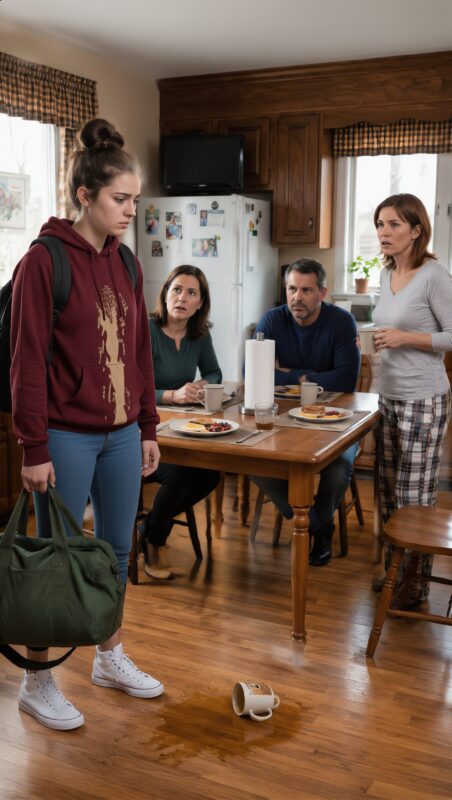
But that morning, none of us knew what was coming.
I had arrived in Denver hoping for an ordinary visit before returning south. I wanted home-cooked meals, lazy mornings, and a few evenings around the old oak kitchen table where I had eaten countless dinners as a teenager. Most of all, I wanted several days when I didn’t have to think about Army logistics, inventories, equipment records, or responsibility.
The second morning started quietly enough.
When I walked into the kitchen, Britney was already sitting at the table.
That alone was unusual.
My sister had never been enthusiastic about mornings unless there was a reason to be awake.
There was.
Another lender had rejected her car loan.
Britney explained the situation as if she had been treated unfairly rather than denied credit for financial reasons.
Then she turned to me.
“You could solve this easily,” she said. “Your credit is excellent. Let me use your card until I get everything sorted out.”
The way she said it made one thing obvious: she wasn’t really asking.
She expected me to agree.
I didn’t.
Ten years in Army logistics had taught me to take responsibility seriously. When your name is attached to equipment worth millions, you learn quickly that signatures, records, and accountability matter.
I wasn’t about to gamble my financial future because Britney wanted another car.
“No,” I said.
Her expression changed immediately.
Mom gave me the disappointed look she usually reserved for moments when I refused to make Britney’s problems disappear.
Dad concentrated on his breakfast.
Then the familiar chorus began.
“She’s your sister.”
“You have a stable Army salary.”
“She only needs help temporarily.”
I had heard versions of those arguments for years.
What nobody mentioned was the $4,000 I had sent Britney when she was facing eviction.
Nobody brought up the store-card problem I had helped untangle after discovering that she had used my name as a financial reference without permission.
I remembered all of it.
I had receipts.
Screenshots.
Messages.
Records.
What I had never done was use those records as ammunition during family arguments. I had helped, cleaned up the mess, and moved on.
Looking back, that may have been part of the problem.
My family had interpreted my silence as proof that there would always be another rescue.
I said no again.
Britney’s chair scraped sharply against the floor.
Before anyone could react, she grabbed her coffee mug and flung its contents toward me.
The coffee struck my face and soaked the front of my shirt.
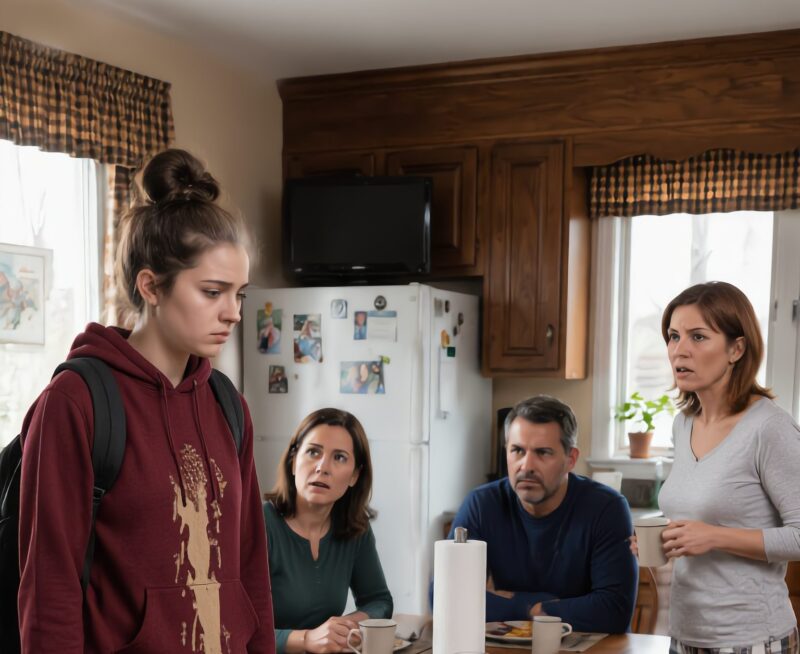
For several seconds, nobody moved.
Mom stared at Britney.
Dad stopped eating.
The television continued playing beside the refrigerator, absurdly normal against the silence that had swallowed the kitchen.
Britney stood there waiting for my reaction.
I didn’t give her one.
No screaming.
No retaliation.
No argument she could later reshape into a story about how we had both lost control.
I picked up my keys and left.
During the drive to urgent care, something became strangely clear.
I had spent years treating Britney’s behavior as a series of isolated emergencies.
It wasn’t.
It was a pattern.
At urgent care, I answered the nurse’s questions and kept every document I received. I photographed the paperwork and saved copies.
Then I returned to my parents’ house.
My suitcase was packed within minutes.
I had originally planned to stay another six days.
I left that afternoon.
Mom followed me around the house insisting Britney had simply lost her temper.
Dad told me not to let one incident divide the family.
Britney never apologized.
That silence told me everything I needed to know.
Before I was far from Denver, I began protecting myself.
I froze my credit and activated fraud alerts. I removed Britney from my phone plan. I downloaded my medical records and backed up years of messages, receipts, screenshots, and financial documents. Then I checked every account connected to my name.
I wasn’t trying to punish anyone.
I was making sure nobody could use my identity, money, or reputation again.
People can change their version of an argument.
Documents don’t.
Six weeks passed.
Life at Fort Carson returned to its familiar rhythm, and I stopped expecting my family to contact me about anything except holidays or an eventual demand that I forgive Britney.
Then my phone buzzed during lunch.
Mom.
You need to call us. Britney is in serious trouble.
Before I could respond, another message appeared.
Dad.
The bank has questions. Please call.
I already had a feeling I knew what had happened.
Dad answered almost immediately.
Britney had attempted to finance another vehicle.
This time, some of the information on the application was connected to me.
Unfortunately for Britney, the protections I had placed on my credit six weeks earlier had worked exactly as intended.
The transaction had been flagged.
The bank began asking questions.
They wanted verification.
They wanted signatures.
They wanted documents Britney didn’t have.
For once, I wasn’t standing nearby with a checkbook, explanation, or solution.
I heard Mom’s voice in the background.
Then she came onto the phone.
“We didn’t understand,” she said quietly. “We didn’t realize how many times you were keeping her out of trouble.”
I sat silently for a moment.
That was when another truth became obvious.
I hadn’t merely been helping Britney.
I had been shielding her from consequences.
And every time I rescued her, I made it easier for everyone—including Britney—to believe there would always be a next time.
“I hope she gets it sorted out,” I said. “But I’m staying out of it.”
The silence on the other end was uncomfortable.
I let it remain.
Then Dad said something I had never heard from him before.
“We should have protected you. I’m sorry.”
That mattered more than all the excuses I had heard over the years.
He wasn’t asking me to forget what happened.
He wasn’t telling me to be the bigger person.
He was finally acknowledging that I had been the one who needed support that morning.
I didn’t return home until Christmas.
Britney wasn’t there.
For the first time in her adult life, she was dealing with her own problems without the rest of us forming a human shield around her.
Dad had replaced the mug that had been damaged during our last visit.
Mom met me at the door and hugged me.
Nothing followed the hug.
No request for money.
No emergency.
No whispered conversation about how I could help Britney “just this once.”
Later, I sat at the old oak table and looked around the kitchen.
Almost nothing had changed.
Same television.
Same cabinets.
Same familiar scratches in the tabletop.
Yet I felt completely different sitting there.
For years, I had measured my value in the family by how many problems I could solve.
I believed a good daughter said yes.
A good sister stepped in.
A loving person sacrificed.
What I hadn’t understood was that constantly protecting someone from the consequences of their choices isn’t always kindness.
Sometimes it’s permission for the pattern to continue.
I still loved my family.
I simply stopped believing that love required unlimited access to my money, identity, patience, or future.
There are moments when helping someone is an act of love.
There are also moments when refusing to rescue them is the only way anything can finally change.
Britney’s life was hers to manage.
And for the first time in years, mine belonged entirely to me.