“Let Me Dance the Tango With Your Son,” the Homeless Girl Said — “He’ll Walk Again”
One gentle summer evening in Central Park, golden sunlight filtered through the branches of old trees. Somewhere nearby, a violinist played softly. Laughter drifted through the air along with the smell of grass and street food.
Daniel Foster slowly pushed his son’s wheelchair along the path, moving with quiet caution, as if the world itself had become fragile.
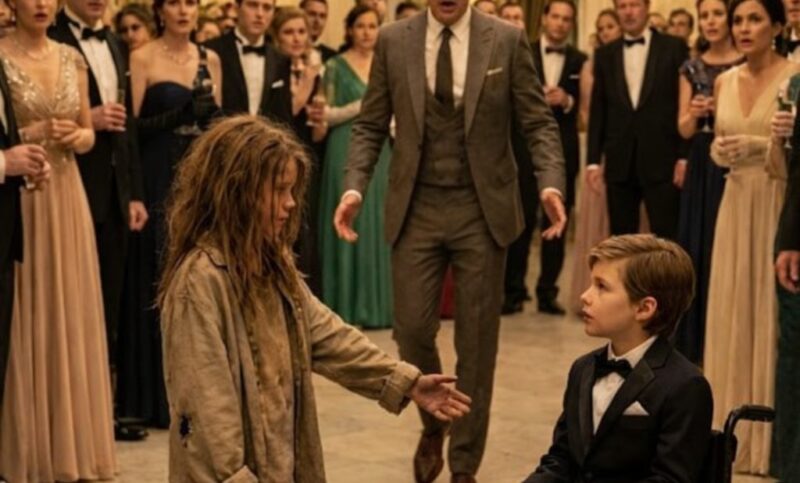
Seven-year-old Ethan sat in the chair.
Doctors had examined him countless times. There were no broken bones, no nerve damage, nothing physically wrong with his legs. Every scan looked perfectly normal.
Yet after Ethan’s mother disappeared without a trace, the boy simply stopped walking.
Gradually, he seemed to withdraw from life itself.
Daniel searched everywhere for answers. He consulted renowned specialists, visited private clinics, and tried experimental treatments. Their large house filled with toys, tutors, and an overwhelming silence. Nothing helped. The faint sound of the wheelchair rolling across the marble floors became a daily reminder of failure.
Eventually, one specialist offered an unusual suggestion: let the boy reconnect with the outside world—with people, with life.
So Daniel brought Ethan to a charity gathering in the park.
Children ran nearby, shouting and playing. But Ethan sat motionless, his gaze fixed ahead.
Then suddenly someone stepped in front of them.
A barefoot girl stood beside the wheelchair. Her clothes were worn and her hair tangled, yet her eyes were bright and confident.
“Hello,” she said.
Not to Daniel.
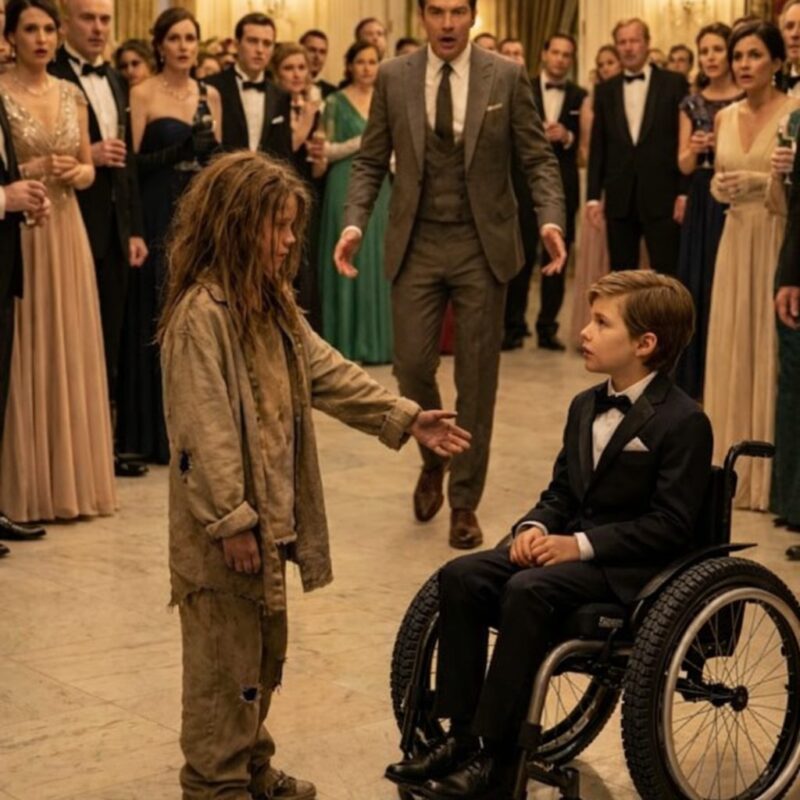
To Ethan.
Daniel stiffened immediately. He was used to strangers approaching him for money or sympathy.
The girl leaned closer.
“Let me dance with your son,” she said quietly. “He’ll walk again.”
Daniel frowned. “Please move,” he said sharply.
Before he could add anything else, Ethan slowly turned his head.
Not halfway.
All the way.
His eyes locked onto the girl.
She knelt so they were face to face. “I know how you feel,” she whispered. “My sister went through the same thing when our mother left. She stopped walking too.”
Ethan hesitated.
“How… did she get better?”
Daniel held his breath.
It was the first full sentence Ethan had spoken in weeks.
“Through dancing,” the girl replied softly. “When the heart feels safe again, the body remembers what it can do.”
Daniel looked at her carefully. “What’s your name?”
“Grace Parker.”
Grace began humming a slow rhythm and gently took Ethan’s hands. She carefully rotated the wheelchair, turning it into part of the movement.
Suddenly Ethan laughed.
A genuine laugh—bright and unexpected—like a spark returning after a long darkness.
Daniel blinked back tears.
“We don’t fight what we’ve lost,” Grace said quietly. “We move with what remains.”
“Come to my house tomorrow,” Daniel said, his voice unsteady. “I’ll pay you.”
Grace shook her head. “I don’t want money. I just want to help.”
That night something changed.
Hope returned—quietly, but unmistakably.
The following day Grace arrived at Daniel’s estate with her older sister, Lily. Lily walked normally, though her expression carried the weight of many hardships.
The housekeeper hesitated when she saw them.
“Let them in,” Daniel said. “And bring them food.”
The girls ate hungrily.
Later Grace shared their story. Years earlier their mother had abandoned them. Soon afterward Lily had stopped walking. Grace began dancing with her every day—not to force movement, but to remind her body it was still alive.
Eventually Lily stood again.
“Can you help me too?” Ethan asked.
Grace smiled. “I won’t fix you,” she said gently. “I’ll stay beside you until you remember how to move.”
Her lessons were patient and simple—rhythm first, then balance, then movement. Days turned into weeks.
Ethan slowly began to change. He smiled again. He asked questions. He waited eagerly for music.
Some days were difficult.
“Why won’t my legs listen?” he asked once in frustration.
“They’re afraid,” Grace answered softly. “We’ll teach them they’re safe.”
Watching this, Daniel realized something important.
The girls could not return to the streets.
“Would you like to stay here?” he asked one evening.
Lily’s voice trembled. “You mean… live here?”
“For as long as you want.”
Not everyone supported the idea.
Daniel’s mother was outraged. “Street children?” she scoffed.
“They are giving my son his life back,” Daniel replied calmly.
Even a neurologist initially doubted the progress—until he observed a session.
“This is real,” the doctor admitted. “It’s a reconnection between the mind and the body.”
With time and therapy, Ethan improved. First he stood. Then he took a step. Eventually he walked.
Later Grace suggested creating a movement studio for people healing from emotional trauma. Daniel funded the project immediately. Soon doctors began sending patients there. Grace and Lily taught with compassion and patience.
One day their mother appeared at the estate gate—nervous and ashamed. Healing took time, and forgiveness was not perfect, but the future slowly opened.
One bright spring morning Ethan walked across the room without help.
“I did it, Dad,” he said proudly.
Even Daniel’s mother later told Grace quietly, “I was wrong.”
A year later, during a small performance at the studio, Ethan and Grace danced together. The steps were simple but heartfelt. Many in the audience wiped away tears.
Daniel watched his family with quiet gratitude.
That Christmas, the estate was full of laughter. Ethan ran across the lawn. Lily spoke about one day performing on great stages.
Grace—now wearing shoes—raised her glass as Daniel offered a toast.
“To family,” he said. “And to the girl who reminded us that miracles don’t come from power…”
“But from love,” Grace finished with a smile.
Dance helped Ethan rediscover his strength.
And love helped all of them heal.