Locked in a Hot Car — How a Seven-Year-Old Saved Her Baby Brother
The moment I pulled into the driveway, unease settled in before I could explain it.
No lights. No sound. No sign of life inside.
I had just finished a twelve-hour shift at St. Mercy’s—long, draining, and relentless. All I wanted was to walk in and hear my kids. My parents had been watching them, like always. It was routine. Safe.
At least, it should have been.
Then I noticed movement near the edge of the woods behind the house.
And I ran.
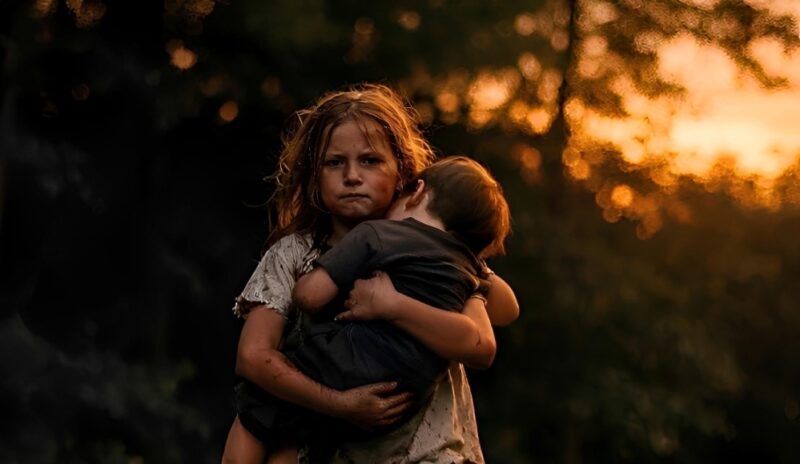
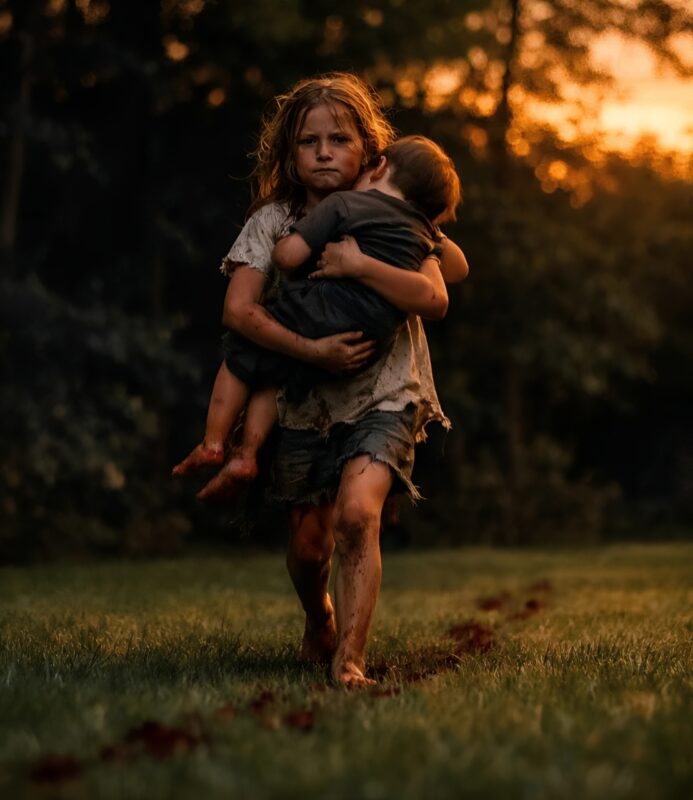
Lila was stumbling toward me, barefoot, her clothes torn, her small body shaking—but she didn’t stop. Noah was pressed tightly against her chest, her arms wrapped around him with a strength that didn’t belong to a child.
“Don’t stop me,” she whispered hoarsely. “I need to get him inside.”
A second later, her knees buckled. I caught them both before they hit the ground.
Noah was alive—but barely. His lips were dry, his breathing uneven. Lila’s feet were split open, dirt and blood covering her skin. Still, she didn’t cry.
Not even once.
“Grandma left us in the car,” she said quietly. “She said she’d be right back.”
But she never came back.
They had been stuck there for hours, trapped in rising heat.
Lila tried everything—pressing buttons, pulling handles, screaming for help. No one listened. No one stopped.
Eventually, her grandfather appeared. He shattered the window and pulled them out—but something was wrong. He didn’t recognize her. His words didn’t make sense. His fear turned into something unpredictable.
So Lila made a decision no child should ever have to make.
She ran.
Into the woods.
With a baby in her arms.
Without shoes.
Alone.
“I sang to him,” she said later, her voice steady. “So he wouldn’t be scared.”
She found water somewhere along the way. She remembered something I once mentioned—how to help someone who can’t drink. She used it to keep Noah alive.
When she heard her grandfather searching for them, she hid. She stayed silent. She protected him.
By the time I found her, she had carried her brother for what must have been hours.
When the police arrived, she explained everything clearly and calmly. Her hands trembled—but her voice never broke.
At the hospital, Noah stabilized quickly. Lila needed stitches in both feet. She watched without flinching.
“Yes, it hurts,” she admitted. “But it’s not the worst thing I felt today.”
Later, the truth came out.
My mother had advanced Alzheimer’s. My father had a brain tumor affecting his behavior and judgment. Neither of them had understood what they were doing.
And still… Lila didn’t hold it against them.
“Is Grandpa going to be in trouble?” she asked.
“No,” I told her. “He’s sick.”
She nodded, as if she had already figured it out.
“That’s what I thought.”
In the weeks that followed, she woke up from nightmares and checked on Noah constantly. Slowly, she began to heal—but she never stopped watching over him.
A year later, she wrote an essay for school.
“I was very scared that day. But being scared doesn’t mean you can’t be brave. Sometimes, it’s where being brave starts.”
Her teacher called me afterward, her voice thick with emotion.
“She’s extraordinary,” she said. “Whatever she chooses to be—she’ll become it.”
I didn’t need convincing.
Because my daughter, at just seven years old—tired, hurt, and terrified—kept moving forward.
Not because she wasn’t afraid,
but because she refused to let fear win.
Because she loved.
And that love carried them both out of the woods… and back into my arms