My Sister Asked Me to Carry Her Baby—But the Moment She Saw Her Daughter, She Walked Out of the Delivery Room
When my younger sister, Chloe, broke down and told me she’d never be able to experience motherhood, I couldn’t stand the thought of her living with that pain forever. She and her husband, Ethan, spent months convincing me that becoming their surrogate would be the greatest act of love our family could ever share.
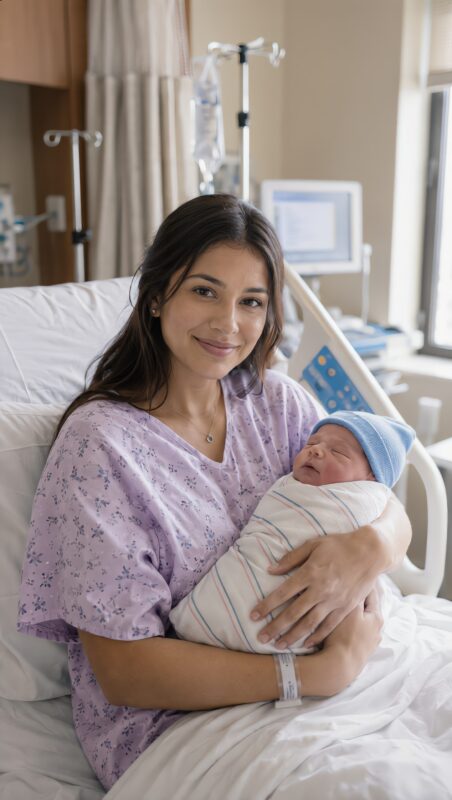
Eventually, I agreed.
Before the medical procedures began, Ethan slid a stack of legal documents across the table. He smiled and called them “standard surrogacy paperwork.” I trusted my sister enough not to question him, signing every page without realizing one paragraph would later haunt me.
Months into the pregnancy, I found it.
Hidden among pages of legal language was a condition stating that the intended parents could refuse custody if the child failed to satisfy specific hereditary expectations. It sounded bizarre, but I assumed it was meaningless legal jargon.
I couldn’t have been more wrong.
As my pregnancy progressed, Ethan transformed into someone I barely recognized. Every meal I ate had to be approved. Every doctor’s appointment became an interrogation. Chloe repeatedly referred to the baby as “our little prince,” and whenever I reminded them that healthy babies—not perfect babies—should be the priority, they exchanged nervous glances they couldn’t explain.
Their secret finally surfaced by accident.
While searching for a folder in their home office, I discovered financial records tied to the Sterling family estate. The inheritance—worth more than twelve million dollars—could only pass to Ethan if he produced a biological son.
Suddenly, every strange conversation made perfect sense.
I hadn’t been carrying a child born from hope.
I had been carrying the key to someone else’s fortune.
The emotional pressure eventually caught up with me.
Several weeks before my due date, I went into labor.
Fourteen exhausting hours later, a healthy baby girl entered the world.
I expected tears of happiness.
Instead, silence filled the room.
The nurse proudly introduced the newborn, but Chloe didn’t reach for her. Ethan never smiled. They looked at each other as though something had gone terribly wrong.
“This isn’t what we agreed to,” Chloe whispered.
Ethan demanded answers from the medical staff before announcing they would not accept the baby.
Without touching their daughter even once, they walked away.
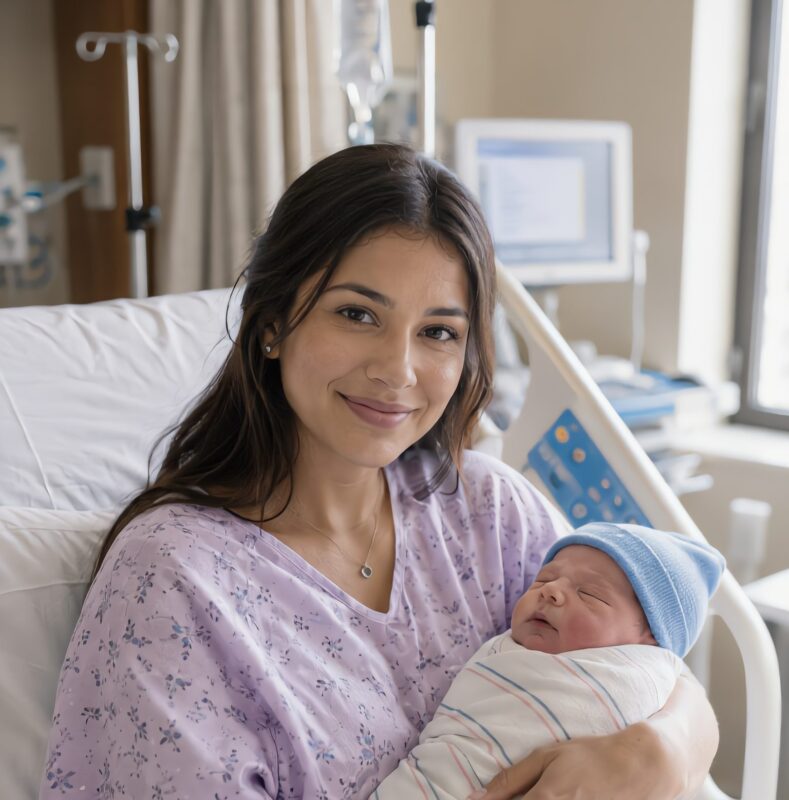
Watching them leave was harder than giving birth.
The tiny girl resting against my chest had done nothing except arrive exactly as nature intended.
Hospital administrators prepared emergency paperwork and discussed placing her into protective care.
I interrupted them.
“If her parents don’t want her,” I said, “I’ll be her parent.”
That afternoon, I named her Lily.
The story should have ended there.
Instead, forty-eight hours later, legal papers arrived at my hospital room.
Ethan accused me of violating the surrogacy agreement and demanded reimbursement for every expense related to the pregnancy.
He believed fear would force me into silence.
He underestimated me.
I visited their house carrying nothing but my phone with its recorder running.
Certain they could bully me, they admitted everything.
The pregnancy, they confessed, had never been about family. It was always about unlocking the inheritance. Ethan even laughed while calling his own biological daughter “worthless” because she couldn’t qualify him for the trust.
That single recording destroyed every argument they had.
Their lawsuit disappeared almost overnight, and both of them signed documents permanently relinquishing their parental rights. Soon afterward, the adoption became official, and Lily legally became my daughter.
Years passed peacefully until an unexpected letter arrived from the attorneys managing the Sterling Family Trust.
Buried within the trust agreement was a provision few family members had ever noticed. Any beneficiary who knowingly abandoned a biological child would lose every right to the inheritance.
By rejecting Lily, Ethan had unknowingly eliminated himself from receiving a single dollar.
The wealth he had sacrificed his integrity to obtain vanished forever.
Justice couldn’t have written a better ending.
The daughter they considered a disappointment became the very reason their fortune disappeared.
Without the inheritance, debts mounted, their marriage crumbled, and the future they had carefully planned unraveled piece by piece.
One rainy evening, Chloe knocked on my front door.
She looked older, exhausted, and desperate.
With tears in her eyes, she begged for the opportunity to meet Lily, insisting she’d changed.
But I remembered every choice she had made when it truly mattered.
She hadn’t rejected a contract.
She had rejected her own child.
I quietly wished her well and closed the door.
Inside, Lily was asleep with her favorite stuffed rabbit tucked beneath one arm, completely unaware that someone had once decided she wasn’t enough.
Looking at her, I realized life has a remarkable way of exposing people’s true values.
They gambled everything for money and lost.
I opened my heart to one little girl—and found a love more valuable than any inheritance could ever buy.