On a cold, rain-drenched night in Cedar Hollow, the streets shimmered under flickering lights. Inside the nearly empty Maple Street Grill, Lena Brooks worked her shift in silence, polishing the counter more out of habit than necessity. At twenty-eight, her life was built around endurance—late hours, tight finances, and caring for her young daughter, Ellie, whose health issues made stability feel like a fragile dream.
The quiet was broken when the diner door swung open. A man stepped in, drenched and unsteady, clearly in pain. He made his way to a booth, barely able to stay upright. From the back, the manager, Victor Hayes, noticed him and immediately ordered Lena to send him away, dismissing him as trouble.
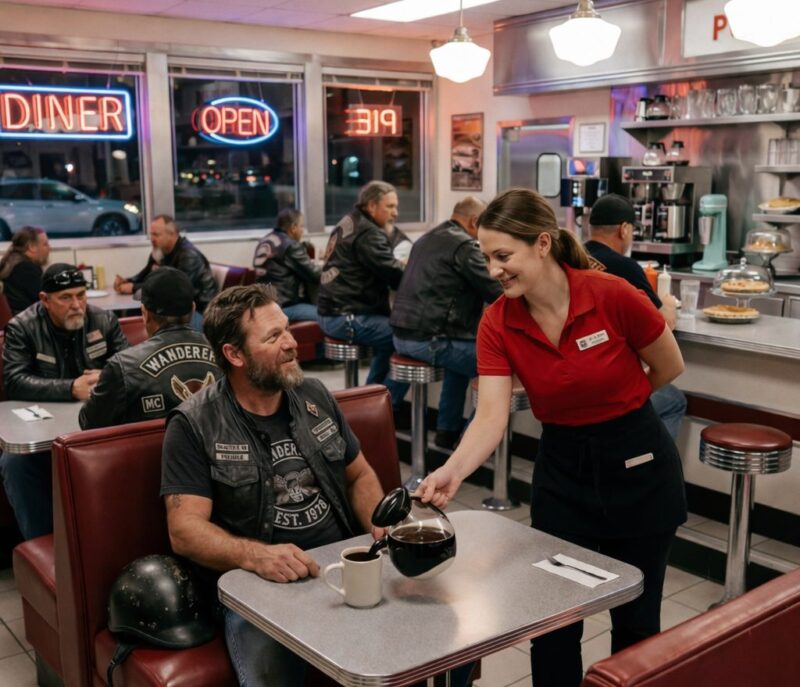
Lena paused. The man didn’t seem threatening—he seemed like someone on the edge. Remembering her own moments of desperation, she made a choice that went against the rules.
Instead of turning him out, she approached him with calm kindness, bringing water, coffee, and something warm to eat. The man, who introduced himself as Aaron, seemed guarded at first. But Lena’s quiet sincerity slowly broke through his defenses. When he asked why she was helping, her answer was simple—she knew what it felt like to be in need.
Noticing his injury, she gently insisted on tending to it. With basic supplies, she cleaned and wrapped the wound. As a final touch, she used a small bandage covered in cartoon stars—something her daughter believed could make anything less frightening. The gesture lingered with him.
When Aaron reached for his wallet, Lena shook her head. She refused payment and, without fully thinking it through, handed him all the money she had earned that night. Surprised, he declined the cash and instead gave her a small metal token, explaining that it could help her if she ever found herself in trouble.
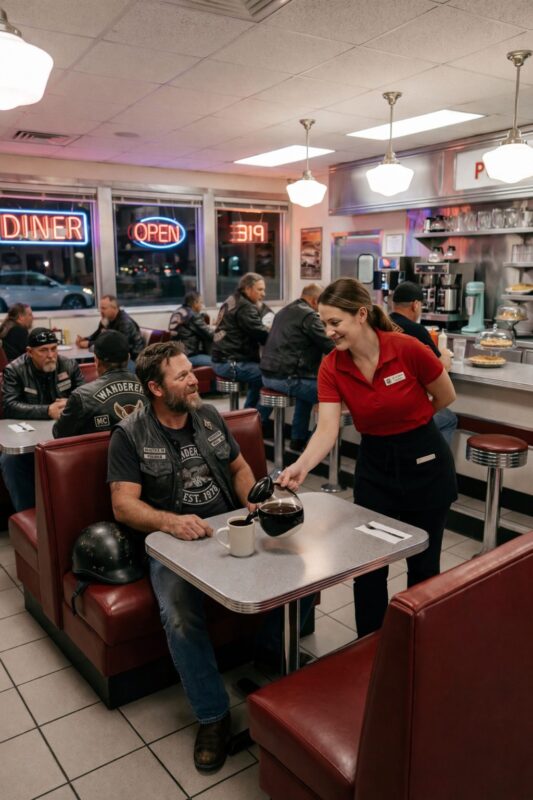
Shortly after he left, Lena faced the consequences—Victor fired her without hesitation.
The next morning, Lena was awakened by Ellie calling her to the window. Outside, the street was filled with motorcycles—dozens of them, lined up in silence. At the front stood Aaron, no longer alone. With him was a man named Daniel Ross, who explained that they stood by those who showed compassion when it mattered most.
They offered Lena something she never expected—financial support to ease her immediate burdens, and a job opportunity that promised stability, better hours, and care for her family. Though overwhelmed, she was reminded that her actions had already earned this.
That moment marked a turning point.
With time, Lena’s life began to change. The constant pressure eased, Ellie’s laughter returned, and hope slowly replaced fear. Eventually, Lena built something of her own—a small café where kindness wasn’t optional, but essential.
Behind the counter hung a hand-painted sign, made by Ellie: “Everyone Deserves Kindness.”
Years later, Victor walked through her door again—no longer in control, but seeking forgiveness. Lena listened, then accepted his apology with quiet grace.
She never forgot that night in the storm—the moment she chose compassion when it would have been easier not to.
Because even the smallest act of kindness can echo far beyond what we imagine.
And sometimes, when you give everything you have, life finds a way to give back even more.