The funeral was meant to pass in silence and dignity—but that calm shattered the instant Cooper started barking.
The sound was sharp and relentless, echoing through the chapel and breaking the weight of grief. The golden retriever lunged at the coffin, striking it with enough force to make people recoil in shock.
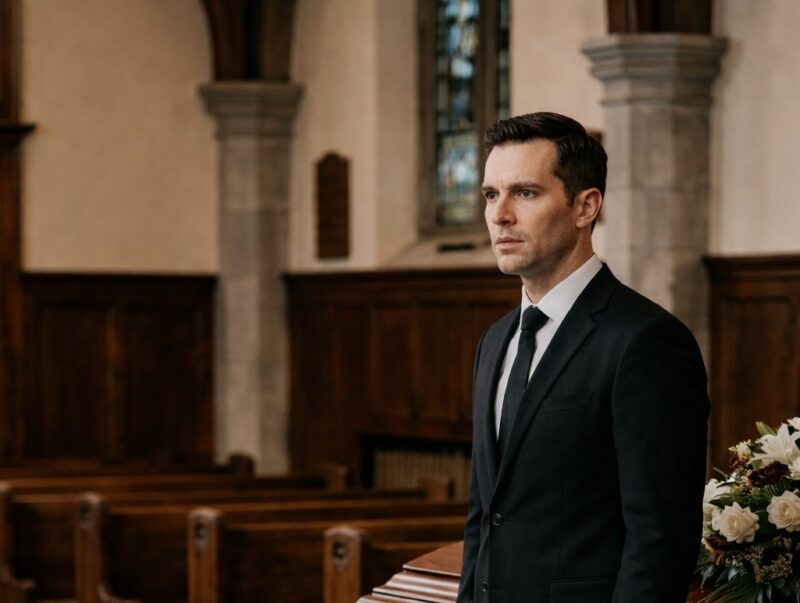
Inside lay Officer Daniel Hayes, only twenty-eight, pronounced dead just three days earlier after what doctors called sudden cardiac arrest. Everything had been confirmed. There had been no doubts.
Except for one.
Cooper.
The trained K9 paced around the coffin, his body tight with tension, claws scraping the floor. Daniel’s mother tried to soothe him, her voice trembling, but he pulled away and returned to the coffin as if guided by something no one else could see. His barking deepened into a low, warning growl.
No one could calm him—not even the officers who knew him best. This wasn’t grief alone. It felt urgent. Insistent.
When they tried to secure a leash around his collar, Cooper suddenly broke free and began clawing at the base of the coffin with frantic determination, as though trying to tear it open. Several men struggled to restrain him, but his cries—raw and almost human—filled the room with unease.
Then, without warning, he went still.
The silence that followed felt heavy, almost suffocating.
Slowly, Cooper turned back toward the coffin. This time, he approached carefully. Reaching it, he pressed his ear against the polished wood and froze, listening.
The entire room held its breath.
After a moment, he lifted his head and locked eyes with Marcus, one of Daniel’s colleagues. There was something unmistakable in that look—an urgent message, almost a plea.
Then Cooper nudged the coffin again, gently but persistently, as if asking for it to be opened.
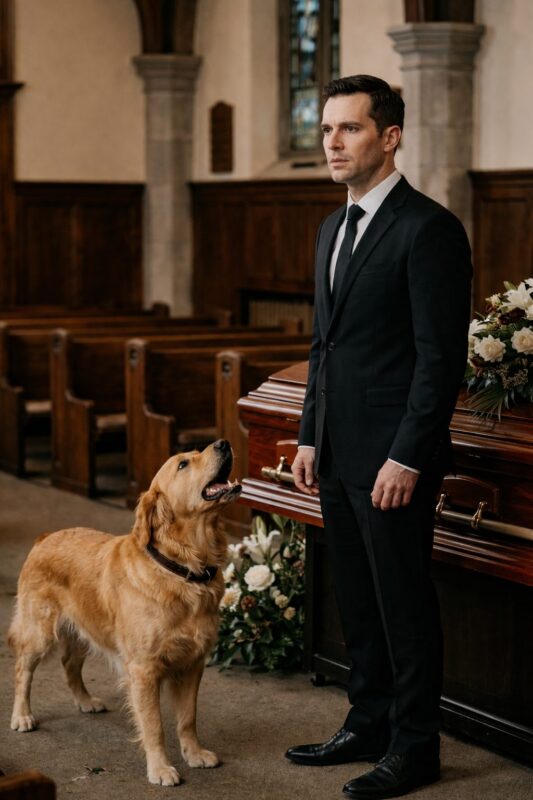
Marcus stepped forward, uncertain yet drawn in. He placed his hand on the exact spot where the dog had been listening.
At first, nothing.
Then… a faint pulse.
It came again—subtle, but steady.
His expression changed instantly.
“Sir… you need to feel this,” he said quietly.
Daniel’s father hesitated before placing his hand where Marcus had indicated. Seconds later, all color drained from his face.
“Oh God…”
The room erupted with confusion.
“Open it,” Marcus said, his voice firm.
The funeral director protested, but Daniel’s father gave a trembling nod. The latches were undone.
The coffin slowly opened.
Everyone stared.
Daniel looked exactly as before—still, pale, lifeless.
Then someone screamed.
His chest moved.
Barely—but undeniably.
A fragile breath.
A faint twitch of his fingers.
He wasn’t gone.
Panic turned into chaos. Voices shouted for help as Daniel was carefully lifted out. His mother collapsed in tears, while Cooper barked uncontrollably, jumping up, his body shaking with overwhelming relief.
Paramedics arrived within minutes and rushed Daniel to the hospital. His pulse was weak—but it was there.
Later, doctors revealed the cause: catalepsy—a rare condition capable of imitating death so convincingly that even trained professionals can be misled.
“If you had delayed,” the doctor said softly, “he wouldn’t have survived.”
All eyes turned to Cooper.
The only one who hadn’t accepted the impossible.
Days later, Daniel opened his eyes. The first thing he saw was Cooper sitting beside him.
“Hey, buddy,” he whispered weakly.
The dog’s tail wagged uncontrollably.
Daniel lived—and the story spread far beyond the hospital walls. But for his family, it wasn’t just a miracle.
It was a chilling reminder of how close they had come to burying him alive.
And a powerful truth remained:
Sometimes, the line between life and death isn’t medicine.
It isn’t technology.
Sometimes…
it’s loyalty.