The House That Learned to Feel Again
Have you ever existed in a place where no one truly sees you? Where your presence is useful, but never meaningful? That was Naomi Carter’s everyday life inside the Ashford estate.
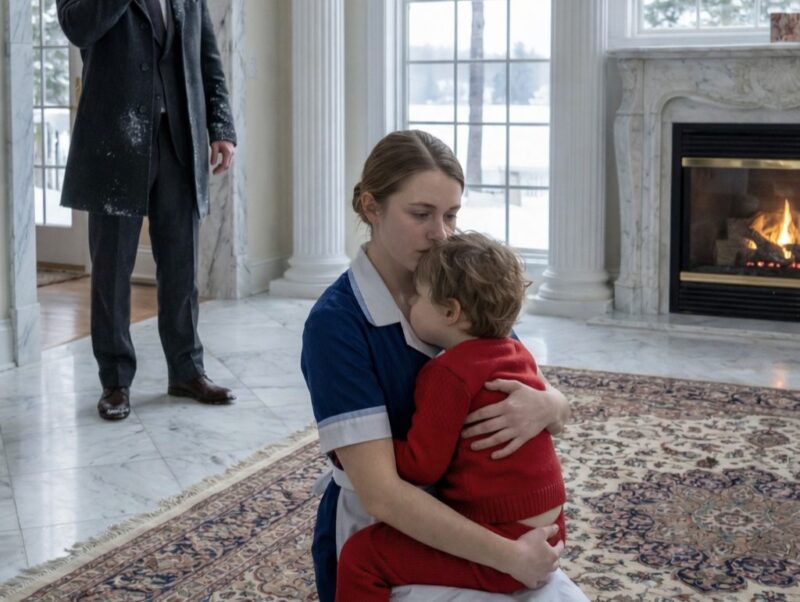
From the outside, the mansion looked perfect—standing proudly above Lake Waverly, surrounded by flawless gardens and elegant architecture. People admired it, envied it even. But inside, it felt empty. Not because of space, but because of silence. A silence so deep it seemed to swallow every trace of warmth.
Naomi, only twenty-three, carried more weight than most people her age. Her work was constant, her body tired, her hands rough from endless cleaning. She moved quietly, blending into the background, because she had learned long ago that being invisible kept her safe.
She had been hired to clean. That was all.
But the house demanded more than that.
Nathaniel Ashford, the owner, was known as a brilliant and composed businessman. To the world, he was strong and untouchable. But after losing his wife, Caroline, during childbirth, he shut himself off completely. Work became his escape, and he avoided the one thing that reminded him of his loss—their newborn twin sons, Owen and Eli.
The babies were fragile, barely three months old. Their cries echoed through empty rooms, unanswered. Nannies came and left, unable to endure the cold atmosphere or the emotional distance of their employer.
Only Naomi remained.
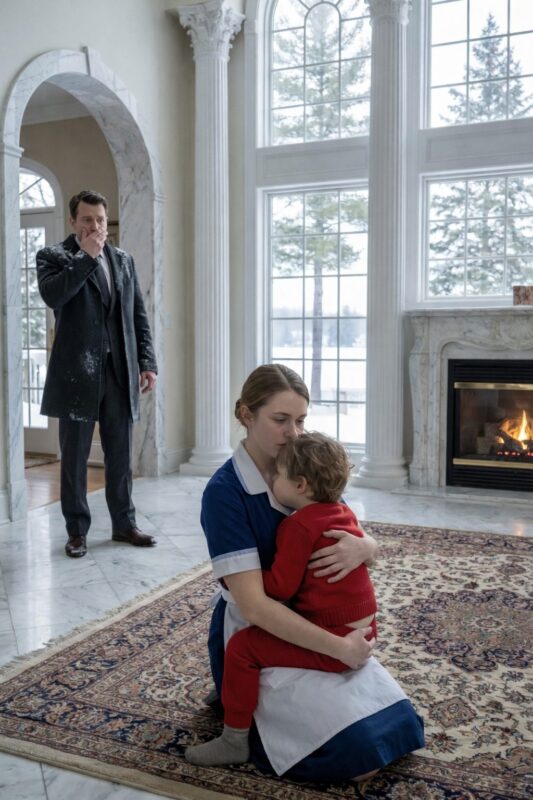
She had no training in childcare. It wasn’t her responsibility. But when the babies cried at night, something inside her wouldn’t let her ignore them. It reminded her of her younger brother—of nights when she had to grow up too quickly.
So she stepped in.
Quietly. Without recognition.
She fed them, held them close, and soothed their fears.
And she told no one.
One harsh winter night, a storm swept through the estate. The nursery grew cold, the heating barely functioning. Naomi noticed immediately. One baby felt cold to the touch; the other was burning with fever.
There was no time to hesitate.
She carried them downstairs, closer to the warmth of the fireplace. For hours, she paced the room, one child in each arm, whispering gently until their cries faded. Her body ached, exhaustion pulling her down, but she refused to stop.
When they finally drifted off to sleep, she placed them on a quilt and curled around them, shielding them from the cold with her own body.
Just for a moment, she thought.
But sleep took over.
Later that night, the front door opened.
Nathaniel stepped inside—and stopped.
The scene before him was impossible to ignore: his housekeeper asleep on the floor, wrapped protectively around his children.
“What is going on here?” he asked sharply.
Naomi woke instantly, her first instinct to protect the babies.
“The nursery is freezing,” she explained softly. “One of them has a fever. I couldn’t leave them there.”
As he looked closer, he noticed something else—a faint bruise on her face.
She hesitated before admitting it came from a careless guest weeks earlier. He hadn’t seen it. In truth, he hadn’t seen much of anything.
Then she spoke words that changed everything:
“They cry at night. They need someone. They shouldn’t feel alone in their own home.”
That sentence stayed with him.
For the first time, he really looked at his sons—not as reminders of grief, but as children who needed their father. And he saw Naomi—not as staff, but as the person who had been holding everything together.
Without a word, he went upstairs and returned with blankets, gently covering the babies. His hands trembled as he adjusted them.
“They’re so small,” he whispered, emotion breaking through.
Then he admitted the truth: he had been running from his pain, believing distance would protect him. Instead, it had only created more emptiness.
That night changed everything.
He offered Naomi a new position—one built on respect, responsibility, and proper support. She accepted, not for recognition, but because she already cared deeply.
The transformation was slow, but real.
Nathaniel began to show up. He asked questions, learned how to care for his sons, and allowed himself to be present. Gradually, the house softened. Toys replaced decorations. Laughter began to fill the once-silent rooms.
Months later, on a quiet rainy afternoon, he came home early. Instead of retreating, he joined Naomi and the boys.
“Is there room for me?” he asked.
There was.
The mansion no longer felt cold or distant.
It became something real.
A home.
In the end, Naomi discovered a quiet truth: love often begins in the harshest moments—when someone chooses to stay.
And Nathaniel learned that fatherhood isn’t measured by what you provide…
But by whether you are there when it matters most.