The Man Who Came Looking for the Boy
The waitress’s hands shook as she slid the bolt into place.
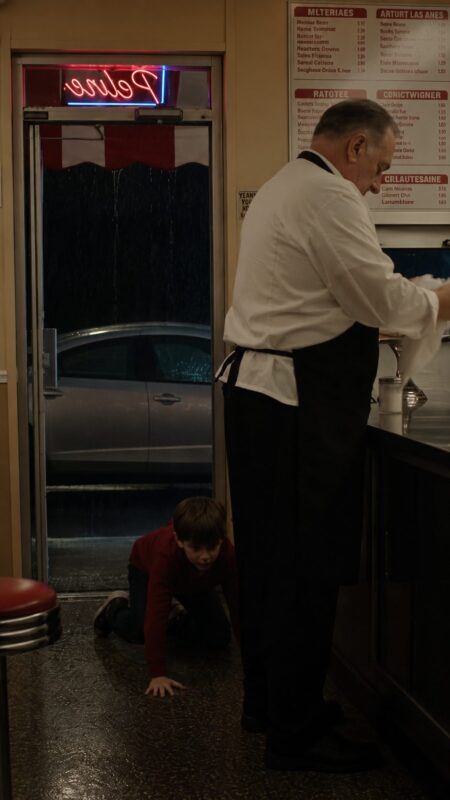
The metallic click rang through the diner, cutting through the sound of rain beating against the windows.
Everyone heard it.
The man standing near the entrance stiffened. His dark coat dripped with rainwater, and one hand remained hidden beneath the fabric.
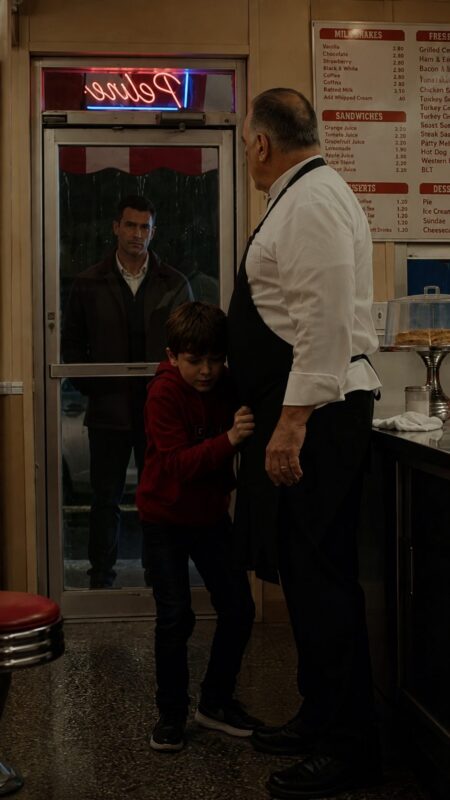
Behind the counter, a frightened boy clung to the cook’s waist, burying his face against the stained apron.
“Unlock the door,” the man ordered.
His voice was calm.
Too calm.
No one moved.
The cook stepped forward, shielding the child with his broad frame.
“The kid already told us everything,” he said. “You’re not taking him.”
The stranger narrowed his eyes.
The room grew tense.
Then the boy spoke.
His voice was small and trembling.
“He took my mother.”
A chill swept through the diner.
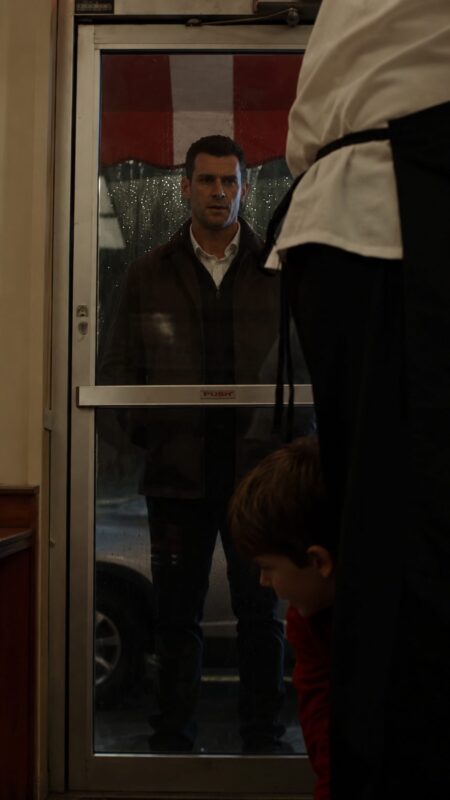
Forks stopped halfway to mouths.
Conversations died instantly.
A woman seated by the window covered her lips in shock.
The man slowly withdrew his concealed hand.
Several customers recoiled.
They expected steel.
A gun.
Something deadly.
Instead, he produced a photograph.
The cook took it.
His eyes scanned the image.
A woman sat bound to a chair.
Her wrists were tied.
Her expression was filled with fear.
In her hands was a sheet of cardboard displaying the diner’s address in thick black marker.
The cook’s jaw tightened.
Then he noticed something hidden in the corner of the picture.
A second person stood behind the captive woman.
Only part of the figure was visible.
Just enough.
A weathered tattoo wrapped around the person’s wrist.
The cook froze.
His blood ran cold.
That tattoo.
He knew it.
Two decades ago, he had seen the exact same mark on the man responsible for his brother’s death.
Slowly, he lowered the photograph.
His gaze settled on the stranger.
The stranger met it without blinking.
The cook glanced at the terrified boy beside him.
Then he looked back at the man.
A faint smile touched his lips.
“You should’ve chosen another place.”
Outside, bright beams suddenly swept across the rain-soaked windows.
Engines rumbled.
One truck pulled into the parking lot.
Then a second.
Then a third.
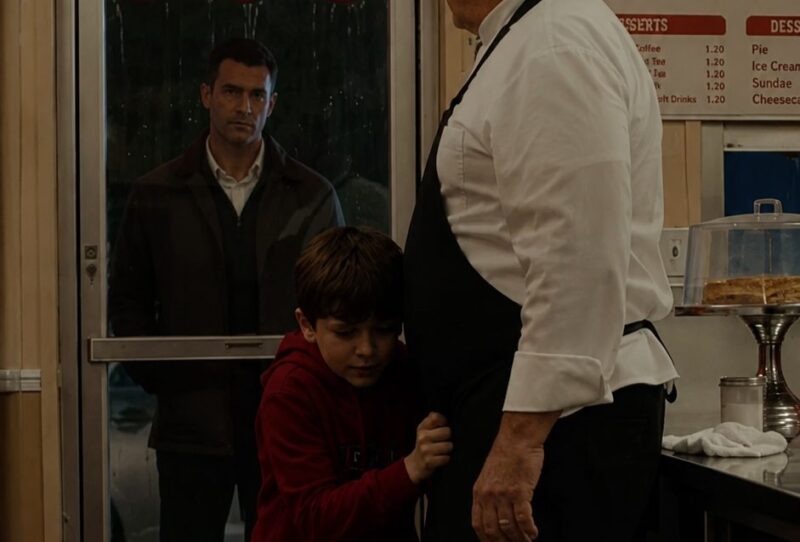
The stranger turned toward the glass.
For the first time, uncertainty crossed his face.
The cook leaned closer.
Close enough that only the stranger could hear him.
“You made one mistake,” he whispered.
The man said nothing.
The cook’s smile widened.
“You came onto my family’s block.”
The diner fell silent.
Outside, truck doors opened.
And the hunter finally understood that he had just become the prey.