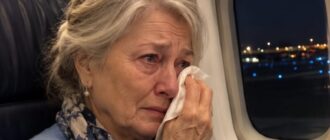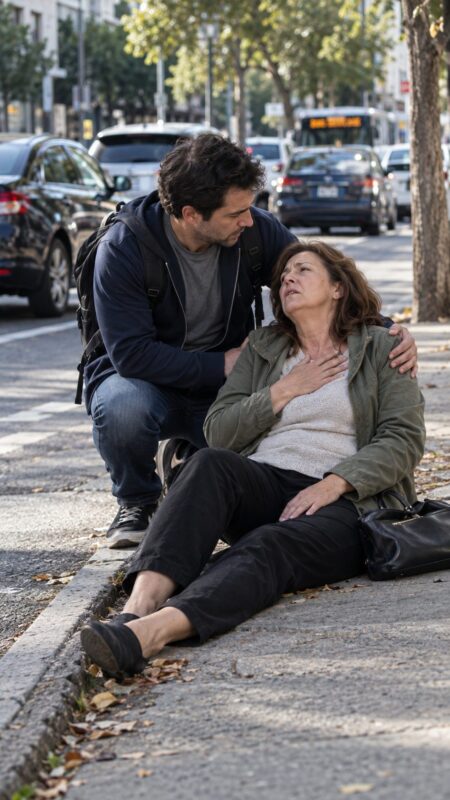
The morning I was fired, I learned exactly how little my boss thought a human life was worth.
Three days later, I learned how wrong he was.
I arrived at the office nearly forty minutes late, still shaken, my shirt wrinkled and my hands trembling.
Nick was waiting beside the conference room.
The clients were already gone.
My presentation remained frozen on the screen behind him, slide one glowing across the wall like evidence at a trial.
“Where were you?” he demanded.
I swallowed.
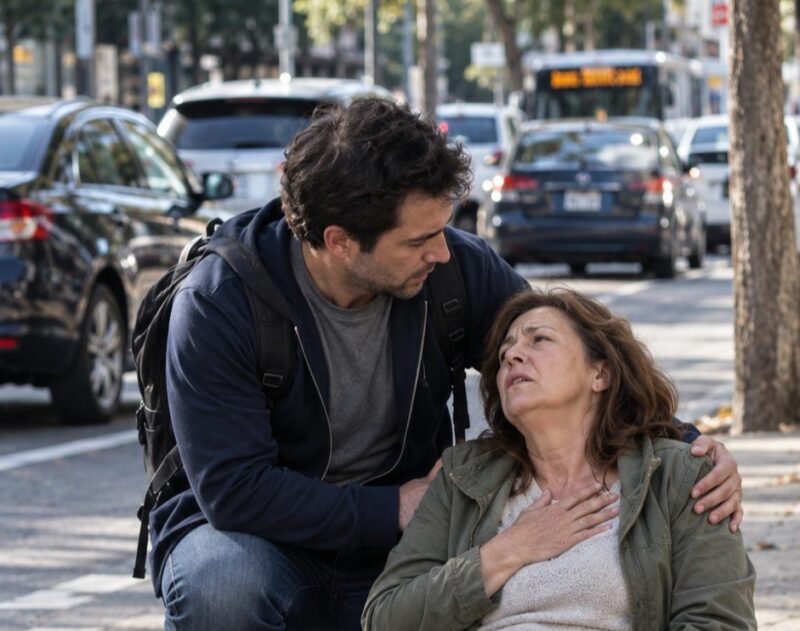
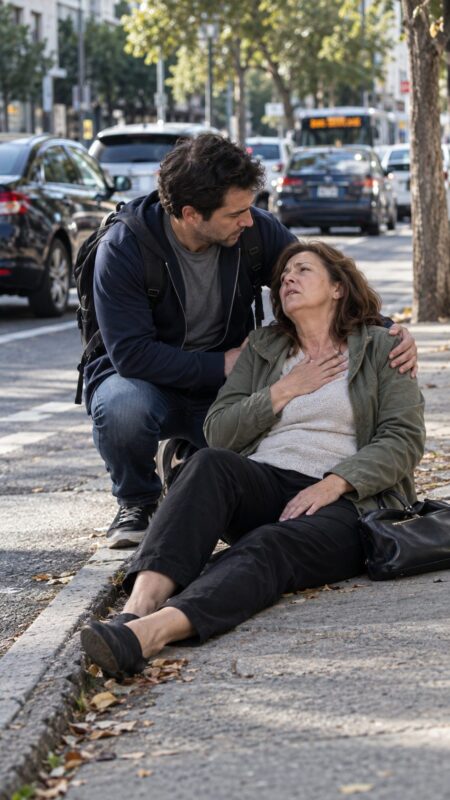
“There was a woman on the side of the road. She collapsed while I was driving past.”
Nick stared at me.
“So?”
“So I stopped.”
His expression hardened.
“She was clutching her chest. She could barely breathe. I called emergency services and stayed with her until the ambulance arrived.”
Nick folded his arms.
“Did you know her?”
“No.”
“Relative?”
“No.”
“Friend?”
“No.”
I already knew where this was going.
He gave a short, disbelieving laugh.
“You abandoned the most important client meeting of the quarter for someone you’d never met?”
“I didn’t abandon anything. A woman was dying.”
“And we lost the account because you weren’t here.”
The words landed hard.
I glanced through the glass walls at my coworkers.
Nobody moved.
“Nobody else had stopped,” I said quietly. “Cars kept going past her. What was I supposed to do?”
Nick answered immediately.
“Keep driving.”
For a second, I thought I had heard him wrong.
He stepped closer.
“You’re paid to show up when people depend on you. We had executives sitting in that room waiting for your pitch. Instead, you decided to play hero.”
I felt something inside me turn cold.
For almost three years, I had lived for that agency.
I had answered emails during family dinners.
Worked Saturdays without complaining.
Fixed presentations other people had ruined.
Taken calls at midnight.
Missed school events because a client suddenly needed “one last revision.”
I had spent so much time in that building that the security guards knew which snacks my daughters liked when they visited.
And none of it mattered.
“I’ve never let this company down,” I said.
Nick barely reacted.
“You did today.”
Then he pointed toward my desk.
“Pack your things.”
That was it.
No warning.
No conversation.
No gratitude for the years I had given them.
Just a cardboard box and silence.
I looked around, hoping someone would say something.
Nobody did.
A few people avoided my eyes.
One coworker pretended to type.
I walked out before anyone could see how close I was to breaking.
Inside my car, I shut the door, rested my forehead against the steering wheel, and finally lost control.
I had two daughters.
Bills.
A mortgage.
No backup plan.
All because I had stopped for a stranger.
For the next three days, one question kept circling through my head.
Had I been stupid?
Then I went back to the office.
It was late in the evening, and most of the floor was dark.
I only wanted the things I had left behind: family photos, old notebooks, a coffee cup with crooked painted hearts, and a few personal files.
I was placing the last picture into a box when the elevator chimed.
I expected a security guard.
Instead, Nick appeared.
He looked exhausted.
Behind him stood an older woman wearing a navy coat.
I recognized her eyes before I recognized her face.
The roadside.
The ambulance.
Her hand gripping mine while she struggled to breathe.
“You,” I whispered.
She smiled.
“My name is Eleanor.”
I set the box down.
“You’re okay.”
“Because of you.”
Her voice shook slightly.
“The cardiologist told me I had only a small window. If you hadn’t stopped when you did, I might not have made it.”
“I’m just glad someone got to you in time.”
“You got to me in time.”
Nick shifted beside her.
For once, he looked uncomfortable.
“Sebastian,” he said, “there are some circumstances you weren’t aware of.”
Eleanor turned toward him.
“Let me explain.”
Then she looked back at me.
“The meeting you missed that morning was with Hartwell Industries.”
I nodded slowly.
That was the account Nick had been chasing for months.
“Our biggest prospect,” I said.
Eleanor smiled faintly.
“My family owns Hartwell Industries.”
I said nothing.
“My daughter is the chief executive.”
Suddenly, Nick’s pale expression made sense.
Eleanor continued.
“When she heard why you failed to attend the meeting, she asked your agency to explain exactly what happened.”
My chest tightened.
“And?”
“She was told you had been dismissed.”
Eleanor’s smile vanished.
“My daughter did not appreciate that.”
Nick stared at the carpet.
“She terminated negotiations with this agency that afternoon.”
I looked at him.
For the first time, he couldn’t meet my eyes.
Eleanor reached into her handbag.
“She said something to me afterward.”
She took out a card.
“She said, ‘Anyone willing to risk his career for someone who has nothing to offer him is exactly the kind of person I want around my company.’”
She handed me the card.
A job title was written beneath a name.
Director of Brand Strategy.
Underneath it was a salary figure.
I read it twice.
It was more than double what Nick had paid me.
I looked up.
“I don’t understand.”
“We’re bringing more of our marketing work in-house,” Eleanor said. “We need someone to build the team.”
“And you want me?”
“We do.”
“You don’t know anything about me.”
Eleanor gave me a long look.
“I know what you did when nobody was watching.”
That sentence stayed with me.
Not my résumé.
Not my portfolio.
Not my years of overtime.
One decision on the side of a highway had told her more about me than any interview ever could.
I looked down at the box filled with pieces of my old life.
For three days, I had believed kindness had ruined me.
I had imagined telling my daughters that sometimes the world punishes people for trying to help.
Now I understood the lesson differently.
Doing the right thing does not guarantee an easy outcome.
Sometimes it costs you.
Sometimes it embarrasses you.
Sometimes it closes a door you desperately wanted to keep open.
But that does not make the choice wrong.
I lifted the box from the desk.
Nick moved as if he wanted to say something.
Maybe apologize.
Maybe ask me to reconsider.
I never found out.
I walked past him.
Eleanor held the elevator open.
As the doors began to close, I took one final look at the office where I had spent three years trying to prove my value.
Then the doors shut.
And I realized something.
I had not lost my career because I stopped to help a stranger.
I had simply discovered I was working for people who did not deserve me.
Sometimes the road you think destroyed your future is the road that quietly redirects you toward a better one.