The Silent Cry: The Night the Capo’s Daughter Uncovered a Buried Truth
If you arrived here from Facebook, you’re probably still wondering what truly happened with Sofia and the mysterious waitress. The reality is far more disturbing than it first appears.
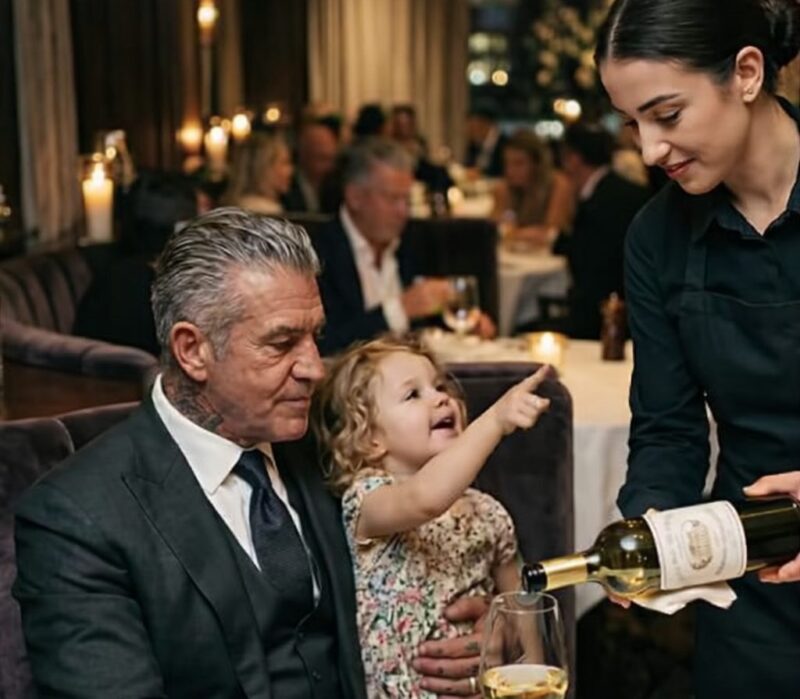
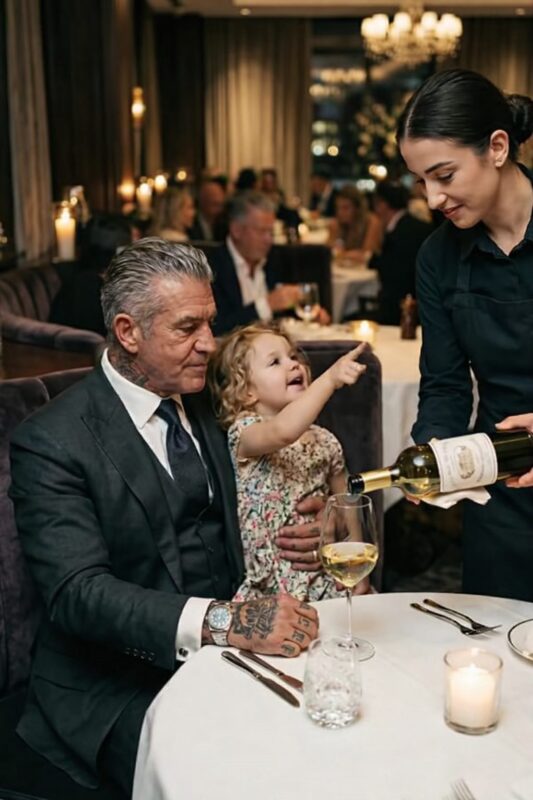
At the luxury restaurant “La Dolce Vita,” Don Antonio—a man known for power and fear—dined each week with his wife Elena and their seven-year-old daughter, Sofia. Everything about the place was refined and controlled, except the girl. Sofia had never spoken a single word in her life. Specialists called it severe selective mutism, though no real cause was ever identified. For Antonio, her silence was a wound nothing could heal.
That evening, something broke the pattern.
A new waitress arrived at their table. The moment Sofia saw her, her behavior shifted. She froze, staring at the young woman with an intensity that unsettled her parents. It was not a child’s curiosity—it was recognition.
The atmosphere in the room seemed to tighten.
Then, without warning, Sofia made a sound for the first time in her life. A faint, fragile whisper escaped her lips, breaking years of complete silence.
And then she spoke a single word.
“Mom…”
The waitress turned pale. Elena and Antonio were equally shocked, unable to process what they had just heard. Sofia had never spoken—why would she address a stranger like that?
Without hesitation, Antonio ordered the waitress, Isabella, brought to his private office for answers.
Under interrogation, Isabella insisted she had never met the child and did not understand what was happening. But Antonio did not accept coincidence. His investigation into her background began immediately.
Isabella’s history revealed she had grown up in an orphanage and, as a teenager, had worked at a small, underfunded hospital.
That same hospital was tied to Sofia’s birth.
As Antonio’s men dug deeper, a darker picture formed. The hospital had long been suspected of falsified records and illegal adoptions. Isabella remembered whispers of newborns disappearing and mothers being misled or forced away.
Then came a revelation that changed everything: Isabella had once been told she had a twin sister, taken from her at birth.
Slowly, the impossible connection emerged. Sofia was not Elena’s biological child. She and another newborn had been part of a corrupt arrangement involving hospital staff and illegal adoption channels. One of the twins was given to Antonio and Elena. The other vanished into the system.
Sofia’s silence was not a disorder—it was the emotional imprint of a deep, unspoken separation, as though part of her identity had been missing since birth.
Elena broke down, unable to accept that the life she believed was real had been constructed from deception. Antonio, however, shifted into cold resolve.
Within days, he used his influence to dismantle the criminal network behind the hospital. But justice did not repair what had been lost.
Sofia began to change. With Isabella now present in their lives, something inside the child softened. She started reacting more openly—small sounds, laughter, fragments of expression—like a door slowly opening.
Antonio’s next decision was inevitable: he would find the missing twin.
After an extensive search, she was located a year later in a quiet seaside town, raised by an ordinary family. Her name was Camila. When the two identical girls finally met, the moment was overwhelming—like looking into a mirror shaped by fate and time.
Isabella gradually became part of their family circle, a bridge between past and present. Even their biological mother, long deceived and lost in grief, was eventually found and given the chance to reunite with her daughters.
Antonio’s empire remained strong, but his perspective shifted forever. Control and power no longer defined him—truth and family did.
And Sofia, the girl who once never spoke, became the spark that exposed a hidden crime and reunited a broken family, changing every life tied to hers.