“THINK YOU EVEN HAVE MONEY? I’LL DOUBLE IT!” — THE MANAGER MOCKED HIM… UNAWARE HE WAS SPEAKING TO THE OWNER
The day began like any other.
Buses sighed at the curb, and the warm aroma of fresh bread drifted through the street. At precisely nine o’clock, the doors of Riverstone National Bank slid open, welcoming another routine morning.
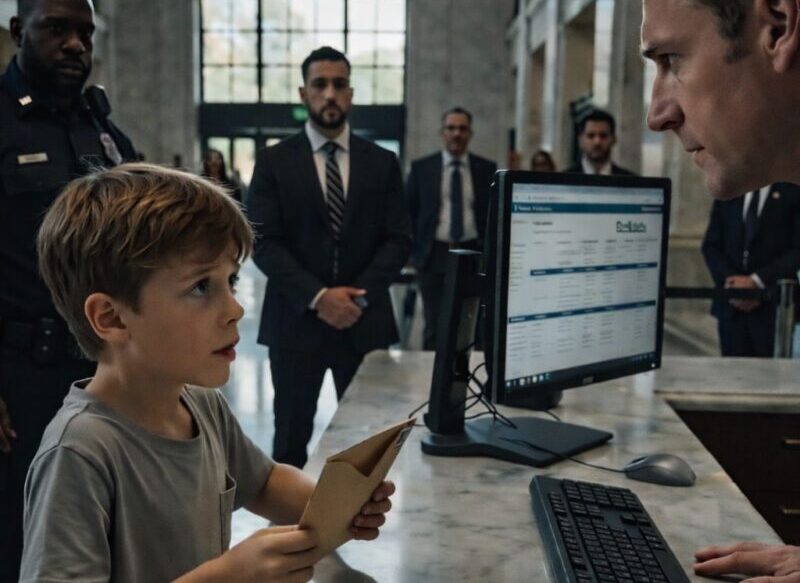
Inside, everything was spotless—gleaming marble floors, bright lights, and carefully crafted promises of security and trust. It looked flawless. Yet somehow, it felt cold.
Then a man walked in who didn’t match the setting.
His pace was slow, but steady. Not weak—intentional. His clothes were modest but tidy, his shoes worn from years of use rather than luxury. His face carried traces of fatigue… and something far more powerful—quiet self-respect.
No one greeted him.
A few customers glanced his way, then quickly turned back to their business. One woman held her bag a little tighter. Others pretended not to notice him at all. Behind the counters, staff continued their routines, offering the same mechanical politeness to everyone—except him.
He took a number.
And waited.
From behind the glass walls of his office, the branch manager, Sebastián Rojas, noticed him immediately.
Dressed sharply and perfectly composed, Sebastián saw himself as the authority in the room. To him, appearances defined worth. And this man—with his simple clothing and calm demeanor—did not belong.
When the number was called, the man stepped forward. Before he could even speak, Sebastián approached, positioning himself beside the counter as if to take control.
“How can we help you?” he asked, his voice smooth—but edged with quiet contempt.
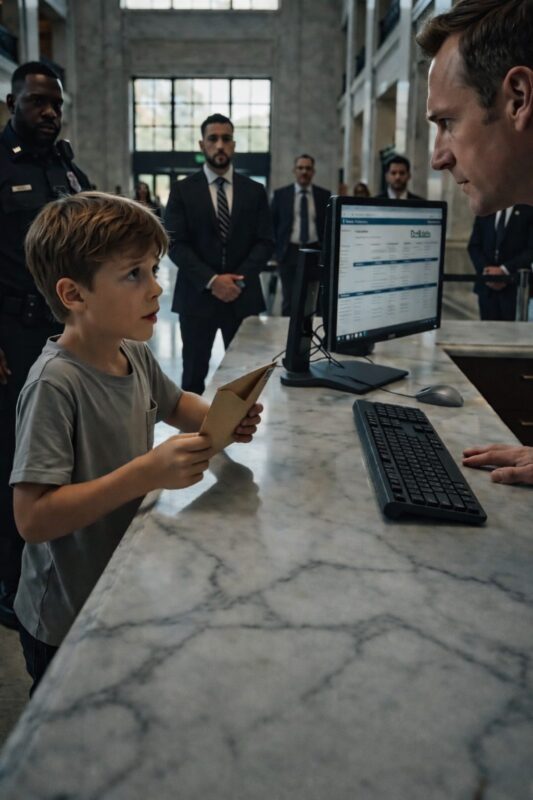
“I’d like to make a withdrawal,” the man replied calmly.
Sebastián let out a short, dismissive laugh. The sound cut through the room. A few people shifted uncomfortably, while others looked down, avoiding eye contact.
Then he said it:
“If you even have any money,” he sneered, “I’ll personally double it.”
Silence fell.
The man didn’t react. No anger. No defense. Just a slow, measured breath.
“I expected nothing less,” he said quietly.
Something about his composure made the moment heavier.
Then, without urgency, he reached into his pocket.
Not for cash.
Not for a card.
Instead, he placed a small metal badge on the counter—simple, yet official, bearing the bank’s insignia.
The teller picked it up and scanned it.
Her hands trembled.
Her face changed.
“Sir…” she whispered.
Sebastián leaned in, still certain this was some kind of misunderstanding—until he saw the screen.
The confidence drained from his face.
**OWNER & EXECUTIVE DIRECTOR – RIVERSTONE NATIONAL BANK**
A ripple of shock spread through the lobby. Whispers replaced the earlier tension. Eyes widened. The atmosphere shifted instantly.
“That… that can’t be right,” Sebastián stammered.
The teller shook her head softly.
“It is.”
The man—Arturo Medina—looked at him steadily.
“Do you still question it?” he asked, not with anger, but with quiet disappointment.
For the first time, Sebastián’s composure cracked. This wasn’t fear of punishment—it was the fear of being exposed.
Arturo calmly took a seat, as if he had always belonged there.
“I’d like everyone to listen,” he said.
The room fell silent.
“I came here dressed this way intentionally,” he continued. “I wanted to see how someone without status would be treated—someone ordinary, someone uncertain.”
Sebastián went pale.
“A bank isn’t just a place for money,” Arturo said. “It’s a place built on trust. And trust begins with respect. Every person who walks through these doors deserves to be treated with dignity.”
His words settled deeply.
“I didn’t know who you were,” Sebastián said weakly.
Arturo met his eyes.
“That’s exactly the issue,” he replied. “It shouldn’t matter who I am.”
The truth hit harder than any reprimand.
Later, as internal records were reviewed, a pattern became clear—dismissive behavior, overlooked clients, quiet disrespect repeated over time.
Arturo listened carefully.
Then he spoke.
“When respect disappears, the institution loses its soul.”
He turned to Sebastián.
“And anyone who forgets that doesn’t belong here.”
That evening, Arturo returned to the lobby—not as a figure of authority, but as a reminder.
“Respect costs nothing,” he said. “But it reveals everything.”
A woman approached him, her voice shaking.
“Thank you… for noticing us.”
Arturo gave a gentle smile.
“I didn’t do anything special,” he said. “I simply remembered what matters.”
From a distance, Sebastián stood in silence—realizing he hadn’t just lost his position.
He had lost something far greater.
Because money can fill accounts.
But only respect gives them meaning.