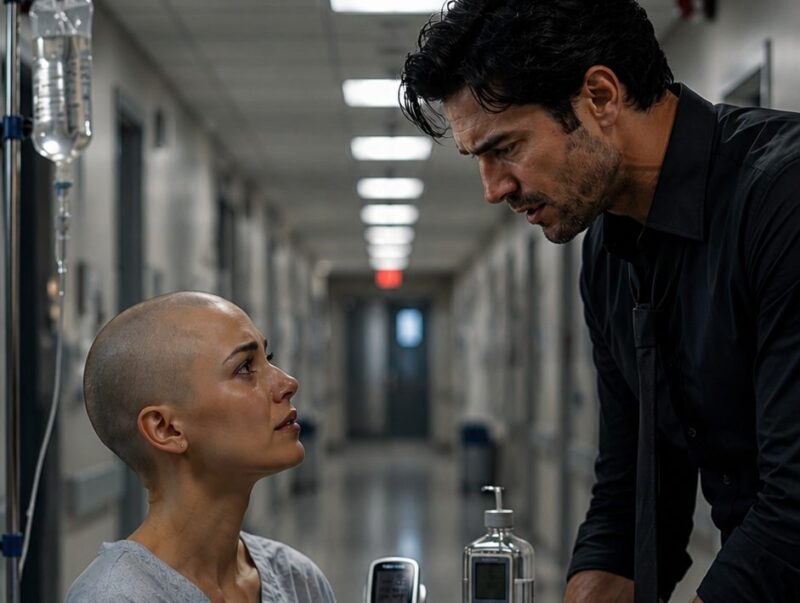
Two months after signing the divorce papers, I walked into a hospital and saw my ex-wife sitting alone in a corridor.
The sight nearly stopped my heart.
I had spent weeks convincing myself that our chapter was over, that we had both moved on, and that separating had been the right decision.
Then I saw her.
She sat quietly near a window at the end of the hallway, wrapped in a loose hospital gown. Her shoulders seemed smaller than I remembered. Her face was pale, and her eyes were fixed on the floor as people hurried past without noticing her.
For a few seconds, I simply stood there.
Unable to move.
Unable to think.
It was Maya.
The woman I had once promised to spend my life with.
The woman I had divorced only eight weeks earlier.
My name is Arjun. I’m thirty-four years old and work a regular office job. There is nothing particularly remarkable about me. Until recently, I believed my life would follow a predictable path.
Marriage.
Children.
Growing old beside the person I loved.
For a while, that future seemed possible.
Maya and I spent five years together. She was the kind of person who brought warmth into every room she entered. She never raised her voice, never demanded attention, and never asked for much. Yet somehow, she became the center of my world.
Home always felt different when she was there.
Better.
Safer.
Happier.
Like most couples, we made plans.
We talked about buying a house.
We argued about baby names we hoped to use someday.
We imagined family vacations and noisy holiday dinners.
Then reality intervened.
Two miscarriages in less than two years shattered something inside us.
The grief was unbearable.
Maya withdrew into herself.
I buried myself in work.
Neither of us knew how to heal.
Instead of facing our pain together, we carried it separately.
The distance between us grew slowly.
Almost invisibly.
Until one day it felt impossible to cross.
The arguments weren’t dramatic.
There were no betrayals.
No scandals.
Just disappointment, exhaustion, and silence.
One rainy evening, after another conversation that led nowhere, I finally said what had been hanging between us for months.
“Maybe we should let each other go.”
Maya stared at me quietly.
Her expression never changed.
After a long pause, she asked a single question.
“Did you decide that a long time ago?”
I looked away.
That was answer enough.
She nodded once.
No tears.
No shouting.
No accusations.
That calm acceptance hurt more than any fight ever could.
Within a few weeks, our marriage officially ended.
I moved into a small apartment in Budapest and tried to rebuild my life.
Every day followed the same pattern.
Wake up.
Go to work.
Come home.
Eat alone.
Sleep.
Repeat.
The apartment felt empty.
I missed the sound of another person moving through the rooms.
I missed her laughter.
I missed the simple questions she used to ask.
“How was your day?”
“Did you eat lunch?”
“Are you tired?”
I missed all of it.
But pride convinced me to keep moving forward.
Or perhaps it was fear.
Then came the afternoon that changed everything.
I was visiting my friend Rohit at Semmelweis Clinic after a routine operation.
While walking through one of the hospital wings, I noticed a familiar profile.
I stopped immediately.
My stomach tightened.
It was Maya.
She looked nothing like the woman I remembered.
Her long hair had been cut short.
Her cheeks were hollow.
Dark shadows rested beneath her eyes.
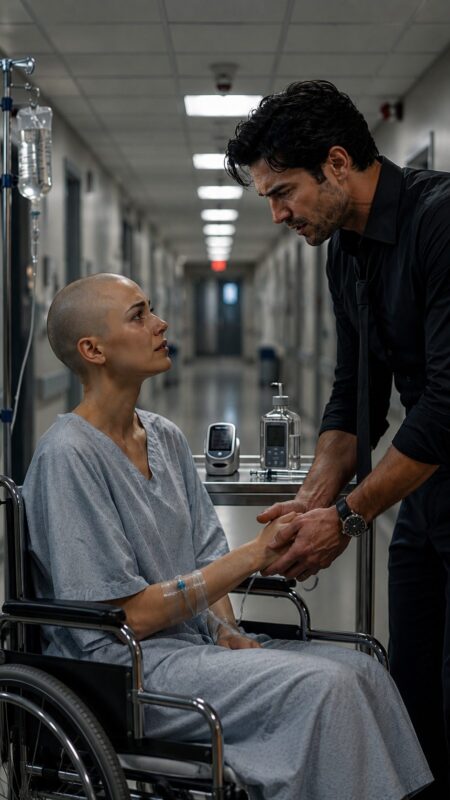
An IV pole stood beside her chair.
She looked weak.
Far too weak.
I approached slowly.
“Maya?”
She lifted her head.
For a brief second, surprise flickered across her face.
“Arjun.”
Hearing my name in her voice felt strangely painful.
I sat beside her.
“What happened?”
She forced a smile.
“I’m fine.”
The lie was obvious.
I gently took her hand.
It was cold.
Cold enough to frighten me.
“Maya,” I said quietly, “please tell me the truth.”
Her eyes filled with tears.
For a moment, she seemed unsure whether to speak.
Then she whispered the words that changed everything.
“I have leukemia.”
The world around me seemed to disappear.
“What?”
She lowered her gaze.
“I found out before the divorce.”
I stared at her in disbelief.
“Why didn’t you tell me?”
A faint smile appeared on her lips.
Because you were already drowning.”
I couldn’t speak.
“You were carrying so much pain,” she continued. “I didn’t want to become another burden.”
At that moment, every excuse I had ever made for myself felt meaningless.
All the late nights.
All the avoidance.
All the opportunities I had wasted.
I squeezed her hand.
“You should have never faced this alone.”
The tears she had been holding back finally fell.
And mine did too.
From that day forward, I returned to the hospital whenever I could.
I sat beside her during treatments.
I brought her books she never finished reading.
I stayed through the difficult days and celebrated the good ones.
Slowly, hope returned.
Not all at once.
But enough.
A year later, we stood together in the hospital garden after her final remission appointment.
The doctors had delivered the news we had prayed for.
She was cancer-free.
Maya looked at me and smiled.
A real smile.
The kind I hadn’t seen in years.
“We lost our marriage,” she said softly, “but somehow we found something even more important.”
I looked at her and nodded.
Because I finally understood.
Love isn’t always about staying together.
Sometimes it’s about showing up when someone needs you most.
Sometimes it’s about forgiveness.
And sometimes it’s about choosing not to walk away when darkness enters another person’s life.
As we stood there beneath the afternoon sun, hand in hand, I realized that although our story had changed, it wasn’t over.
Not yet.