Every October, My Brothers and I Paid Our Sister to Heat Mom’s House. Then I Found Our 82-Year-Old Mother Shivering in Her Winter Coat—and Discovered a Family Secret.
For years, I believed my siblings and I were doing everything necessary to keep our elderly mother comfortable. Then one freezing night in North Dakota revealed how terribly wrong I was.
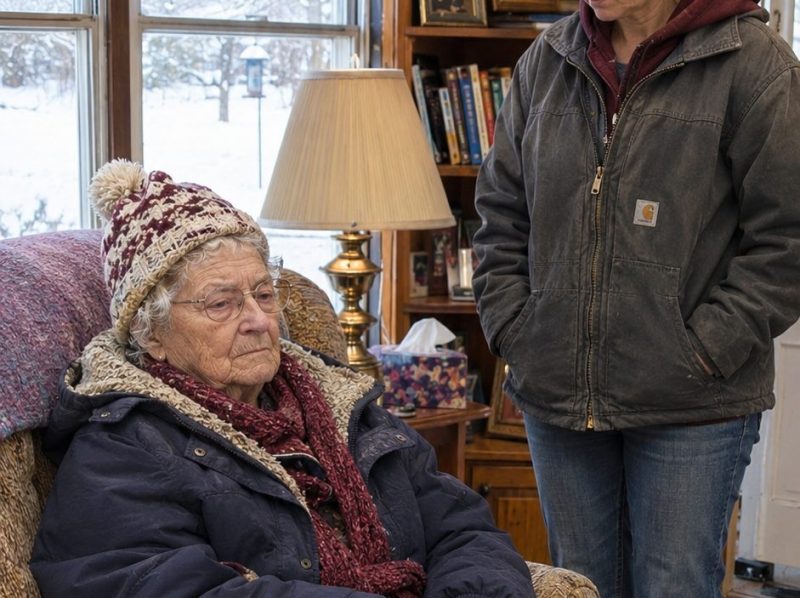
Mom was 82 and lived alone in the farmhouse she’d shared with Dad before his death four years earlier.
When she stopped answering her phone during a dangerous winter storm, I became concerned enough to drive 115 miles through icy roads to check on her.
The outdoor temperature had dropped to minus 31 degrees. But the moment I stepped inside the farmhouse, I knew something was seriously wrong.
There was no familiar rumble from the heating system.
The house was freezing.
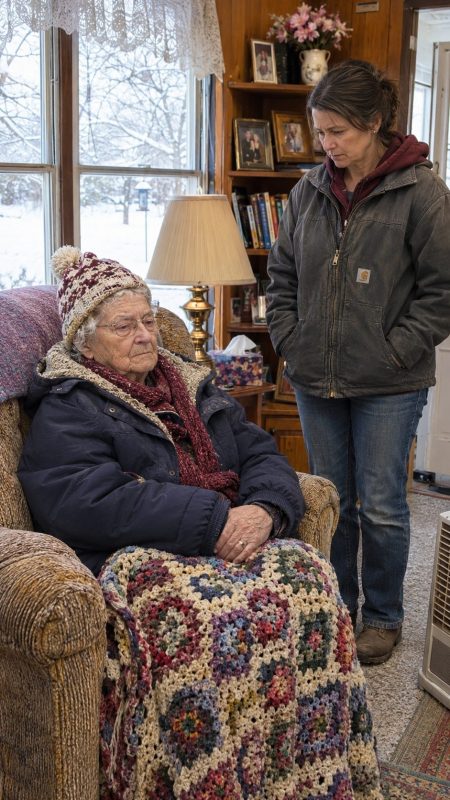
I discovered Mom sleeping in Dad’s old armchair, still wearing her heavy coat, gloves, and knitted hat. Frost clung to the windows, and the indoor thermometer showed only 51 degrees Fahrenheit.
«Mom, wake up!» I whispered, touching her shoulder.
She opened her eyes and immediately grabbed my hand.
«Whatever happens, please don’t blame your sister.»
I stared at her in confusion.
My older sister, Pam, lived nearby and had been responsible for Mom’s propane deliveries since Dad passed away.
Every autumn, my brothers Rob and Dean and I transferred $250 each to Pam. She was supposed to add another $250, providing $1,000 for Mom’s winter heating expenses.
We had followed this arrangement faithfully for years.
So why was the house freezing?
I hurried outside and inspected the 500-gallon propane tank.
The gauge showed barely five percent remaining.
Then I discovered a delivery slip indicating that Pam had ordered only 200 gallons in October, paying approximately $400.
That meant hundreds of dollars intended for Mom’s heating had been used elsewhere.
I felt furious.
But Mom refused to let me confront Pam.
«Her husband had an operation,» she explained. «Mark hasn’t earned a paycheck in months. They’re having a terrible time.»
I wanted answers, but getting Mom warm was more important.
I called the propane supplier’s emergency number. Unfortunately, the roads were too dangerous for their truck to reach the farmhouse that night.
I found a portable electric heater, gathered every spare blanket I could locate, and remained beside Mom until morning.
The next afternoon, a delivery truck finally pulled into the driveway.
I paid $783.75 to refill the propane tank and immediately arranged for future deliveries to be charged directly to my account.
I wasn’t willing to risk another night like that.
When the heating system finally began working again, Mom leaned back in her chair and closed her eyes.
An hour later, she slowly unbuttoned her coat.
«I didn’t realize how much I’d missed being warm,» she murmured.
I thought I’d solved the problem.
Instead, I’d unknowingly opened a much deeper family wound.
When Pam learned that I’d transferred the propane account into my name, she called me angrily.
«You had no right to take over without talking to me!»
I described the condition of Mom’s house and how I’d found her.
Pam went silent.
Then she hung up.
For the next eleven weeks, we barely acknowledged each other’s existence.
Everything changed on Easter Sunday.
We were gathering at Mom’s farmhouse when Pam appeared at the door holding a cardboard box and a dented metal coffee can.
She placed both on the kitchen table.
Before we could begin eating, she removed the lid from the can and emptied its contents.
Bills and coins scattered across the table.
The total was $750.
«This is what the three of you gave me last October,» Pam said. «I spent $400 on propane. The remaining money went toward our mortgage, utilities, and Mark’s medicine. I couldn’t afford to add my own share.»
She explained that she’d sold several family possessions, including Grandma’s old sewing machine and a handmade quilt stand, to replace the money.
Then she opened the cardboard box.
Inside were four years’ worth of receipts and a worn green notebook.
Pam pushed the notebook toward us.
«Before you decide what kind of person I am, read this.»
Page after page detailed expenses she’d paid herself while caring for Mom.
Groceries. Pharmacy bills. Plumbing repairs. Replacement appliances. Transportation to medical appointments. Countless other household necessities.
At the bottom of the final page was a total.
$14,860.
I stared at the figure.
Pam had spent nearly fifteen thousand dollars of her own money helping Mom over four years.
And none of us had known.
«You sent money every October,» Pam said quietly. «I was here the other eleven months, making sure Mom had everything she needed.»
Her voice cracked.
«I never asked you to reimburse me. I thought that’s what families did.»
A heavy silence settled over the kitchen.
Then she told us what had been happening in her own home.
Mark’s surgery had drained their savings. With him unable to work, bills accumulated faster than they could pay them.
They were behind on their mortgage and dangerously close to losing their house.
Pam had ordered less propane than usual, believing it would be sufficient until January. If necessary, she’d planned to request another delivery on credit.
But Mom suddenly interrupted.
«That wasn’t entirely Pam’s decision.»
We all looked toward her.
«I knew they were struggling,» Mom said. «I told her not to spend more money on heating. I said I had blankets, sweaters, and plenty of warm clothes.»
Pam shook her head as tears filled her eyes.
«Mom, you shouldn’t have done that.»
«I couldn’t bear the thought of you losing your house because of me,» Mom replied.
For the first time, I understood how two people had been secretly sacrificing their own comfort and security to protect each other.
Pam had been trying to care for Mom while keeping her own family afloat.
And Mom had been enduring the cold because she didn’t want her daughter to suffer.
Meanwhile, my brothers and I had assumed that sending $250 once a year meant we’d fulfilled our responsibilities.
Rob was the first to speak.
He picked up the notebook, studied the expenses, and pulled out his checkbook.
«I’m sorry, Pam,» he said. «We left all the work to you and never asked how you were managing.»
Dean moved his chair closer.
«Tell us what you need. We’ll help you get caught up.»
I looked at my sister, ashamed of how quickly I’d judged her.
«I thought you’d taken advantage of Mom,» I admitted. «I didn’t understand how much you’d been carrying.»
Pam wiped her cheeks.
«I should have told you everything.»
«Maybe,» I replied. «But we should have asked.»
That afternoon, we stopped arguing about who had made the biggest mistake and started discussing how to prevent it from happening again.
We created a family account to cover Mom’s groceries, medication, repairs, and heating expenses.
Each sibling agreed to contribute regularly rather than sending money only once a year.
We also divided responsibility for visiting Mom, taking her to appointments, and checking on the farmhouse.
Pam would no longer be expected to handle everything simply because she lived closest.
And if anyone in the family encountered financial trouble, they wouldn’t have to hide it out of embarrassment.
A few months later, something remarkable happened.
A large package arrived at Pam’s house without any explanation.
When she opened it, she found Grandma’s sewing machine.
It was the same machine she’d reluctantly sold to repay the money we’d contributed for propane.
Tucked inside was a small note bearing two simple words:
«Keep-full.»
Pam assumed one of us had purchased it.
But eventually, the truth came out.
Mom had secretly contacted the buyer and used some of her own savings to bring the sewing machine back into the family.
She wanted Pam to have something precious returned to her after everything she’d sacrificed.
By Thanksgiving, life looked very different.
Mark was working again. Pam and her husband were gradually recovering financially. Mom’s propane tank was being refilled automatically, and her farmhouse was comfortably warm.
Our family had also grown closer than we’d been in years.
While everyone prepared Thanksgiving dinner, I noticed Mom standing alone beside the kitchen window.
Snowflakes drifted across the yard, gathering on the ground near the propane tank.
I approached her.
«Everything okay, Mom?»
She nodded, looking content.
«It’s nice being warm,» she said.
Then she added, «It’s even nicer knowing everyone is taking care of each other.»
I never forgot those words.
When I first arrived during that freezing February night, I’d believed our family’s biggest problem was missing heating money.
But the empty propane tank was only a symptom of something much larger.
We’d allowed one sister to become responsible for everything while the rest of us assumed our small annual contributions were enough.
We had failed to notice her sacrifices.
And she’d been too proud to ask for help.
That winter taught me something no bank transfer ever could.
Taking care of family isn’t simply about paying a bill or sending money when it’s convenient.
It’s about noticing when someone is overwhelmed, sharing responsibilities before resentment builds, and making sure the people we love never feel they must suffer in silence.
Because a warm home matters.
But a family where nobody has to face hardship alone matters even more.