I Was Paid to Pretend I Was a Forgotten Woman’s Son—But Her Last Secret Changed My Future Forever
The dashboard clock read 11:48 p.m.
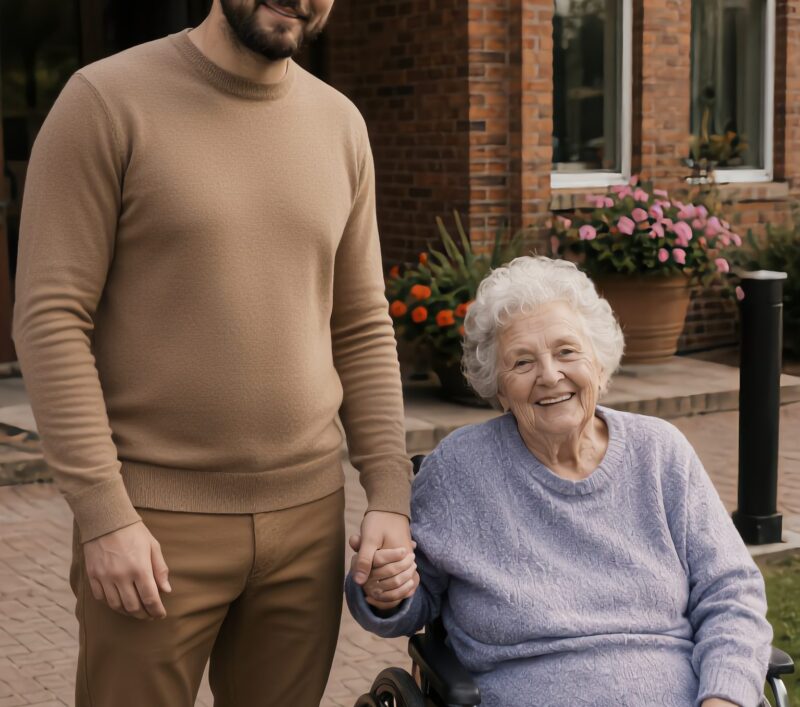
Nathan Cole sat in his rusting pickup truck outside a pharmacy, staring at a receipt he couldn’t afford to pay.
His mother’s heart medication had doubled in price.
The electric bill was overdue.
His savings account contained less than thirty dollars.
No matter how many extra shifts he worked, life always seemed one step ahead of him.
The opportunity arrived three days later.
A man named Richard Hayes contacted him through a temporary employment agency and requested a private meeting.
They met in a quiet diner on the edge of town.
Richard looked exhausted despite his expensive clothes.
Dark circles framed his eyes.
Without introducing himself properly, he placed a thick envelope on the table.
Inside was more money than Nathan normally earned in a month.
“I need a favor,” Richard said.
Nathan immediately became suspicious.
“What kind of favor?”
Richard rubbed his forehead.
“My mother lives at Cedar Hills Assisted Living. Her memory is fading. Most days she thinks I’m still visiting.”
Nathan waited.
“She keeps asking for me,” Richard continued. “I can’t do it anymore.”
The honesty in those words surprised him.
“What exactly are you asking?”
Richard looked directly at him.
“Visit her. Let her believe you’re her son.”
Nathan almost stood up and left.
“You want me to lie to an elderly woman?”
“I’ll pay you seven hundred dollars every week.”
The amount made his stomach tighten.
His mother’s prescriptions alone cost nearly that much.

He hated the idea.
But desperation has a way of changing a person’s principles.
So he agreed.
The following Saturday, Nathan walked through the doors of Cedar Hills.
Room 108 was at the end of a quiet hallway.
Inside sat a tiny woman with silver hair arranged neatly beneath a blue scarf.
She looked up from a photo album as he entered.
For a moment, Nathan forgot every prepared sentence.
Then he forced himself to smile.
“Hi, Mom.”
The woman’s face brightened instantly.
“Oh, David,” she whispered. “I knew you’d come.”
Guilt settled heavily in his chest.
Yet he stayed.
At first, he counted the minutes.
Then the visits became easier.
Margaret loved crossword puzzles.
She told stories about raising three children during difficult times.
She laughed loudly at old television shows.
She always saved half of her dessert for him.
Before long, Nathan found himself looking forward to Saturdays.
Soon one visit a week became two.
Then three.
Eventually, he stopped keeping track altogether.
One afternoon, Richard happened to arrive while Nathan was helping Margaret plant flowers in the facility garden.
He watched silently for several moments.
“You spend more time here than I ever asked you to.”
Nathan shrugged.
“She likes company.”
Richard looked away.
“She forgets everything by morning.”
Nathan carefully pressed a flower into the soil.
“Maybe. But she remembers when someone cares.”
Months slipped by.
Then one autumn afternoon, Margaret surprised everyone.
For several minutes, her confusion vanished.
She looked directly at Nathan.
Not through him.
At him.
“You’ve been carrying the weight of the world on your shoulders,” she said quietly.
Nathan froze.
The observation was painfully accurate.
She reached out and squeezed his hand.
“You deserve kindness too.”
No one had said those words to him in years.
Three days later, the call came.
Margaret had passed away peacefully overnight.
Nathan sat alone in his apartment long after the phone conversation ended.
The silence felt unbearable.
He had entered her life pretending to be someone else.
Yet losing her felt like losing family.
At the memorial service, the facility administrator handed him a sealed envelope.
“Margaret wanted you to receive this personally.”
Inside was a letter and a small silver key.
The first line stopped his heart.
To the young man who chose love when he could have chosen convenience.
Nathan’s eyes widened.
The administrator smiled knowingly.
“She figured it out a long time ago.”
His hands trembled.
“What do you mean?”
“She knew you weren’t David.”
Nathan looked back at the letter.
My memory failed in many ways, but not in the ways that mattered. I knew from our first conversation that you weren’t my son. But I also knew that you stayed when you didn’t have to.
Tears blurred the words.
The key belonged to a private lockbox at a local bank.
Margaret had left detailed instructions.
Part of its contents would go to Nathan.
The rest would fund activities and support programs for residents whose families rarely visited.
The news spread quickly.
And Richard was furious.
A week later, he arrived at Nathan’s apartment demanding the key.
“That belongs to my family.”
Nathan remained calm.
“Your mother made her decision.”
Richard’s face reddened.
“She wasn’t thinking clearly.”
Nathan took a deep breath.
“Then tell me something. When was the last time you spent an entire afternoon with her?”
Richard had no answer.
The dispute eventually ended up in court.
Richard’s attorneys accused Nathan of manipulation.
Of deception.
Of taking advantage of a vulnerable woman.
For months, Nathan endured accusations from strangers who knew nothing about Margaret.
Then the truth surfaced.
Bank records showed Richard had hired Nathan from the beginning.
Staff members testified that Margaret openly acknowledged the arrangement.
Several caregivers even recalled her joking about it.
“He’s not my son,” she would say with a smile. “He’s simply the one who shows up.”
The courtroom grew quiet.
By the end of the hearing, even Richard seemed ashamed.
When asked why he had stopped visiting, he finally told the truth.
“It hurt too much.”
Nathan understood.
Watching someone disappear piece by piece is heartbreaking.
But pain doesn’t excuse abandonment.
The judge upheld Margaret’s wishes.
The lockbox belonged exactly where she intended.
When Nathan finally opened it, he found savings certificates, cash, family keepsakes, and dozens of handwritten letters.
The inheritance transformed his circumstances.
His mother’s medical care was secured.
His debts vanished.
For the first time in years, he could plan for a future instead of merely surviving.
But Margaret’s greatest gift wasn’t financial.
It was the lesson she left behind.
Even after everything was settled, Nathan continued visiting Cedar Hills every weekend.
The residents began expecting him.
They shared stories.
Played cards.
Complained about the food.
And laughed together.
One spring morning, Nathan placed a vase of fresh daisies beside Margaret’s favorite seat in the garden.
An elderly resident nearby smiled.
“You never forget her, do you?”
Nathan looked toward the empty chair.
“No.”
“Why?”
He smiled.
“Because she taught me something most people spend their whole lives trying to learn.”
“What was that?”
Nathan glanced around at the residents chatting beneath the sunshine.
Then he answered softly.
“Family isn’t always the people you’re born to.”
He paused.
“Sometimes it’s the people who stay.”
And for the first time in a very long while, that truth felt like home.