My Husband Chose Another Woman, Threw Me Out Into the Storm, and Thought That Was the End. He Couldn’t Have Been More Wrong.
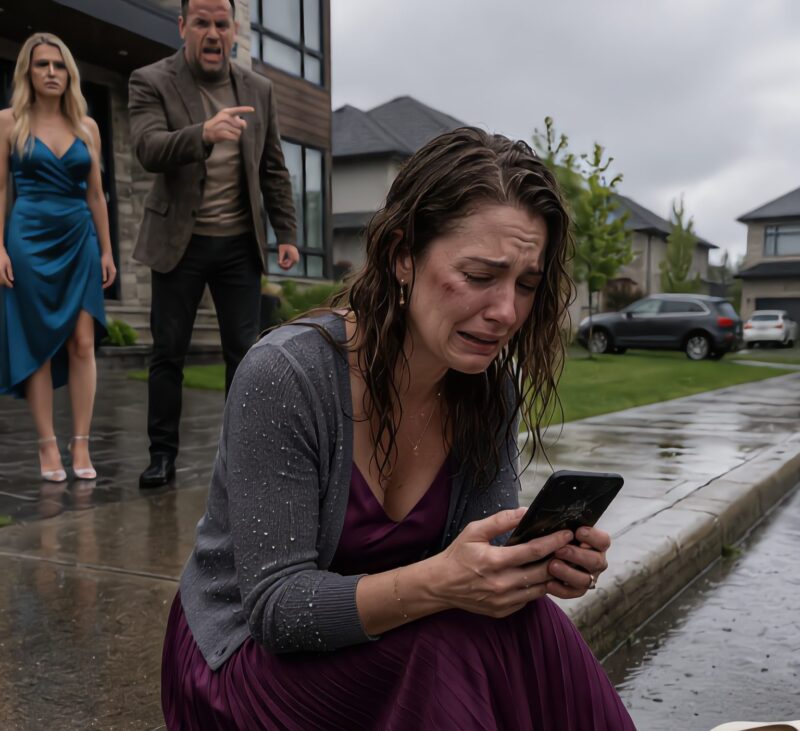
Cold rain soaked my clothes as I sat on the edge of the sidewalk, barefoot, clutching a broken phone with shaking hands. Blood trickled from a cut on my mouth, but the pain in my chest hurt far more than any injury.
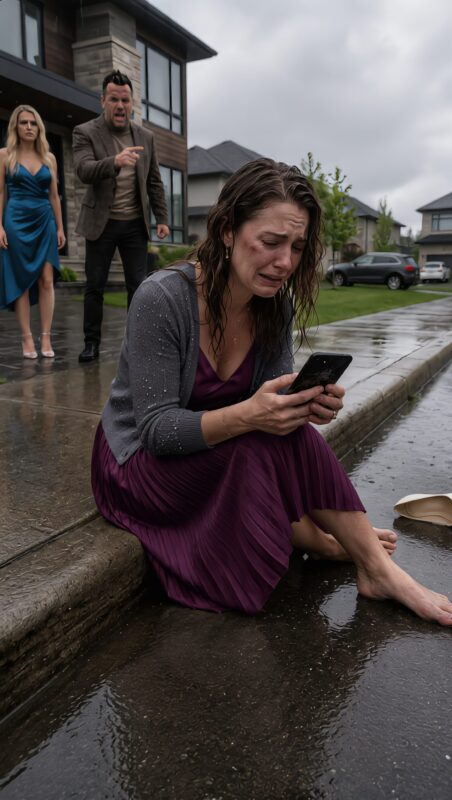
Just minutes earlier, I had still believed I was walking into my own home.
Everything changed when I found a stranger wearing my pearl earrings.
I asked Grant why she had them.
His answer wasn’t words.
It was the first slap.
When I demanded she remove my jewelry, another strike followed. Then another. By the time he hit me for the sixth time, I had stumbled backward into a console table, knocking photographs of our marriage onto the floor.
Grant towered over me with fury in his eyes.
“You own nothing here,” he shouted. “Now get out.”
He threw my suitcase into the front yard and shoved me through the doorway before slamming the door behind me.
As the lock clicked, his mistress appeared in the hallway, wearing my silk robe with a satisfied smile that told me she believed she had already replaced me.
For several moments I couldn’t move.
Then I reached for my damaged phone and called the one person whose voice had always made me feel safe.
My father answered on the first ring.
He didn’t ask what had happened.
He asked, “Are you hurt?”
“Yes.”
“Share your location.”
My voice barely worked.
“Dad… please don’t let him destroy anyone else.”
Within the hour, I was admitted to the emergency department. Physicians photographed bruises, confirmed fractured ribs, and carefully documented every injury. Meanwhile, my father wasn’t making emotional phone calls.
He was assembling a legal team.
Before the next day was over, Grant was served with divorce papers, emergency protective orders, and court motions preventing him from moving or hiding marital property. At the same time, financial specialists began examining companies connected to his real estate business.
What started as a domestic violence investigation soon uncovered something much larger.
Accountants traced millions of dollars through shell companies disguised as consulting firms. Corporate funds had paid for luxury vacations, designer watches, expensive jewelry, and secret real estate purchased in other names. Investors believed they were financing developments.
Instead, they had financed Grant’s private life.
My phone never stopped ringing.
Grant called constantly.
He begged.
He threatened.
He demanded.
I answered none of them.
Every voicemail, every angry text, every attempt to intimidate me was saved and handed directly to my attorney.
When our first hearing arrived, Grant’s legal team insisted everything had been exaggerated during an emotional argument between spouses.
Then my lawyer displayed surveillance footage recorded by a nearby security camera.
The judge watched Grant force me outside into the storm without shoes before locking the front door.
Medical reports matched the timeline perfectly.
His own messages destroyed the rest of his defense.
The court immediately issued long-term protective orders, restricted his access to major financial accounts, and prohibited any direct contact with me.
Investigators kept digging.
Each new document revealed another deception.
Forged signatures.
False invoices.
Hidden loans.
Misappropriated investments.
Years of carefully concealed financial fraud surfaced one record at a time.
His board of directors voted to remove him.
Banks demanded repayment.
Business partners withdrew.
News organizations published investigations that exposed not only his financial misconduct but also the abuse he had hidden behind a polished public image.
The empire he had spent years building collapsed far faster than it had risen.
Months later, Grant asked to settle.
His attorneys finally admitted what the evidence had already proven.
He accepted responsibility for the assault.
He acknowledged the affair.
He confessed to concealing millions of dollars.
Those admissions weren’t motivated by guilt.
They came because there was no credible way to deny the truth.
When the divorce became final, I kept our home, recovered a substantial portion of the missing assets, and received financial compensation supported by the court’s findings. Separate legal proceedings continued addressing Grant’s business misconduct while his former company moved forward under entirely new leadership.
The woman he had sacrificed everything for disappeared as soon as his fortune disappeared.
The man who believed wealth placed him above consequences discovered that money cannot buy freedom from accountability.
A year later, my father funded a nonprofit legal center dedicated to helping survivors of domestic abuse rebuild their lives. He insisted it carry my name—not because of what I had endured, but because I had chosen not to stay silent.
During the opening ceremony, he quietly asked whether I regretted asking him to show mercy to no one.
I looked around the room filled with women beginning again after unimaginable pain.
Then I smiled.
“No,” I answered. “I wasn’t asking for revenge. I was asking for justice.”
Several weeks afterward, one final envelope arrived.
Inside was a short handwritten note from Grant.
“I finally understand what losing everything feels like.”
I read the sentence once.
Then I placed the letter into a file marked Finished, closed the drawer, and stepped into the morning sun.
That rainy night no longer defined my story.
It became the moment my new life began.
Because true strength is never found in violence.
It is found in refusing to let fear have the final word.