My Husband Died Millions in Debt, and Our Sons Walked Away. Then His Hidden Note Sent Me to an Old Blue Ford.
Only one person sat in the family pew at Robert Hale’s funeral.
Me.
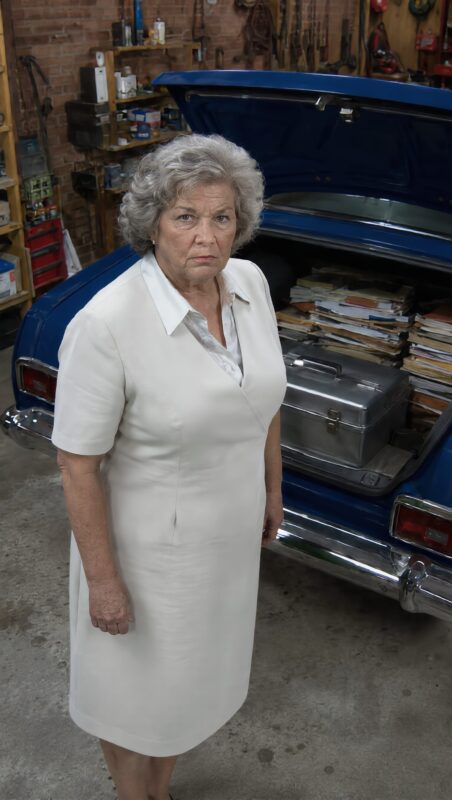
For twenty-seven years, I had imagined that if one of us died first, the other would be surrounded by family. Instead, I sat beneath the chapel’s pale windows with my hands clasped together, staring at my husband’s casket.
The seats beside me were empty.
Our sons had chosen not to come.
Mark had called the previous evening.
“Mom, Lucas and I talked about it. We’re staying home.”
I struggled to understand.
“You’re talking about your father’s funeral.”
There was a brief silence before Lucas joined the call.
“Dad left behind $6.2 million in debt. His company is finished. There’s nothing we can do now.”
“Is that really why you’re not coming?”
Neither answered immediately.
Then Mark said quietly, “There’s nothing left for any of us.”
Those words stayed with me long after the call ended.
Robert had spent decades building a regional logistics business. It had once been successful, but the final years were difficult. Contracts disappeared, creditors became impatient, and lawsuits began arriving.
Whenever I questioned him, Robert remained strangely composed.
“I have a plan, Ellie.”
I wanted to believe him.
Then, without warning, he suffered a fatal stroke.
After his death, everyone seemed convinced that his business troubles had swallowed everything we owned.
Apparently, our sons believed it too.
Seven days after the funeral, I entered Robert’s study to begin sorting through his belongings.
Most of the room looked exactly as he had left it: reading glasses beside the lamp, unfinished paperwork on his desk, and shelves crowded with books he refused to throw away.
I pulled down an old volume he had kept since his university days.
Something slipped from between the pages.
An envelope.
My name was written across it.
Eleanor.
Underneath, Robert had added another sentence:
“Read this alone.”
I opened it immediately.
“Ellie,
If things have happened the way I expect, our sons may have already made a choice they cannot easily undo.
Do not tell them about this letter.
Go to storage unit B17.
You’ll find the blue Ford there. Look in the trunk.
After that, you’ll understand why I kept certain things from everyone.
Forgive me for making you discover it this way.
Robert”
I read the letter twice.
Then a third time.
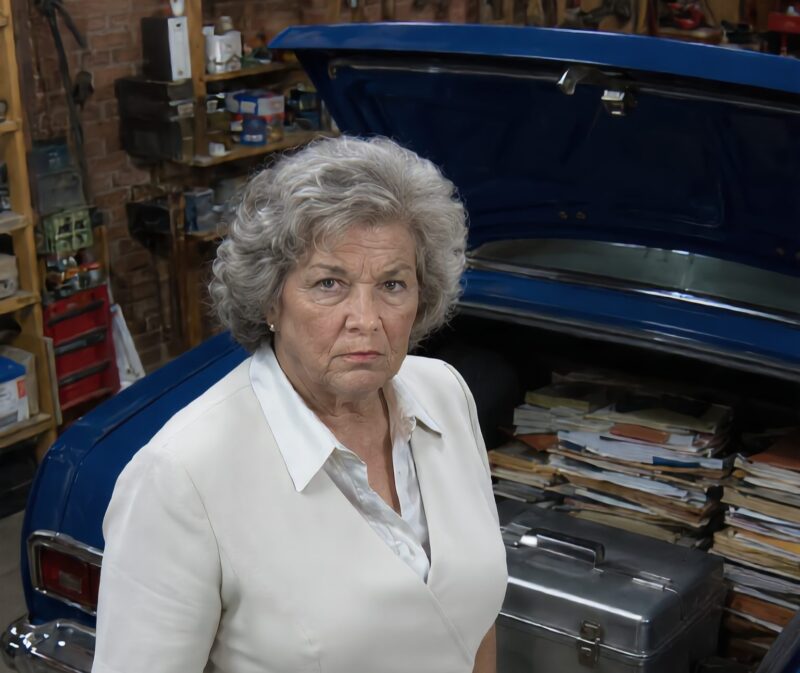
The blue Ford was an aging 1998 sedan Robert had stubbornly kept long after we stopped driving it. Every time I suggested getting rid of it, he found another reason to keep it.
I had always assumed nostalgia was the explanation.
The next morning, I drove to the storage facility.
Unit B17 was at the far end of a dim corridor.
When I rolled up the metal door, dust floated through the morning light.
There it was.
The old Ford.
A tarp covered most of the faded blue paint.
I searched beneath the rear bumper and found the spare key exactly where Robert had always hidden it.
My heart began pounding as I unlocked the trunk.
There were no sentimental souvenirs inside.
There were files.
Dozens of them.
Property records. Bank statements. Trust documents. Investment portfolios. Legal agreements.
I sat on the concrete floor and began reading.
Years before his company reached the edge of collapse, Robert had legally separated our private assets from the business.
Our home was protected.
Several investments had been placed beyond the company’s reach.
Most surprising of all was a trust established solely for me.
The business might have owed millions, but Robert had quietly ensured that its failure would not destroy my future.
At the bottom of the trunk were three envelopes.
Two bore our sons’ names.
The third was mine.
I opened mine first.
Robert’s message was short.
“I could have explained everything to Mark and Lucas. I chose not to.
I needed to know whether they would protect their mother when they thought she had nothing.
If they stayed beside you, they would never need to know they had been tested.
If they walked away, you deserved to know why.”
I lowered the letter.
For the first time since Robert’s death, the silence around me felt different.
It no longer felt empty.
It felt like an answer.
Weeks passed.
Eventually, information about the trust surfaced during the handling of Robert’s estate.
That was when my sons remembered how often they used to call me.
My phone lit up repeatedly.
First came Mark.
“Mom, can we talk?”
Then Lucas.
“We handled everything badly.”
Soon came the explanations.
They had been overwhelmed.
They had misunderstood the situation.
Grief had affected their judgment.
They had never intended to abandon me.
Finally, they arrived at my house together.
Mark hugged me.
Lucas apologized.
Both insisted that money had nothing to do with their sudden return.
I allowed them to finish.
Then I went to the cabinet and retrieved the two envelopes from the Ford.
I placed them on the table.
Mark immediately recognized his father’s handwriting.
“What are these?”
“Something your father prepared for each of you.”
Lucas reached toward his envelope, but I rested my hand over it.
“There’s one thing I want you to hear first.”
Both looked at me.
“When your father died, you thought he had left nothing behind.”
Neither spoke.
“And when you believed there was nothing to inherit, you decided there was no reason to stand beside me.”
Mark’s face tightened.
Lucas looked away.
I removed my hand from the envelopes.
“Your father protected me financially long before he died. But that wasn’t his final gift.”
I pushed the letters toward them.
“His final gift was clarity.”
The room became completely still.
They opened their envelopes.
I never asked what Robert had written to them.
Those words belonged between a father and his sons.
And despite everything, I eventually chose to forgive them.
Not because their behavior had been acceptable.
Not because money erased what had happened.
I forgave them because I refused to spend the rest of my life carrying their mistake.
Robert had spent years protecting my future.
But hidden inside the trunk of that forgotten blue Ford was something more valuable than property deeds or investment accounts.
It was a reminder that wealth does not create character.
Sometimes it simply removes the disguise.
And when everything appears to be gone, you discover who stays because they love you—and who stays only because they expect something in return.